Dar es Salaam. Researchers have introduced science-driven technologies designed to transform traditional palm oil production into a modern, income-generating enterprise.
Through the technologies, recently introduced in Ifakara District of Morogoro Region, small-scale palm oil producers witnessed a quiet but significant shift in how their crop is processed and valued.
On January 23, 2026, the University of Dar es Salaam (UDSM), through its Research and Innovation Management (RIM) Programme supported by the Swedish International Development Cooperation Agency (Sida), took laboratory science directly to farmers and processors.
The two-day hands-on training brought together palm oil peasants, agro-processors, extension officers and university researchers.
The objective was simple but ambitious: to demonstrate how applied research and modern processing technologies can unlock value addition, improve quality and raise rural incomes.
“Research has no real meaning if it does not improve people’s lives,” said UDSM Director of Research and Publication and Principal Investigator of the Sida–RIM Subprogramme, Dr Mathew Senga.
“Our responsibility as a public university is to ensure that the knowledge we generate translates into practical solutions that communities can use,” he said.
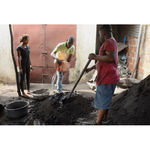
Experts said palm oil value addition matters because traditional extraction methods often compromise quality. Inconsistent heating, poor filtration and contamination reduce shelf life and limit access to formal and higher-value markets.
As a result, most smallholders sell crude oil at low prices, missing out on significant margins.
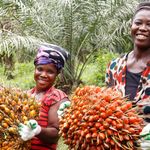
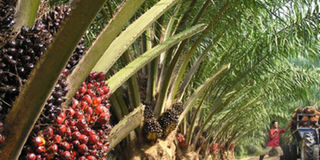
For decades, palm oil has quietly sustained thousands of rural households in Tanzania. From Kigoma and Kagera in the west to Morogoro and the Coast Region, the crop has been cultivated mainly by smallholders, processed using rudimentary methods and sold in informal markets at modest prices.
Despite growing domestic demand, the sector has remained largely informal, low-tech and low-value.
Tanzania consumes far more edible oil than it produces. Official data show that the country meets only about 40 percent of its edible oil demand locally, forcing heavy reliance on imports.
Palm oil, which thrives in Tanzania’s agro-ecological zones, has long been identified as one of the strategic crops capable of closing this gap. Yet production challenges have not been agronomic alone; they have been technological.
At the centre of the Ifakara intervention was a compact palm oil refinery system developed and adapted by UDSM researchers.
The system applies scientifically controlled refining stages—degumming, bleaching and deodorisation—to remove impurities, stabilise the oil and improve clarity and safety.
“Quality is not accidental,” explained a chemical and processing engineer, Dr Divine Kaombe, who led the technical demonstrations.
“It is controlled through science: temperature, time, chemical balance and correct handling of equipment. Once processors understand this, they can consistently produce oil that attracts better prices.”
The Deputy Manager for Technology Development at UDSM’s Technology Development and Transfer Centre (TDTC), Dr Ibrahim Mwammenywa, said:
“The problem has never been palm oil itself,” he said. “The real challenge has been how it is processed. Technology is what turns effort into income.”
Crucially, the training went beyond oil extraction. Participants were shown how palm oil by-products can be converted into animal feed, soap, cosmetics, construction materials and even biodiesel. For many farmers, this was a moment of realisation.
“When farmers see that nothing goes to waste, their thinking changes,” Dr Mwammenywa noted. “They begin to see palm oil processing as a business, not just a survival activity.”
This is where research-driven technology becomes transformative. By turning waste into products and informal activity into enterprise, science reshapes livelihoods. The intervention also reflects a broader shift in how agricultural research is conducted in Tanzania, from academic isolation to community-centred innovation.
TDTC, a specialised unit within UDSM’s College of Engineering and Technology, plays a critical bridging role.
Equipped with modern engineering facilities such as CNC machines, 3D printers and prototyping tools, the centre designs technologies with small and medium enterprises in mind.
“TDTC exists to shorten the distance between innovation and impact,” said Dr Mwammenywa. “We adapt technologies to real conditions faced by rural processors, not ideal laboratory environments.” Technology transfer, however, is as much about people as machines. Deputy Manager for Technology Transfer at TDTC, Dr Neema Msuya, emphasised capacity-building and follow-up support.
“Technology transfer is not about handing over a machine and walking away,” she said. “It is about ensuring users can operate, maintain and sustain the technology independently.”
Beyond Ifakara, the lesson is national. At a time when Tanzania is pushing for industrialisation, food security and import substitution, the palm oil initiative demonstrates how research, when deliberately applied, can modernise agriculture.
Register to begin your journey to our premium contentSubscribe for full access to premium content