How Tanzanian roots inspired Dr Cecelela to change how the world sees African families

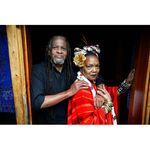
Dr Cecelela Loyce Tomi, a researcher specialising in migration, childhood and disability care, celebrates after successfully defending her dissertation and earning a Doctor of Philosophy (PhD) in Childhood Studies from Rutgers University in Camden, New Jersey, United States, with distinction. PHOTO | STEPHEN TOMI

What you need to know:

  • Her doctoral research examined how children in African immigrant families understand growing up in households where disability care is both a profession and a way of life
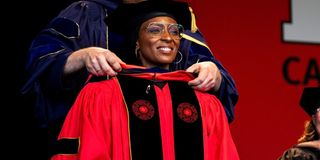

Dar es Salaam. For Dr Cecelela Tomi, earning a Doctor of Philosophy (PhD) in Childhood Studies from Rutgers University in the United States was more than an academic milestone. It was the culmination of a personal journey shaped by her Tanzanian heritage and a desire to ensure African immigrant families are better represented in global research.

Speaking to The Citizen on July 29, 2026, Dr Tomi said her work sought to bridge academic research and the lived experiences of Tanzanian families at home and abroad.

Although born and raised in the United States, she said Tanzania has always remained central to her identity. Her father’s family comes from Dodoma, while her mother’s roots are in Singida. Growing up in the Tanzanian diaspora in Massachusetts, Dr Tomi maintained close links with relatives and has travelled to Tanzania for work and language studies.

"Tanzania has always been central to my sense of belonging and home," she said. Her doctoral research examined how children in African immigrant families understand growing up in households where disability care is both a profession and a way of life.

Researcher and scholar of migration, childhood, and disability care, Dr Cecelela Loyce Tomi celebrating after successfully defending her dissertation and earning a Doctor of Philosophy (PhD) in Childhood Studies from Rutgers University in Camden, New Jersey, USA, with distinction. PHOTO: STEPHEN TOMI

"I wanted to understand how children make sense of the work their parents do. What happens when home is work and work is at home?" she said.

Dr Tomi explained that many immigrant parents enter disability care because it provides financial stability while allowing them to remain close to their families. Some later establish care agencies to balance professional responsibilities with parenting.

Her study found that childhood experiences in caregiving environments continue to shape participants into adulthood. While some pursued careers in care-related fields or remained committed to supporting people living with disabilities, others deliberately chose different paths to prevent future generations from inheriting similar responsibilities.

Dr Tomi learned much about disabilities in Tanzania by spending time with Sauti Parasports Amputee Football Club during their practices in Chang’ombe, Dar Es Salaam. Here, Players listen as Head Coach Abdul Machine encourages and strategizes with them. Recent winners of Azam Amputee Football Tournament. Coach Machine won Best Coach. Names from Left to Right: Sajati Mjupaa, Salmin Michael, Bashra Alombile (Goalkeeper), Coach Abdul Machine, Tito Mwanjalila, Habiba Likoike, Kasimu Mbarouku

Using Kiswahili concepts, she described this contrast as kujifungua—opening oneself to others—and kujifunga—setting boundaries to protect future generations.

"Our childhoods shape how we think about responsibility and what a good life looks like," she said.

Dr Tomi said her research challenges the way migration is often understood.

Dr Tomi surrounded by family after walking across the stage at her graduation ceremony on May 19, 2026 at Rutgers University in Camden, New Jersey, USA. From Left to Right, Salum Salum, Zulfiqar Manzi, Mimi Mgawe, Nenelwa Tomi, Dr Cecelela Tomi, Kissah Okeyo, Saburi Eliamani, Stephen Tomi, Magdalena Tomi, Tusekile Mwakalundwa, Maria Sombe-Baraka

"Many people see remittances arriving every month but never see the demanding work that makes those remittances possible," she said.

"Behind the money are long shifts and emotional labour. Families reorganise their daily lives around care."

She believes her Tanzanian background influenced the questions she pursued as a researcher, giving her a deeper understanding of family, childhood, disability and care. Looking ahead, Dr Tomi said Tanzania will increasingly need to address questions around caring for older people, those living with disabilities and future generations as home-based care expands.

"The Tanzanian diaspora has accumulated decades of experience navigating these questions through home care agencies, workforce development, transportation systems and public policy," she said.

She hopes her research will help strengthen links between those experiences and Tanzania’s future care systems.

The journey to completing her doctorate was not without challenges. Dr Tomi faced financial pressures, research approvals and the difficulties of conducting studies across two countries.

She also experienced burnout and uncertainty, but said her faith helped her remain grounded.

Dr Tomi in Zanzibar during her doctoral studies. PHOTO|MAGDALENA LILLIAN (NZELANI) TOMI

During her studies, she lost two close family members. Her paternal grandmother died of cancer in the first year of her PhD, while her uncle passed away during her final year.

"He would have loved to witness this moment," she said.

Dr Tomi said one lesson from her academic journey continues to guide her: "Let your research change you."

Beyond academia, she hopes her work contributes to a wider movement of Tanzanians documenting their own lives and communities through research, writing and film.

She recalled interviewing Tanzanian filmmaker Seko Shamte during her research, saying the conversation reinforced the importance of representation.

"Representation requires resources," she said.

Leading an international education program in Arusha. PHOTO|DR CECELELA TOMI

For young Tanzanians pursuing international research careers, Dr Tomi advises them to pay attention to everyday experiences and develop questions from their surroundings.

"Train your mind to notice what other people overlook. Ask why things are the way they are," she said.

She encouraged young people to value their backgrounds, saying their Kiswahili-based perspectives can become a unique intellectual advantage.

Although born in the United States and an American citizen, Dr Tomi said her connection to Tanzania remains deeply rooted through her family, culture and research.

For her, academic success is not simply about earning titles but ensuring Tanzanian stories, values and experiences are documented and understood around the world.