Dodoma/Dar. The government has called for the integration of artificial intelligence (AI) into Tanzania’s healthcare transformation agenda, warning that weak data protection systems could expose the country to digital colonialism.
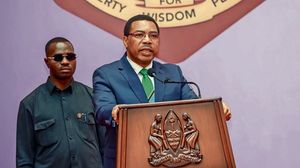
Speaking during the opening of the Scientific Health Conference (USCHe) organised by the University of Dodoma (UDOM), Deputy Permanent Secretary in the Ministry of Health Emmanuel Tayari said modern healthcare development could not ignore the growing role of AI.
Representing the Minister for Health, Mr Tayari said technological advancement provides an opportunity to improve healthcare delivery, particularly amid shortages of health professionals, laboratory experts, biologists and data analysts.
He said AI should be used to enhance the capacity of existing professionals rather than replace them.
“AI can support health data analysis, disease prediction, patient information management and decision-making based on large volumes of data,” he said.
Mr Tayari also called for locally produced research and innovation to be transformed into products and services that benefit society and generate income, while ensuring researchers’ intellectual property rights are protected.
However, he said limited publication of locally generated knowledge remains a challenge, as many Tanzanian experts do not regularly share their work through academic journals, blogs and open platforms.
Mr Tayari warned that this leaves AI systems relying heavily on information generated in Europe and the United States, which may not accurately reflect Tanzania’s realities.
“We must develop a culture of writing and publishing. If we do not, we will continue using AI systems built on information that does not represent our environment and receive responses that do not match our reality.”
Mr Tayari warned that Tanzania risks digital colonialism if citizens’ health data is stored or used without adequate national control.
He proposed three measures for responsible AI adoption: ensuring Tanzanians’ health data remains stored within the country, requiring healthcare AI systems to be approved by relevant authorities and developing local capacity to create such technologies.
“AI is not a replacement for health professionals, but an important tool to improve their ability to provide quality services.”
Mr Tayari said UDOM has the potential to become a centre for AI development in healthcare due to its expertise in cybersecurity and information and communication technology.
He called for stronger collaboration between UDOM, the Muhimbili University of Health and Allied Sciences (MUHAS), the National Institute for Medical Research (NIMR), teaching hospitals and other research institutions to develop health professionals with data science skills and data experts who understand healthcare.
The UDOM Deputy Vice Chancellor for Academic, Research and Consultancy, Prof Razack Lokina, said the conference brought together health experts, researchers, policymakers and development partners to discuss ways of strengthening Tanzania’s health systems.
He said the university would continue using education, research and innovation to support Vision 2050 and improve healthcare services.
Prof Lokina highlighted achievements at Benjamin Mkapa Hospital, including dialysis services and kidney transplant procedures for adults and children, reducing the need for patients to seek specialised treatment abroad.
The World Health Organisation (WHO) Regional Director for Africa, Prof Mohamed Janabi, said African countries must build health systems capable of responding to disease outbreaks, climate change impacts and financial pressures.
He said resilient health systems require more than large hospitals, calling for investment in primary healthcare, community health workers, disease surveillance and digital innovation.
Meanwhile, a medical specialist and resident at Benjamin Mkapa Hospital, Dr Jesse Mnyune, said successful AI adoption in Tanzania’s healthcare system requires strong government leadership, investment in digital infrastructure and clear regulations.
He called for the establishment of a dedicated regulatory body to oversee AI applications in healthcare and ensure compliance with ethical standards, patient safety requirements and national regulations.
Dr Mnyune said healthcare workers should view AI as a decision-support tool rather than a replacement for human expertise.
“AI is like having an intern or assistant that helps improve diagnosis, treatment planning, disease surveillance, research and overall health service delivery, while final clinical decisions remain with trained professionals,” he said.
He stressed the importance of continuous education and capacity building for healthcare workers, adding that AI adoption must be guided by ethical principles, patient confidentiality and the use of secure, government-approved platforms.
Register to begin your journey to our premium contentSubscribe for full access to premium content