Inside ORCI's evolution into a cancer treatment centre

What you need to know:

  • The institute has commissioned modern cancer treatment equipment, developed a skilled workforce, and attracted substantial investment in infrastructure

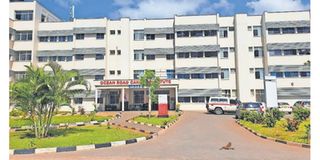
Dar es Salaam. The Ocean Road Cancer Institute (ORCI) has marked significant milestones in its 30 years of existence, establishing itself as a premier cancer treatment centre in East Africa and the Sub-Saharan region.

The institute has commissioned modern cancer treatment equipment, developed a skilled workforce, and attracted substantial investment in infrastructure.

ORCI is now seeking accreditation from international cancer oversight bodies, a move that would position it not only as a regional hub but also as a leading centre across Africa.

Speaking to The Citizen recently, ORCI executive director, Dr Diwani Msemo, said the institute is proud of the government’s support as it commemorates three decades since its 1996 establishment.

“President Samia Suluhu Hassan’s administration has invested over Sh40 billion in modernising ORCI’s cancer treatment facilities in the past four years,” he said.

“Patients no longer need to travel to India for oncology treatment, as our local capacity is sufficient. ORCI is on track to become a continental hub, ranking third after South Africa and Egypt, and attracting international students due to enhanced infrastructure and expertise,” he added.

Dr Msemo highlighted that the commissioning of Positron Emission Tomography (PET) scanners allows ORCI to offer services previously sought abroad.

Furthermore, he said the shift from 2D to 3D radiotherapy for women’s cancers enables precise tumour targeting while protecting healthy tissue.

He noted that delegates from the International Atomic Energy Agency (IAEA) during their recent visit pledged support for ORCI’s accreditation process, recognising its world-class equipment and skilled personnel, which remain unmatched in East and Southern Africa.

IAEA Africa Regional Director, Mr Gashaw Wolde, who first visited ORCI 18 years ago, praised the institute’s progress. “Ocean Road has made remarkable strides in expanding cancer management services.

The newly commissioned Cyclotron and PET facilities now offer advanced diagnostic services to Tanzanians,” he said during a recent visit.

Acknowledging ongoing cancer challenges, Mr Wolde urged Tanzania to continue strengthening national capacity, commended ORCI for its achievements, and encouraged the institute to maintain momentum in serving the community.

On Monday, February 2, 2026, Health Minister Mohamed Mchengerwa launched a Sh18.7 billion PET CT scanner at Ocean Road Hospital, noting that the test will now be available locally for Sh1.2 million, down from Sh6–8 million previously incurred abroad.

“We are ready to host patients from other countries,” Mr Mchengerwa said, citing Malawi’s plan to send 1,900 patients who would have otherwise gone to India.


He explained that PET scans assess cellular and tissue activity, unlike CT and MRI scans, which only show structural images.

“The service will greatly reduce the burden on citizens, who previously had to travel abroad, paying Sh6–8 million for the test alone, excluding travel and accommodation cost,” he added.

Reflecting on the 30-year journey, retired ORCI cancer specialist, Dr Khamza Maunda, recalled early challenges, including a lack of equipment and limited staff.

“Despite these hurdles, we gradually reorganised and improved,” he said, noting that specialist training was introduced in 2013.

Radiology expert, Dr Yokebeth Vuhahula, highlighted the absence of a pathology department in the past, which required patients to go to Muhimbili National Hospital for tests. “All necessary diagnostics are now conducted at ORCI.”

Oncology expert, Mr Mwanga Mhoka, emphasised the expansion of the nursing workforce, while cancer survivor, Dr Jasmin Salum, said ORCI restored her hope.

Dr Carol Swai of the Health Insurance Clinic noted increased regional patient numbers following government investment, “The influx has been particularly due to the venture made at a facility.”

Dr Maguha Ollo stressed the importance of grassroots education via local radio.

Dr Abubakar Hassan said modern equipment now provides detailed diagnostics, and the ongoing commissioning of new treatment units is expected to reduce waiting times.