Dar es Salaam. Research and development, science, technology and innovation, digital technologies, energy, and transport and connectivity have been identified as five critical pillars through which Tanzania can accelerate the achievement of its long-term development ambitions.
The pillars put education at the centre of the country’s next 25-year journey.
The five areas will form part of the discussions during this year’s National Education, Skills and Innovation Week, which seeks to bring together government, researchers, scientists, innovators, the private sector, industry and other stakeholders to examine how education and knowledge can drive development.
The exhibitions started on Saturday at Usagara Secondary School in Tanga, while the official opening will take place on August 18, with activities continuing until August 24.
The Ministry of Education, Science and Technology says the gathering provides an opportunity to bring together sectors that are often discussed separately but are closely connected when it comes to national development.
Giving an update on preparations yesterday, the ministry’s Director of Science and Technology, Prof Ladislous Mnyone, said the five pillars were particularly important in the implementation of Tanzania’s long-term development agenda. “There are five tools. The first is research and development. The second is science, technology and innovation. The third is digital technologies. Another is energy, and the last is transport and connectivity,” Prof Mnyone said.
He said most of the areas were supported by research, science, technology and digital technologies, giving the Ministry of Education, Science and Technology an important role in ensuring that they contribute to the country’s development. “If you look at all these, to a large extent they are carried by research and development, they are carried by science and technology, and they are carried by digital technologies,” he said. This is where the significance of the week comes in. Rather than discussing education, research, innovation, industry and technology as separate subjects, the week creates a common platform where stakeholders can examine how the five pillars interact and how they can collectively contribute to Vision 2050.
Prof Mnyone said the main objective was “to bring stakeholders from different sectors and different groups together so that they can have discussions and reach common resolutions and joint strategies on issues of education, skills and innovation.” He said the three areas affected every sector and every citizen.
“This is because if you look at all these three issues, they touch every sector, they touch every group and they touch every citizen,” he said.
For education expert Dr Thomas Jabir, this broad approach is important as Tanzania enters what could be one of the most consequential 25-year periods in its development history.
“You cannot build the Tanzania of the next 25 years by allowing education, industry, research and government to work in isolation. The solutions we need must come from collaboration,” Dr Jabir said. He said the week creates an opportunity for different sectors to understand what others are doing, identify gaps and explore ways of taking promising innovations from research institutions and classrooms into the economy.
That connection will be visible through the technology exhibitions, where innovations are expected to demonstrate solutions addressing challenges in education, health, water, mining and other sectors.
Industry and private-sector players have also been invited to witness solutions being developed by young people through technology and innovation, potentially creating opportunities for partnerships, commercialisation, employment and further skills development.
Education as the connector
The inclusion of all levels of education this year—from basic education and skills development to higher education—is another important component of the week.
Education expert Dr Mwajuma Ally said this was significant because Tanzania needed to see education as one connected system rather than separate levels operating independently.
“We need to look at education as one ecosystem. What a child learns at school, the skills developed through vocational education and training, and the knowledge generated at universities must ultimately connect with the needs of society and the economy,” Dr Ally said.
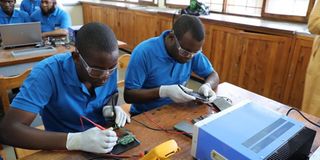
The skills component will also feature competitions involving vocational and technical training institutions. Prof Mnyone said the competitions would help prepare young Tanzanians for regional and international skills competitions while giving them opportunities to meet potential employers.
“This will give our young people an opportunity to meet different stakeholders who can perhaps help them in terms of employment. They will also get opportunities to go to places that can help them improve their skills,” he said.