Jakaya Kikwete Cardiac Institute launches AI and robotic laboratory

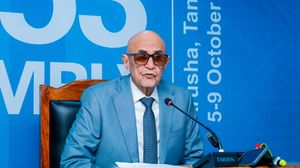
The Executive Director of the Jakaya Kikwete Cardiac Institute (JKCI) Peter Kisenge speaking to the media in Dodoma today on the implementation of the institute’s activities for the 2025/2026 financial year.

Dar es Salaam. The Jakaya Kikwete Cardiac Institute (JKCI) has inaugurated a modern laboratory equipped with artificial intelligence (AI) and robotic sample-processing systems, making it the largest of its kind in East Africa and Sub-Saharan Africa.

The new facility is designed to improve diagnostic accuracy, reduce human error and enable early detection of diseases.

Speaking to journalists on Thursday, April 9, 2026, JKCI Chief Executive Officer, Peter Kisenge, said the investment is part of the Sixth Phase Government’s efforts, through the Ministry of Health, to ensure patients receive faster and higher-quality services.

“This laboratory has a modern system capable of analysing samples precisely, reducing human error, and detecting diseases even at their earliest stages,” he said.

The facility has cut waiting times for test results from three hours to just one and can process large volumes of samples quickly, helping reduce patient congestion.

“JKCI’s Robotic Lab positions the institute as a centre of excellence for laboratory diagnostics, particularly for cardiovascular diseases. It reinforces our role as a leading medical research and treatment hub in the SADC region and East Africa,” Dr Kisenge added.

The laboratory also serves as a live training facility for local health professionals, providing new knowledge and expert guidance in scientific diagnostics.

Dr Kisenge highlighted the institute’s broader use of technology in patient care, including the AI-enabled patient monitoring system Dozee, introduced in 2024. The system allows doctors to track vital signs such as heart rate, respiration, and blood pressure in real time, even when patients are outside the hospital. More than 100 patients have already benefited from this service.

In 2025, JKCI launched an online appointment system, used by over 71,000 patients, reducing waiting times. A family registration system has also been introduced to improve visiting procedures and ward security.

Record-breaking services

JKCI continues to expand its cardiovascular services, performing more than 800 open-heart surgeries annually and introducing complex procedures, including TAVI and specialised paediatric surgeries such as Ozaki and Truncus—performed for the first time in Africa at the institute.

These advancements have reduced the need for Tanzanians to travel abroad for heart treatment, cutting costs while boosting medical tourism.

In the past four years, JKCI has opened six branches in Tazara, Kawe, Oysterbay, Kariakoo, Chato, and Arusha, increasing daily patient numbers from an average of 400 in 2022 to over 1,100 in 2025.

Through funding from the Sixth Phase Government under President Samia Suluhu Hassan, more than 300 children have received free heart surgery, including over 30 undergoing major open-heart procedures.

Looking ahead, JKCI plans to introduce heart transplantation services by 2030 and aims to open an international branch, further strengthening Tanzania’s position as a medical tourism hub in Africa.