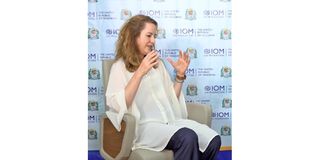
Migration can drive Tanzania’s economic growth: IOM chief

International Organization for Migration (IOM) Director General Amy Pope speaking during an interview. PHOTO | COURTESY


Dodoma. Migration can be a major driver of Tanzania’s economic growth if it is properly managed, with governments urged to protect migrants from exploitation while addressing the impact of migration on host communities.

International Organization for Migration (IOM) Director General Amy Pope said evidence from around the world showed that migration contributed to economic growth, but warned that poor management could create social and economic pressures in host communities.

In an exclusive interview with The Citizen on the sidelines of her visit to Tanzania, Ms Pope said migration should no longer be treated as the responsibility of a single government ministry.

She called for a coordinated approach involving government agencies, host communities and migrants to maximise the economic benefits of migration while reducing potential tensions.

“Migraation does lead to economic growth and the evidence is overwhelming that it does. But in order not to create the pressures within communities, we have to address those community impacts,” she said.

Ms Pope said governments needed to understand both the skills migrants brought and the needs of communities hosting them.

“Many governments around the world don't tend to think about migration that way. They tend to think of it just through one particular ministry. That's a loss. It's a loss for communities. It's a loss for the government. It's a loss for the economy,” she said.Ms Pope said Tanzania was taking on a significant role in shaping migration policy in East Africa as it assumes leadership of a regional migration platform.

She said the position offered Tanzania an opportunity to work with neighbouring countries to develop policies that respond to the movement of people across borders.

“Tanzania at this moment is playing a critical role. First of all, in the region itself, it's taking over this regional migration platform. It has the opportunity to set an agenda and to work with its neighbouring countries to advance migration policies that work even just in this region,” she said.

Millions of people cross African borders for employment, trade and other purposes, she said, making it important for governments to maintain effective border management while facilitating legitimate movement.

Properly managed migration could boost regional trade and travel and contribute to economic growth across the region, Ms Pope said.

Tanzania’s role in regional migration policy could also help shape measures to protect Tanzanians seeking employment abroad.

With Tanzania’s young population growing, Ms Pope said more Tanzanians would seek employment opportunities outside the country. She urged the Government to ensure young people migrated through safe and regulated channels to reduce the risk of exploitation.

“We want to make sure when people move, they move safely. They know what they're getting into. They're not exploited. They're paid fairly,” she said.

Governments should also ensure their nationals working abroad could access support, including assistance from embassies and consulates when they encounter problems, she said. Ms Pope urged governments negotiating labour mobility agreements to include specific safeguards for their citizens working in other countries.

Such agreements could cover access to consular services, minimum wage standards and regulation of recruitment agencies to prevent exploitation and excessive recruitment fees.

“All of that are key policies where government can really make a difference,” she said.

Ms Pope also linked migration to Tanzania’s broader development ambitions, saying the country’s economic growth and stability would influence the opportunities available to its growing population. She said President Samia Suluhu Hassan’s ambition to raise Tanzanians’ incomes was an important starting point, but economic transformation would also require investment in skills development.

“The president's current agenda to achieve higher income status for all Tanzanians is the first step. It's an ambitious agenda, but achieving that is going to create opportunity,” she said.

Young Tanzanians would need skills to take advantage of emerging opportunities, she said, adding that migration could itself contribute to skills development.

Tanzanians who study or work abroad could return with new knowledge and experience that could be applied to development at home.

“A person who goes and studies or practices in another country, when they come back home, they bring that skills, they bring the skills and knowledge back home and it enables them to even advance things further here,” she said.

Ms Pope said Tanzania should therefore view migration not only as a challenge to be managed, but also as “one tool in a development strategy” that could contribute to economic transformation when properly planned and regulated.