Muhimbili makes history with keyhole kidney transplants on four patients
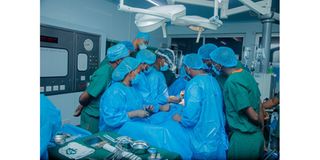
A team of Tanzanian doctors performs a kidney transplant using the minimally invasive laparoscopic technique. Previously, the procedure was carried out through open surgery, requiring a full abdominal incision. PHOTO | COURTESY
Dar es Salaam. The Muhimbili National Hospital (Muhimbili National Hospital) has marked a major milestone in Tanzania’s specialised healthcare services after successfully performing kidney transplants on four patients using minimally invasive (keyhole) surgery.
The procedures, carried out using laparoscopic techniques, represent a significant advancement in the country’s capacity to undertake complex organ transplant surgery while reducing risks associated with conventional open operations.
The surgeries were led by Dr Emanuel Minja, a Tanzanian specialist based in the United States and an expert in minimally invasive kidney transplant surgery, who worked alongside a team of MNH doctors.
Health officials said the use of keyhole surgery allowed doctors to carry out the procedures with high precision through small incisions, avoiding the large surgical openings typically required in traditional transplant operations.
The technique is associated with reduced post-operative pain, lower blood loss, fewer complications, and shorter hospital stays for both kidney recipients and donors.
Speaking on May 14, 2026, MNH kidney transplant specialist Dr Jonathan Mgumi said the development marked a turning point in the expansion of advanced medical services in Tanzania.
“This technology has improved safety for donors and patients alike. Recovery is faster, and patients are able to return to their normal activities within a shorter period compared to conventional surgery,” he said.
He added that the hospital would continue investing in modern medical technologies to reduce the need for patients to seek expensive treatment abroad.
Dr Minja said the introduction of laparoscopic kidney transplant surgery in Tanzania aligns the country with global standards in specialised healthcare.
“This is technology used in leading hospitals worldwide. Its introduction here means Tanzanians can now access safer and more advanced treatment at home,” he said.
Medical experts noted that the growing burden of kidney disease in Tanzania requires increased investment in specialist services, equipment and training to meet rising demand.
They further observed that the adoption of advanced surgical techniques would help reduce costs previously incurred by sending patients abroad for treatment.
In recent years, the government has continued to strengthen the health sector through investment in infrastructure, equipment and specialist training, contributing to the expansion of advanced and super-specialised services.
MNH remains one of the country’s leading referral hospitals, and the successful use of keyhole surgery in kidney transplants is being viewed as a significant step towards modernising complex surgical care in Tanzania.