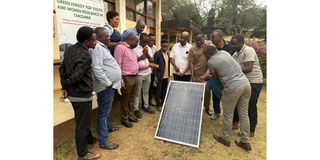
Morogoro. A training programme for vocational instructors is seeking to address a skills gap that could slow Tanzania’s shift to clean energy by equipping trainers with practical knowledge they can pass on to young people and women.
The 10-day programme, organised by the Relief to Development Society (Redeso) in partnership with the Vocational Education and Training Authority (Veta), has trained 12 instructors as Trainers of Trainers (ToT) at the Vocational Education and Training Teachers’ College in Morogoro.
The instructors come from Veta colleges in Dar es Salaam, Moshi, Mbeya, Mwanza, Pwani and Singida.
The training covers solar energy, improved cookstoves and electric mobility, including electric cars, motorcycles and three-wheelers.
The instructors will pass the skills to students at their respective colleges, helping create a larger pool of workers able to install, operate and maintain clean energy technologies.
Solar technology expert Mzumbe Musa, who is conducting the practical sessions, said the hands-on approach would enable instructors to transfer practical skills to their students.
“Once the instructors acquire these skills, they can train many more students, women and young people in their communities,” he said.
Redeso and Veta have also developed a clean energy curriculum that will be integrated into the syllabuses of participating technical and vocational education and training (TVET) institutions.
Veta Moshi instructor Engineer Frank Kabipi said the training had strengthened his understanding of clean energy technologies.
“This training is important for my personal development and for my community because the world is moving from polluting energy sources to clean energy to protect the environment,” he said.
Veta Dodoma instructor Bahati Kaniki said the practical sessions had helped him understand how solar technology could be applied in cooking, transport and lighting.
“I have gained practical knowledge and will now train my students so they can use these technologies and share the knowledge with their communities,” he said.
A Veta Pwani instructor said expanding clean energy knowledge among young people and women could help communities reduce reliance on polluting energy sources.
“Through us as instructors, I believe we will bring positive change to our communities by training young people and women to understand clean energy and adopt clean cooking technologies, clean-energy transport and solar power,” the instructor said.
Veta Dar es Salaam instructor Philemon Julius and Veta Mwanza instructor Musa Doma said they would combine theoretical and practical approaches to ensure students could apply the skills in their communities.
Funded by the International Development Research Centre (IDRC), the project aims to increase clean energy awareness and practical skills, reduce carbon emissions and support Tanzania’s transition to cleaner energy.
Skills and awareness remain important to adoption, particularly as high initial costs and limited knowledge continue to affect the shift to cleaner cooking technologies.