Ostrich crowned Tanzania’s Bird of the Year 2026

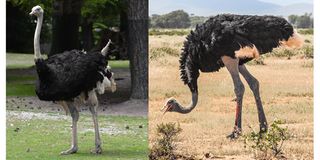
Arusha. The Common Ostrich has been crowned Tanzania’s Bird of the Year 2026, winning a closely contested national vote and succeeding the Superb Starling, which held the title in 2025.

The world’s largest living bird secured the accolade after emerging ahead of four other iconic savannah species in a nationwide campaign that began in September 2025.

The initiative was coordinated by Nature Tanzania in partnership with BirdLife International and Partner für Und Natur, with the results unveiled ahead of World Wildlife Day, observed annually on March 3.

The 2026 contest featured four prominent grassland and savannah species: the Common Ostrich (popularly known as the Maasai ostrich), the Red-necked Spurfowl, the Kori Bustard, and the Southern Ground Hornbill.

Announcing the results at Manyara Ranch Primary School in Makuyuni Ward on Sunday, March 1, 2026, Monduli District, Nature Tanzania’s Communications Officer, Ms Gaudensia Mariki, revealed that the ostrich garnered 303 votes, representing 38.9 percent of the total ballots cast.

“Of these, 186 were online votes and 117 physical ballots,” she said.

Its closest rival, the Kori Bustard, often referred to as the “Ambassador of the Plains,” secured 217 votes (209 online and eight physical), accounting for 30.1 percent.

Notably, while the bustard led in online voting, it trailed significantly in physical ballots.

The Red-necked Spurfowl placed third with 117 votes (60 online and 57 physical), followed by the Southern Ground Hornbill with 136 votes (132 online and four physical).

Voting was conducted both online and physically, engaging Tanzanians at home and in the diaspora, alongside tourists and bird enthusiasts worldwide.

“The winning bird automatically becomes the national ambassador in our ongoing campaign to protect grasslands and rangelands under the theme ‘Rangelands are Not Wastelands,’” said Ms Mariki.

According to her, the initiative aims to promote bird conservation and safeguard critical habitats across Tanzania.

Monduli District’s acting tourism officer, Mr Jonas Nyange, welcomed the outcome, noting that the ostrich is among the most common and celebrated species in the area.

“We are delighted that the ostrich won the title. Despite being flightless, it is a magnificent bird that lays the largest eggs in the world and continues to attract international visitors who come to admire and study it,” he said.

A powerful symbol of Tanzania’s savannah, the ostrich is known for its commanding stride and ecological role as an herbivore and insect-eater, contributing to the health of grassland ecosystems.

However, conservation experts warn that illegal hunting and habitat loss pose ongoing threats.

Strongholds and global presence

Outside protected areas, Lake Natron in northern Tanzania hosts the highest concentration of ostriches, estimated at 330 birds per square kilometre.

West Kilimanjaro supports an average of 85 per square kilometre, while the transboundary Amboseli–Longido–West Kilimanjaro landscape, spanning northern Tanzania and southern Kenya, hosts more than 750 per square kilometre.

The species is also found in major conservation areas, including Lake Manyara, Ngorongoro, Tarangire, Serengeti, Mkomazi, and Arusha National Parks.

Globally, the population is estimated at around two million, mostly roaming freely across Africa.

In countries such as China and the United States, however, ostriches are largely farmed in captivity.

Beyond its ecological role, the ostrich holds deep cultural value among the Maasai.

A traditional leader (Laigwanan) from Esilalei village, Mr Tobiko Lesiara, explained that ostrich feathers are used in youth initiation rites and traditional prayers for rain.

“We believe feathers taken from live ostriches symbolise fertility and prosperity,” he said.

Esilalei Village chairman, Mr Leeko Tayai, urged the government to formally recognise the ostrich as Tanzania’s national bird to strengthen conservation efforts, noting that local communities have already taken proactive measures to protect the species.

Often referred to as the “Maasai bird,” the ostrich is commonly found in pastoral landscapes where Maasai herders reside.

The Bird of the Year campaign was launched in 2023, with the inaugural title going to the Grey Crowned Crane.

The Secretary Bird claimed the crown in 2024, followed by the Superb Starling in 2025.

A Standard Seven pupil from Lake Manyara Primary School, Zawadi Shinini, commended organisers for involving students in the campaign.

“Children are the future generation. The earlier we are involved in environmental matters, the better we can protect our natural heritage,” she said.