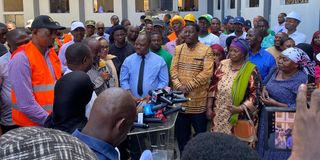
Dar es Salaam Regional Commissioner Albert Chalamila speaks during an inspection visit to Abbas Tarimba Secondary School in Tandale, Kinondoni District, on February 12, 2026. He said students sitting on classroom floors due to a shortage of desks reflects weak long-term planning rather than a lack of funds. PHOTO | COURTESY
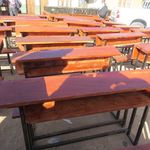
Dar es Salaam. Dar es Salaam Regional Commissioner Albert Chalamila has said that students sitting on the floor due to a shortage of desks is not a matter of insufficient funds, but a failure of proper long-term planning.
Mr Chalamila said the solution to the challenge of desk shortages lies in projecting needs 10 to 15 years ahead, with leaders anticipating how many students there will be, how they will study and where they will sit.
He made the remarks on February 12, 2026, during his ongoing tour of Kinondoni District to inspect development projects.
The Regional Commissioner visited Abbas Tarimba Secondary School and Shifaa Hospital, accompanied by the District Commissioner, the Municipal Director, the Mayor and other officials.
“When I watch videos and see students in Dar es Salaam sitting on the floor without desks, while there are educated leaders entrusted by the public and the President, it is not a lack of funds; it is poor planning,” he said.
“There is money available, but we have left loopholes in revenue collection. Unfortunately, many citizens still lack the spirit of voluntarily paying taxes. We must tighten up seriously so that funds are available to make this major investment,” he added.
Mr Chalamila noted that in the past, institutions were encouraged to contribute through Corporate Social Responsibility (CSR), but the approach has now shifted to Corporate Social Investment (CSI), meaning companies are expected to allocate funds towards development projects, including theconstruction of classrooms.
Addressing regional leaders, he urged them to plan carefully in response to Dar es Salaam’s growing population and limited land.
He cited as an example students who will converge after completing Standard Six and Standard Seven.
“There are two groups of classes that will merge into Form One — those completing Standard Six and Standard Seven at the same time. Therefore, we must prepare,” he said.
He also noted complaints about students returning home late and directed officials to develop proper plans for permanent dormitories, while continuing the construction of multi-storey school buildings similar to those currently under development.
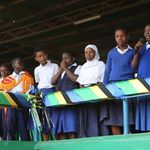
Speaking about Tandale, which had no secondary school since independence, Kinondoni Municipal Mayor Songoro Mnyonge said the municipality’s challenge was not a lack of funds, but limited land.
"As leaders, we decided we must make tough decisions by allocating part of a primary school area to build a secondary school without disrupting students. We adopted a multi-storey model,” he said.
He added that through participatory planning, and despite limited space, they succeeded in constructing the multi-storey school.
Kinondoni Municipal Director Hanifa Hamza said Tandale’s population is increasing and there is growing demand for social services, noting that the construction of the school and other projects clearly demonstrates the government’s commitment to its citizens.
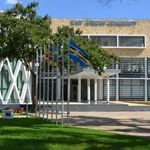
The construction of Abbas Tarimba Secondary School, located in Tandale Ward, Kinondoni District, is costing Sh3.3 billion, of which Sh1.8 billion has already been disbursed.
In a related development, the Regional Commissioner urged Kinondoni District leaders to engage the private sector as part of efforts to boost investment.
He said this would help attract major investments, including hospitals, especially as the country prepares to host the 2027 Africa Cup of Nations (Afcon).