PM clarifies reasons for delay in Kidunda Dam construction
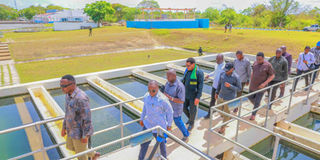
Prime Minister Mwigulu Nchemba (in scarf) assesses the water infrastructure at the Ruvu Water Treatment Plant Dam during a field inspection in the Coast Region yesterday. PHOTO | COURTESY
Dar es Salaam. Prime Minister Mwigulu Nchemba has clarified the reasons for the delays in the construction of the Kidunda Dam, explaining that the project commenced while addressing other pressing issues.
The Kidunda Dam is a multi-purpose infrastructure initiative designed to secure a water supply for Dar es Salaam. It will store water from the Ruvu River and will include hydropower generation and irrigation facilities.
The project features a 20-megawatt power generation plant, a 101-kilometre electricity transmission line connecting Kidunda to the Chalinze national grid, and a 75-kilometre gravel road linking Ngerengere to Kidunda.
Once completed, it is expected to significantly improve water supply for households, agriculture, and industrial use, providing a steady flow of approximately 24,000 litres per second, particularly during dry periods.
According to the ministry of Water, the dam was scheduled to be completed within three years, from 2022 to 2025.
Currently, the Sh335.5 billion project is 40 percent complete and is expected to have the capacity to store 190 billion litres of water. Dr Nchemba shared this information while speaking to residents after inspecting the progress of a new market and bus station in Bunju B, Dar es Salaam.
“The reason progress has not been faster is that the dam was being constructed alongside other major issues that required urgent attention,” he stated.
He reminded the public that three years ago, there were severe power rationing issues, and some experts proposed renting additional equipment. However, President Samia Suluhu Hassan rejected this idea, insisting that the Julius Nyerere Hydropower Plant project be completed first.
Dr Nchemba confirmed that there are currently no power shortages, and any emerging electricity issues are being addressed. He noted that Tanzania now has a surplus of over 2,000 megawatts, which can serve countries in East Africa and the Southern African Development Community (SADC).
Addressing concerns about water supply, he expressed satisfaction with the current conditions after personally visiting the water source.
“We have returned to normalcy; there is no excuse. I have seen the situation firsthand and can assure the public that the delays were not due to negligence; we would have taken strict action otherwise,” he said.
Dr Nchemba also pointed out that climate change has caused irregular rainfall patterns, contributing to events like last year’s floods in Hanang District.
He emphasised that under President Hassan’s leadership, the government has remained vigilant in assessing and preparing for potential risks. One such initiative has been the construction of the Kidunda Dam, which is currently 40 percent complete and will store 190 billion litres of water.
“The government is focusing on implementing solutions rather than merely stating problems. Two years ago, a contractor was appointed, leading to the ongoing construction of the dam,” he added.
Water minister Jumaa Aweso noted that not all areas, including Mabwepande and Bunju, have had consistent water supply. He stated that bills issued to residents should reflect the actual water they received.
“It is unreasonable to demand full payment from a resident who has not received water consistently. I want to caution the Dar es Salaam Water and Sewerage Authority (Dawasa) managers – I am serious, and we will hold you accountable,” he stressed.
Mr Aweso further declared that, given the current conditions, Dawasa has no excuse; residents must have access to safe and clean water, as supplies are now available at the Ruvu Upper water plant.
Register to begin your journey to our premium contentSubscribe for full access to premium content