Produce your own textbooks, minister urges local varsities


Dar es Salaam. The government has directed universities to take responsibility for producing their own academic textbooks, warning that continued reliance on foreign materials is weakening teaching and learning in specialised fields.

The call came during the Muhimbili University of Health and Allied Sciences (MUHAS) Innovation Week 2026, where a major academic milestone was unveiled: the launch of the first comprehensive, locally authored anatomy textbooks tailored to Tanzania’s curriculum and healthcare realities.

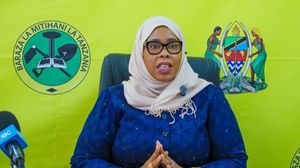
Representing the Minister for Education, Science and Technology, Deputy Permanent Secretary Dr Hussein Omar said universities must lead efforts to close the textbook gap.

“When we talk about producing enough books for higher education, it starts with universities themselves because that is where we have experts and researchers,” he said. “Institutions must review the books they are using and identify areas where new publications are needed.”

He added that universities should allocate funds within their budgets to support academic writing and publishing, while the government is also exploring ways to back such projects due to their national importance.

Reliance on foreign books

For decades, Tanzanian universities have relied largely on textbooks imported from Europe and North America. While many meet global standards, experts say they often fail to reflect local realities, especially in specialised fields such as medicine, engineering and agriculture.

In medical schools, for example, anatomy and clinical textbooks frequently use case studies, images and analogies unfamiliar to Tanzanian students, sometimes based on diets, diseases, or health systems found in Western countries.

Senior anatomist Prof David Ngasapa, MUHAS don and author of the new five-volume Human Anatomy series—the first of its kind in East Africa—said the challenge has persisted for years.

“For many years, our students have relied mainly on lecture notes, which vary from one lecturer to another. When they graduate, they leave without a standard reference book to guide professional practice,” he said. He added that some foreign books use examples students cannot relate to.  “In some books, the gallbladder is compared to a type of pea found in Europe, which many of our students do not know,” he explained.

The new series uses simplified language while maintaining scientific accuracy and aligns with Tanzania’s competency-based education curriculum.

A 20-year effort

Prof Ngasapa said the books were inspired by over four decades of teaching and the longstanding shortage of standard reference materials.

“Writing academic books requires a lot of time. While writing these books, I was also teaching and conducting research. It took me 20 years to complete the series,” he said. He urged fellow academics to abandon the belief that local scholars cannot produce high-quality textbooks.

“The capacity exists. We must have confidence in ourselves,” he said, adding that universities should treat academic publishing as an institutional project rather than a profit-driven venture.

Education analyst Dr Mark Guya said locally written books improve understanding because they use familiar examples. “Students grasp concepts better when they see them reflected in their own environment. Local textbooks make learning more practical and relevant,” he said.

He noted that Tanzania now has sufficient professors and senior lecturers to produce its own materials, unlike in earlier decades.

MUHAS Vice-Chancellor Prof Appolinary Kamuhabwa said academic publishing is a core responsibility of the university, particularly as the country’s oldest health training institution.

“Prof Ngasapa and his colleagues have shown that Tanzania must have its own books that match our curriculum rather than relying excessively on foreign publications,” he said.

The university supported printing to keep the books affordable and confirmed that digital versions are being prepared to increase access.