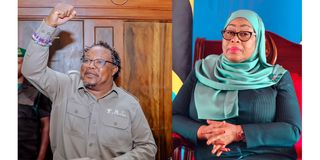
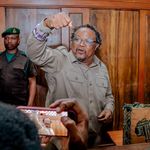
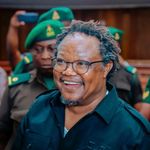
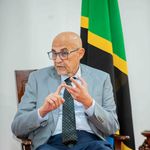
Dar es Salaam. The prosecution has objected to Chadema chairman Tundu Lissu’s request to call President Samia Suluhu Hassan and other senior government officials as defence witnesses in his treason trial.
Lissu named President Hassan, former Vice-President Philip Mpango and former Prime Minister Kassim Majaliwa among 11 witnesses he wants to testify in his defence after the High Court ruled on Friday, August 21, 2026, that he has a case to answer.
The three-judge panel, led by Judge Dunstan Ndunguru and comprising judges James Karayemaha and Ferdinand Kiwonde, informed Lissu of his right to defend himself, call witnesses or remain silent, in accordance with the law.
Lissu told the court that he would defend himself and call witnesses, asking it to issue summonses requiring them to appear.
Other witnesses on his initial list include Chief of Defence Forces General Jacob Mkunda, Inspector General of Police Camillius Wambura, Director of Criminal Investigations Ramadhani Kingai, the Director-General of the intelligence service, Chadema secretary-general John Mnyika, deputy secretary-general Aman Golugwa, deputy chairman John Heche and party information officer Brenda Rupia.
Lissu said the list was only the starting point and that he could name additional witnesses.
During an earlier stage of the proceedings, he had also listed Ugandan and Kenyan activists Agatha Atuhaire and Boniface Mwangi, retired Kenyan Chief Justice Willy Mutunga, Kenyan politician and lawyer Martha Karua, and Jambo TV director John Marwa. However, they were not included in Friday’s list.
The prosecution strongly opposed the request, arguing that Lissu had failed to follow the legal procedure for naming defence witnesses.
Senior State Attorney Nassoro Katuga told the court that while an accused person has the right to defend themselves and call witnesses, the witnesses should have been identified, together with their addresses, during committal proceedings at the Kisutu Resident Magistrate’s Court in accordance with sections 281 and 314 of the Criminal Procedure Act.
He said Lissu had mentioned the witnesses during a preliminary hearing at the High Court but should have formally identified them at the earlier stage of the proceedings.
Katuga also argued that some of the people Lissu wants to call had already testified for the prosecution, saying calling them as defence witnesses would amount to cross-examining them in a manner he described as procedurally improper.
On President Hassan, Dr Mpango and Majaliwa, Katuga argued that Lissu had not followed the legal procedure for summoning them, particularly the President, and that their evidence would have no relevance to the case.
He urged the court not to issue summonses simply because the accused had named the individuals as witnesses.
Senior State Attorney Ignas Mwinuka cited Section 9(b) of the Presidential Affairs Act, arguing that the law prevents a court from summoning the President to give evidence or attend court proceedings.
“The court has no power to issue a summons requiring the President to appear to give evidence in court or for any judicial proceedings,” Mr Mwinuka said.
Senior State Attorney Job Mrema warned that allowing the request could create a constitutional conflict, particularly if senior security officials were required to disclose information related to their duties.
“Therefore, it is our plea to this court that these witnesses should not be brought here to testify,” Mr Mrema said.
Lissu is charged with treason under Section 39(2)(d) of the Penal Code, Revised Edition 2023.
The charge stems from statements he allegedly made at Chadema headquarters in Dar es Salaam on April 3, 2025, regarding the party’s opposition to participating in the 2025 General Election and its alleged intention to prevent the election from taking place.
The prosecution alleges that Lissu, a Tanzanian citizen, incited the public to prevent the election by making statements intended to pressure the head of the Tanzanian Government.
Among the statements attributed to him are: “If they say this position amounts to rebellion, it is true ... because we are saying we will stop the election, we will mobilise rebellion ... that is how we will bring change ... we are going to make things happen ... we will disrupt this election for real ... we are going to make things happen very badly.”
The court is expected to rule on the prosecution’s objections and Lissu’s request to summon the proposed defence witnesses.
Register to begin your journey to our premium contentSubscribe for full access to premium content