When the volcanic Ol Doinyo Lengai mountain a Maasai name that translates to the sacred mountain of God, erupted in 2017, amidst the scrambling from the Government to rescue its people and the International media attention, a Maasai elder took cattle and matched towards the mountain, when he was later asked, he just said the gods were angry, so we sacrificed and the mountains will calm town.
True to his word, this mountain, the only one in the world that erupts natrocarbonatite, a black lava that turns white when it cools, did indeed cool down, with no deaths reported.
Tanzania has places that are major tourist attractions and considered sacred, with significant ancestral connections. Locals would only set foot on these locations on very special occasions.
Unfortunately, this mystery heightens tourists’ curiosity to visit them. At what point does a tourist's dollar become more important than preserving customs and traditions observed by the natives?
Daniel Joachim, an Arusha-based tour operator, has seen this too many times; he attests to seeing tourists' interests grow when they are warned not to traverse these holy grounds.
“There are places locals are very terrified to step foot on; it's these places that tourists demand I take them to, " he explained.
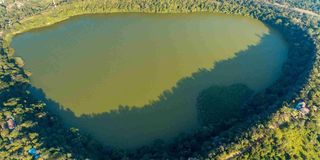
He further mentioned ‘Jicho la Duluti’ Duluti's eye, the local nickname for Lake Duluti, a small round crater lake outside Arusha. Local legend says that the lake is bottomless, with a snake-like creature living in it. From an aerial view, the lake looks like an eye, hence the name. Scientists have concluded the lake to be 9 meters deep.
The lake, which has no rivers feeding it water, in or out, adds to the allure. Tourists have flocked to the place, with activities like canoeing, bird watching and hiking.
Tourists visiting the place have often encountered locals gathering for prayers and have been instructed to pass quietly and at a distance away, to give them the respect and privacy they need. These days, lodges and makeshift camps have intruded on the once revered sanctuary pilgrimage site.
From Goma caves on the Goma hills within the Pare community to caves deep in the forest where Chagga fighters hid in their guerrilla wars against the Germans in 1893, these ancestral sites are venerated by the local communities.
Now they attract tourists. Though in some cases, locals have been hesitant to allow foreigners to visit them, the growing tourism interest has often superseded the local customs and taboos.
Daniel noted that it's important for local or village councils to work with tourism authorities to set guidelines on how traditions can coexist with the tourism interest.
“Tourism can help local communities, but careful observation of indigenous traditions must be considered; some of these sites have to be maintained so that they are not forgotten and that needs money,” he said.
Some of these sites do not carry spiritual significance to the communities, but folktales have made locals stay clear of these places for generations. One such place is Chizua waterfalls in Morogoro. Makene Ngoroma, a conservationist in Mikumi, knows this too well.
“Locals believed, at the Chizua waterfall lived a gigantic snake that was later ascended to the heavens and if they get close it will swallow them. Though it was considered an ancestral spiritual site, prayers were never conducted there,” he explained.
Looking back, he thinks it was one of the ways the elders used these village tales to protect the waterfall from encroachment. In 2024, Makene had to meet the elders and ask them for permission to take tourists for a hike to the waterfalls.
Though the chiefs agreed, locals vehemently refused to offer any help to Makene, who they considered an outsider and not part of the small, secretive Wavidunda tribe that resided there. After a few months, upon seeing how tourism had generated funds for village projects, the locals relented and supported tourists visiting their sacred mountain and its waterfalls.
Like many Tanzanian tribes, ancestral gravesites are considered prohibited grounds to ordinary people, especially outsiders, but some of these grounds carry such rich history that is practically impossible to not take visitors, Wavidunda have such grounds, Nzilaha ritual site, where their first chief Luanda Ngwira was buried, as well as the resting place for their revered traditional healer.
They have recently allowed travelers to visit but not take pictures or videos, believing that if you do that, your device will burn. Next to it is a giant ancestral tree they call mitamba, which they consider holy ground.
Though they allow one access to these places, they forewarn you and ask you to take off your shoes and to respect their rites before entering the place.
Makene urges more investment in the department of antiquities, so that these sites can be maintained together with the local communities. “History has to be preserved for future generations, so that they know their civilizations predate colonialism; they had people with their own sets of rules.
Customs and laws,” he said. “The law of antiquities states that any tree that reaches a century should be filed in the antiquities department to be protected, but many people in the communities do not know how to do that; they should be educated.”
In Zanzibar, where Francis Lous works, said that the island has caves that do not allow tourism activities and are only accessed by the locals. Other caves with no spiritual attachment to the communities are handed over to investors and those are the caves tourists visit.
He has personally visited the prohibited caves and seen pots and other ritual items left behind by the caves, a clear indication that these places remain active ritual sites for the locals.
He too had to be closely escorted by a native of that place. “Before we entered the cave, the local who escorted me had to recite some words; only then was it safe to enter,” he said.
Their clear policy of differentiating between these caves aims to pay utmost respect to local customs but also give tourists spots where they can do their expeditions, at places like Kuza cave, Nungwi, Jambiani and other accessible caves. Tour guides in Zanzibar have learned which caves to stay clear of and which to take tourists to. It is a mutually respectful approach.
Even popular tourist places in Tanzania, like Stone Town, had slave holding dungeons, the heritage coastal town of Bagamoyo has former slave quarters that still feel haunted.
The flagship safari destination Ngorongoro Crater is still regarded by locals as a respected sites as is the tallest mountain in Africa, Mount Kilimanjaro, which has its fair share of folktales from traditional chiefs that traces generations ago.
Tanzania has learned how to navigate between tourism and respecting local traditions and customs. A precarious balance that must be maintained and improved.