Josephine Christopher is a senior business journalist for The Citizen and Mwananchi newspapers
Mwananchi Communications Limitted
Dar es Salaam. President Samia Suluhu Hassan has challenged Tanzania’s financial sector to move beyond celebrating macroeconomic achievements and ensure economic growth translates into tangible improvements in the lives of ordinary citizens, particularly through affordable credit and broader access to financial services.
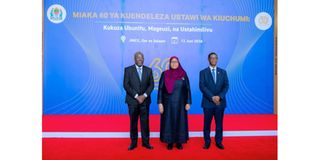
Speaking during the launch of celebrations marking 60 years of the Bank of Tanzania (BoT) on Thursday, President Hassan said indicators such as economic growth, financial inclusion and banking sector expansion would mean little if they fail to improve livelihoods, expand opportunities and support small businesses.
“We should not only measure success by the number of people accessing financial services,” she said.
She said, “We must ask how many people have increased their incomes, how many businesses have grown, how many farmers have accessed capital, and how many young people have transformed their ideas into viable enterprises.”
Her remarks come as Tanzania prepares to implement its Vision 2050 agenda, which aims to transform the country into a $1 trillion economy by mid-century.
While acknowledging significant progress in the country’s financial sector over the past six decades, President Hassan said access to affordable finance remains one of the biggest constraints facing entrepreneurs, farmers and small businesses.
She urged regulators and financial institutions to listen more carefully to complaints about the high cost of borrowing.
“When citizens complain about expensive loans, we should not respond only with economic theories,” she said.
According to the President, the cost of credit for many Tanzanians extends beyond interest rates and includes fees, insurance charges, collateral requirements and lengthy approval processes.
She called on financial institutions to improve transparency by clearly disclosing the full cost of loans before borrowers commit themselves.
The President also challenged banks to rethink traditional collateral requirements that continue to exclude millions of entrepreneurs operating in the informal sector.
She noted that many young people and small business owners lack conventional assets such as titled land, houses or vehicles but possess strong business records and reliable transaction histories.
“A person may not own a house title deed but may have years of successful business operations and a proven repayment record,” she said.
She said, “Trustworthiness is an asset that can be more valuable than visible property.”
She urged the Bank of Tanzania and financial institutions to explore mechanisms that would allow borrowers to use their financial histories and transaction records to demonstrate creditworthiness.
President Hassan also warned that digital financial systems should not become instruments that increase costs for businesses and taxpayers.
As Tanzania continues its transition toward electronic payments and reduced cash transactions, she said digital systems should make tax compliance easier and broaden the tax base rather than placing additional burdens on existing taxpayers.
“The objective should be to increase the number of taxpayers, not to increase the burden on those already paying taxes,” she said.
The President further linked financial sector reforms to the country’s broader development ambitions under Vision 2050, saying Tanzania’s long-term growth targets cannot be achieved through public resources alone.
Instead, she said, success will depend on a financial system capable of mobilising savings, directing capital towards productive investment and supporting private-sector-led growth.
Bank of Tanzania Governor Emmanuel Tutuba said the central bank has undergone a profound transformation since its establishment in 1966, evolving from managing a tightly controlled economy to overseeing a modern and increasingly sophisticated financial system.
He said economic reforms launched in the 1990s helped stabilise inflation, strengthen the banking industry and expand private sector financing.
According to him, inflation has averaged about 3.5 percent over the past three years, remaining within the East African Community convergence target.
Over the past 25 years, Tanzania’s economy has grown at an average annual rate of 6.2 percent, outperforming the Sub-Saharan African average of about 4.4 percent, while private-sector credit has risen from 6.6 percent of GDP in 1994 to about 16 percent in 2025.
The number of licensed banks has expanded from three in the early 1990s to 42 today, while non-performing loans have declined to 2.9 percent, below the regulatory benchmark.
Mr Tutuba also highlighted the central bank’s gold reserve accumulation programme launched in 2024 as part of efforts to strengthen external reserves and enhance economic resilience.
The programme has enabled the Bank of Tanzania to acquire 27.5 tonnes of gold valued at approximately Sh10 trillion.
President Samia praised the initiative, describing it as a strategic use of Tanzania’s natural resources to strengthen financial stability.
She said central banks in the modern era must do more than manage currency and monetary policy.
“They must protect data, anticipate economic risks before they emerge, and detect financial fraud before it affects citizens,” she said.
Looking ahead, the President said her aspiration for the Bank of Tanzania’s next 60 years is for the institution to become “the eyes of the nation” an institution capable of identifying both risks and opportunities before others see them.
The anniversary celebrations brought together central bank governors, policymakers, academics and development partners from across Africa and beyond to discuss the future of monetary policy, digital transformation and financial sector resilience in an increasingly uncertain global environment.
Register to begin your journey to our premium contentSubscribe for full access to premium content