Dar es Salaam. Whether during the rainy or dry season, overflowing sewage from manholes in several streets in Kariakoo continues to trouble traders, food vendors and thousands of people who visit the busy commercial hub for business.
In streets including Uhuru, Msimbazi and Sikukuu, wastewater frequently spills onto roads, producing foul odours and unsanitary conditions.
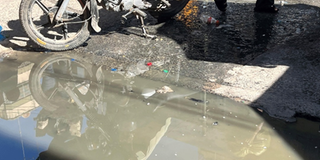
Despite repeated interventions by the Dar es Salaam Water and Sewerage Authority (Dawasa), which has periodically set up repair camps in Kariakoo to rehabilitate sewerage and drainage infrastructure, the problem persists in the densely populated and congested area.
Investigations by The Citizen’s sister newspaper Mwananchi, conducted at different times in January, found that ongoing construction activities in Kariakoo are among the major contributors to the problem.
The dumping of solid waste such as clothes, stones, tyres and plastic materials into sewer systems has also been cited as a key cause of blockages.
A petty trader along Sikukuu and Mchikichi streets, Mr Salehe Othman, said the problem directly affects business as customers cannot comfortably stop to browse.
“When sewage overflows, the whole area smells. Customers cannot stand here; they pass quickly or go elsewhere,” he said.
A household goods trader, Mr Shaaban Said, said the situation becomes worse during heavy rains, when parts of Kariakoo turn into pools of dirty water and, in some areas, human waste floats on the surface.
“You arrange your goods and suddenly water starts coming out slowly, and later it flows with sewage. When it rains, the situation becomes even worse,” he said.
A food vendor operating along Uhuru and Sikukuu streets, Ms Zainabu Zawadi, said the problem disrupts daily business activities whenever manholes overflow.
“When people see sewage flowing near a place where food is sold or displayed, they hesitate to buy because they fear contamination from nearby buildings,” she said.
Pedestrians also complained of constant inconvenience, saying they are sometimes forced to walk through sewage or change routes, increasing health risks.
A resident of Dar es Salaam, Ms Sauda Shaibu, said women wearing long dresses often struggle to avoid dirty water.
“Those of us who wear long dresses have a hard time. You have to hold your dress to avoid the dirty water. On Msimbazi Road, motorcycles and cars splash filthy water, which is very risky,” she said.
Kariakoo West Street chairperson, Mr Said Omary said the sewage problem has become chronic due to ongoing construction that blocks drainage channels and underground systems.
“We were informed that the old systems would be removed and replaced with new ones, and we are still waiting. Construction activities have blocked existing systems, so when water reaches blocked areas it has nowhere to go except to overflow,” he said.
What authorities say
Dar es Salaam City Council engineer, Mr Issack Mtega, said the problem is largely caused by illegal connections of sewer lines into storm-water drainage systems.
He explained that storm-water systems were designed strictly to carry rainwater, but they have been interfered with by sewage connections, reducing efficiency.
“People have connected sewage lines to storm-water systems. When it rains or when toilets are flushed, wastewater backs up and floods the streets,” he said.
Mr Mtega said the current strategy involves inspecting houses one by one and directing property owners to disconnect improperly connected systems.
“This problem affects the entire Kariakoo area and some other parts of the city. We may even need consultants to reassess the whole system. The city allocates up to Sh300 million annually for unblocking drains,” he said.
He added that whether it rains or not, conditions in Kariakoo remain the same because systems have been altered, exposing residents and traders to contaminated water.
“People end up walking in water mixed with sewage, which poses serious health and environmental risks,” he said.
Unplanned construction
Mr Mtega acknowledged that ongoing construction in Kariakoo has worsened the situation, with some drainage channels being blocked or built over without observing infrastructure layouts.
“In the past, there were separate sewer and storm-water systems, but many have been blocked. People build without considering underground infrastructure,” he said.
He added that while some areas have been upgraded with new systems, older ones remain in place, causing inefficient water flow.
Dawasa Director of Sewerage, Ms Lidya Ndibalema, said frequent blockages result from improper use of sewer systems, including the dumping of solid waste into toilets and drains.
She said Dawasa operates 24-hour emergency teams equipped with vacuum trucks and high-pressure cleaning machines to respond to blockages.
“Blockages are common because people use toilets daily and foreign materials get stuck in the lines. When we respond, we often find sand and debris. Once we receive reports, our teams act immediately,” she said.
Ms Ndibalema added that sewer cleaning is part of routine maintenance, not only an emergency response, with lines cleaned section by section to prevent major blockages.
She said Dawasa is also constructing modern wastewater treatment plants in areas such as Buguruni and Jangwani.
Large pipelines, she explained, collect wastewater from residential areas through the city centre, including Upanga, before pumping it to central treatment plants.
“These major plants are accompanied by rehabilitation of old systems to increase capacity for collecting and treating wastewater as the city’s population grows,” she said.
She stressed that controlling blockages depends heavily on public cooperation in using sewer systems properly and reporting problems early.
“Even after cleaning today, blockages may occur again tomorrow. That’s why our teams remain on standby. But if residents use the systems correctly, the problem will significantly reduce,” she said.
Ministry strategy
On January 14, 2026, Water Minister Jumaa Aweso said cooperation between the governments and South Korea will strengthen sewerage services in Dar es Salaam and surrounding areas.
Speaking after holding talks with South Korea’s Ambassador to Tanzania, Ahn Eunju, Mr Aweso said the two countries are jointly implementing a $90 million (Sh223.65 billion) sanitation improvement project expected to benefit about 1.8 million residents in the city, noting that the project is being implemented by Dawasa.
He said discussions held in Dodoma focused on strengthening water supply and sanitation services, water resource management, wastewater treatment, rainwater harvesting and investment opportunities in the water sector.
Mr Aweso said the project is currently being implemented in Dar es Salaam City and Kinondoni council and has reached 10.8 percent completion.
He added that the project will improve wastewater management systems to match the expected increase in clean water usage.
Mr Aweso said a modern wastewater treatment plant being constructed in Buguruni will replace the outdated pond-based treatment system currently in use.
Register to begin your journey to our premium contentSubscribe for full access to premium content