Sustainability concerns as Dar CNG stations face low uptake amid high conversion costs

Dar es Salaam. High conversion costs is among factors that continue to deter private motorists from switching to compressed natural gas (CNG), slowing adoption despite the rapid expansion of refuelling infrastructure in the city.

The rate at which vehicles are being converted from petroleum products to CNG is not keeping pace with the growing number of gas filling stations.
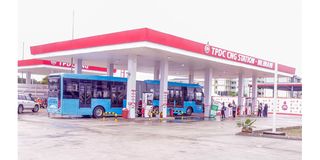
This imbalance is raising concerns about the long-term sustainability of the CNG business model. Data compiled by The Citizen shows that establishing a single CNG station can cost up to twice as much as setting up a conventional petrol station in an urban area.

When fuel prices crossed the Sh3,000 mark in 2022, the government launched efforts to promote vehicle conversion to gas.

At the same time, it encouraged private investors to establish more refuelling stations to ease congestion and widen access.

Under normal market conditions, the lower cost of gas would be expected to drive demand. One kilogramme of CNG can power a vehicle for about 13 to 18 kilometres at a cost of Sh1,548.

Petrol powers the same vehicle for 10 to 15 kilometres at Sh2,788 per litre, while diesel costs Sh2,701 per litre. Despite this clear price advantage, uptake has remained slower than projected.

Dar es Salaam currently has 11 CNG refilling stations, with plans to expand to 18 by the end of the year. The expansion depends on more private sector participation.

However, vehicle conversion rates have not matched infrastructure growth. This has complicated business operations for station owners and investors.

A supervisor at Tembo Energies, Mr Ambilikile Mwangolombe, said their outlets once served more than 1,000 vehicles and motorised tricycles daily.

Today, the figure has fallen to between 100 and 200 vehicles per day.

“This means sales have declined,” he said. “We are now considering opening a new station in an underserved area to expand coverage.”

He added that low conversion rates are partly linked to the failure of the government to lead the process through examples.

He said wider conversion of government fleets would help to boost demand.

At Rafki CNG Station, supervisor Ms Mariam Kibona said their station, which opened in September last year, serves about 400 vehicles daily. This is low compared with pump capacity.

She said customers report significant savings, especially those engaged in online transport and delivery businesses.

The number of vehicles using natural gas has risen to 16,200, from just 60 in 2015. This includes 9,806 three-wheelers, 513 trucks, 783 buses and BRT vehicles, and 5,098 private cars.

However, the long queues that once defined CNG stations have largely disappeared. This signals slower-than-expected growth in daily usage.

Efforts to increase uptake

The Director General of the Tanzania Petroleum Development Corporation (TPDC), Mr Mussa Makame, said the initial priority was to reduce congestion by increasing the number of stations.

“That objective has largely been achieved,” he said. “The focus is now on ensuring the expanded infrastructure attracts enough customers to operate sustainably.”

He noted that many stations are privately owned and are actively promoting CNG use.

While some outlets appear quiet in terms of private vehicles and three-wheelers, industrial demand remains strong. Large trucks continue to collect gas in bulk for factory use.

In the 2023/24 budget, the government introduced incentives to stimulate demand. These include a 25 percent customs duty exemption for imported CNG vehicle engines to reduce conversion costs.

TPDC has also partnered with the Dar es Salaam Institute of Technology to establish vehicle conversion workshops in Dodoma and Arusha.

Similar facilities are planned for Kilimanjaro and Tanga.

High conversion costs

BQ Contractors Limited Chief Executive Officer, Mr John Bura, said converting a petrol-powered vehicle to CNG costs about Sh2.1 million.

He added that investors also face heavy capital requirements, with a single CNG station costing up to $2 million, excluding land.

“Commercial drivers, especially ride-hailing taxi operators, can recover costs in about eight months,” he said. “Private car owners remain hesitant because of the high upfront expense.”

The Director General of the Petroleum Upstream Regulatory Authority (PURA), Mr Charles Sangweni, said Tanzania’s population growth and regional energy demand would keep natural gas relevant, even as the world shifts towards renewable energy.

As Tanzania pursues cleaner, locally sourced energy, analysts say the central challenge is no longer infrastructure alone.

It is the slow pace of consumer conversion. For private motorists, the decision remains a difficult calculation between high initial costs and long-term savings.