This strategic move aims at slashing a $1 billion annual import bill and transforming the nation into a regional medical manufacturing hub
Dar es Salaam. The government and private investors have agreed to deepen cooperation to fast-track local pharmaceutical production as Tanzania pushes to cut its heavy import bill and position itself as a regional hub for medicine manufacturing and medical tourism.
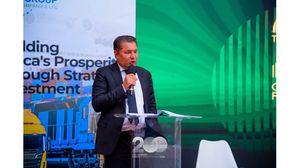
The shared resolve came to the fore during the Tanzania Pharmaceutical Production Investment Forum on Monday, January 19, 2026, which brought together the government institutions, local manufacturers, foreign investors, financiers and regulators to deliberate on how best to unlock the sector’s vast potential.
Opening the forum, minister for Health Mr Mohamed Mchengerwa said Tanzania’s reliance on imported medicines was no longer sustainable, especially after lessons from the Covid-19 pandemic and global supply disruptions.
“National health security cannot be built on dependence on imported medicines alone. It must be built by encouraging local investments, strengthening the capacity of our industries and integrating them into regional and global value chains,” Mr Mchengerwa said.
He noted that Tanzania currently imports more than 80 percent of its pharmaceutical products and medical devices, spending an estimated $1 billion (about Sh2.6 trillion) annually. This, he said, puts pressure on foreign exchange reserves and exposes the country to supply shocks.
To reverse this trend, the government has set a clear target of producing at least 50 percent of hospital medicines and medical equipment locally, while also supplying regional markets, including the East African Community (EAC) and beyond.
A key plank of this strategy is the Pharmaceutical Investment Acceleration Taskforce (PIAT), established to fast-track approvals and remove bottlenecks.
Under this arrangement, processes such as licensing, land access, taxation and product registration will be handled concurrently rather than sequentially. “The pharmaceutical sector cannot wait for slow, conventional decision-making. We have put in place fast-track mechanisms so that serious investors get clear and timely decisions,” the minister said.
He also announced the development of pharmaceutical manufacturing hub clusters at Mloganzila and Kibaha, including a 40,000-square-metre industrial area in Kibaha near the Kwala SGR station.
The hubs will be supported by a $10 million government-backed shared laboratory facility to support quality testing and bioequivalence studies.
From the industry side, Tanzania Pharmaceutical Manufacturers Association (TPMA) chairman Bashiru Haroun said the country offers strong fundamentals for pharmaceutical investment, citing political stability, a growing healthcare sector and rising medical tourism.
“Over the years, local investors have established facilities covering parenterals, solid dosages, capsules and liquid formulations, all meeting internationally accepted standards,” he said. “With the government targeting over 50 percent local production, the opportunities for joint ventures and technology transfer are huge.”
Deputy minister for Finance Mshamu Munde underscored the economic logic behind the push, noting that countries dependent on imports are vulnerable to external shocks.
“Tanzania has made a deliberate policy choice to strengthen local production of pharmaceuticals, medical devices and diagnostics. This is both a public health imperative and a major industrial opportunity,” he said.
He added that recent amendments to the Public-Private Partnership (PPP) Act in 2023 have improved flexibility and transparency, aligning PPP projects with incentives under the Tanzania Investment and Special Economic Zones Authority (Tiseza).
Under the Special Economic Zones (SEZ) and Export Processing Zone (EPZ) schemes, investors enjoy incentives including a 10-year corporate tax holiday, VAT and import duty exemptions on production-related inputs, and relief from local government levies.
Data presented at the forum shows a sharp rise in investment interest. Registered pharmaceutical projects rose from zero in 2021 to 14 in 2025, with capital inflows jumping to over $87 million last year. However, experts agreed that much more investment is needed to meet national and regional demand.
Foreign investors also expressed optimism. A representative of an Indian pharmaceutical firm exploring entry into Tanzania, Mr Hizda Mbughi, said the country’s policy clarity and PPP readiness were encouraging.
“We see Tanzania as a gateway to East and Central Africa. The government’s commitment to market assurance and quality standards gives confidence to long-term investors,” he said.
Local manufacturers have been raising concerns over procurement practices, taxation and coordination among agencies such as TRA, TMDA and port authorities.
They called for advance payments through the Medical Stores Department (MSD) and removal of VAT on locally produced medical devices to improve competitiveness, a concern that the government said it’s already being worked upon.
Responding, Mr Mchengerwa assured investors that once local manufacturers meet international quality standards, the government will use procurement, tariff and regulatory tools to protect them from unfair import competition.
“No investor will be asked to build factories in Tanzania only to be frustrated by unfair imports. That era is over,” he said.
As Tanzania positions itself as a pharmaceutical and medical tourism hub, the message from the forum was clear: government and investors are now rowing in the same direction, with shared strategies to turn ambition into reality.