Tanzania launches campaign to break barriers to girls’ education

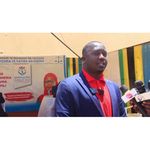
Minister for Education, Science and Technology, Prof Adolph Mkenda, shares a light moment with students of St Peter Clever Secondary School, Dodoma, during the commemoration of the 2026 International Day of Women and Girls in Science held on Wednesday, February 11, 2026. PHOTO | KATARE MBASHIRU
By Katare Mbashiru

Dodoma. The government has launched a sweeping campaign aimed at dismantling barriers to girls’ education, reducing school dropout rates, and promoting the re-entry of adolescent mothers and other vulnerable girls into the classroom.

Dubbed “Africa Educates Her,” the campaign is organised by the African Union International Centre for Girls’ and Women’s Education in Africa (AU/CIEFFA) and represents a major step in the country’s ongoing efforts to transform the education landscape for girls.

The initiative seeks to deliver sustainable, long-term impact on the lives of girls and their communities.

The high-level campaign was officially launched on Wednesday, February 11, 2026, by the Minister of Education, Science and Technology, Prof Adolph Mkenda, as Tanzania joined the global community in commemorating the 2026 International Day of Women and Girls in Science.

Globally themed “From Vision to Impact: Redefining STEM (Science, Technology, Engineering and Mathematics) by Closing the Gender Gap,” the day was marked nationally in the capital, Dodoma, under the theme: “Synergizing Artificial Intelligence, Social Science, STEM and Finance towards Vision 2050: Building an Inclusive Future for Women and Girls.”

The 2026 observance emphasises concrete actions, new technologies, and the use of Artificial Intelligence (AI) to foster inclusive STEM ecosystems.

It also serves as a call to move beyond policy recommendations towards practical implementation, particularly in addressing the impact of technology on gender equality.

The “Africa Educates Her” campaign responds directly to disruptions that disproportionately affect girls’ access to education.

It addresses persistent challenges such as long distances to school, lack of sanitary supplies, early marriage, harmful cultural practices, and economic hardships that force many girls out of school.

A central pillar of the initiative is supporting girls who have dropped out, especially those affected by pregnancy or financial difficulties, to return to school and complete their education.

The campaign brings together a broad coalition of stakeholders, including the African Union, the Tanzanian government, non-governmental organisations, youth advocates, and traditional leaders, to foster a supportive and inclusive environment for girls’ education.

In his remarks, Prof Mkenda reaffirmed the government’s commitment to encouraging young girls to pursue science subjects, noting that top-performing students will continue to benefit from scholarships to study abroad under the popular “Samia Scholarship Extended” programme.

“We are determined to create opportunities that will enable girls to excel in science and technology fields, which are critical for national development,” he said.

Representing the Parliamentary Committee on Education, Culture, and Sports, Mr Mabula Magangila underscored the importance of empowering young women and girls to actively engage in science education and related activities.

“Science is the main solution to various challenges facing the globe today. Therefore, it is important to engage every stakeholder in the inclusivity value chain,” he noted.

On the occasion, Deputy Minister for Community Development, Gender, Women and Special Groups, Ms Maryprisca Mahundi, said her ministry remains at the forefront of efforts to inspire girls to take up science subjects and pursue careers in STEM fields.