Dar es Salaam. As the number of vehicles continues to rise in Dar es Salaam, the need for an efficient parking management system is becoming increasingly apparent.
The government and local authorities have been relying on parking fees as a source of revenue and a means of regulating the use of public spaces.
However, despite this intention, some motorists say the implementation of the system still faces challenges that need to be addressed.
The main complaint in Dar es Salaam concerns how vehicles are scanned and charged parking fees in different parts of the city.
Some citizens say the system does not reflect real-life traffic conditions, leading to situations where drivers are charged multiple times within a short period or accumulate unjustified debts.
Residents who spoke to The Citizen’s sister newspaper, Mwananchi, at different times said the system needs transparency, easier access to payment records, and improved technology to distinguish between a parked vehicle and one that has stopped briefly due to normal city traffic.
Public complaints
In May this year, a video circulating on social media showed a resident confronting a parking enforcement officer who was scanning vehicles stuck in traffic congestion.
The resident argued that vehicles trapped in traffic jams should not be considered parked and, therefore, should not be charged parking fees.
Similar complaints were raised by another resident who said officers were scanning vehicles parked within residential areas.
Another resident, Mr Joseph Elias, said there is no clear procedure governing the scanning process, leading to situations where a single vehicle is scanned multiple times within a short period.
He said a driver can park on one street and be charged, then move to another area and be charged again by different officers within the same short period.
“I often wonder whether the systems communicate, because if you do not check your balance, you may end up with huge accumulated parking charges,” said Mr Elias.
He added that officers sometimes scan vehicles immediately after they stop, without giving drivers time to decide whether they are parking or only stopping briefly.
“This is unfair. Sometimes a person just stops or turns the vehicle, but they are still charged,” he said.
Another resident, Mr Enock Goodluck, said the system has become a financial burden due to rapidly accumulating charges and penalties.
“You can park for a few minutes and get charged, then move again and be charged again. Sometimes my parking debt can reach Sh10,000 if I delay payment due to penalties,” he said.
Mr Goodluck added that the system sometimes shows old debts from places he visited days earlier, even though he has not returned there.
He called for a grace period before charging parking fees to distinguish between parked and temporarily stopped vehicles.
He also urged the establishment of proper long-term parking areas to reduce repeated charges.
A driver, Mr Amin Msomali, who was once arrested in Gongo la Mboto, said he was told he owed Sh5,000 for parking in places he had never actually stopped.
Mayors speak out
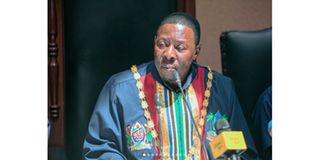
Kinondoni Mayor Songoro Mnyonge said the issue has already been forwarded to the ministry responsible for local government because the system is centrally managed.
He said the main flaw is the failure to indicate the exact time a vehicle is parked, allowing officers to issue multiple charges.
“This allows an officer to charge a vehicle even up to 10 times. That is why there are so many complaints,” he said.
He added that previously, tickets were placed on vehicle windscreens showing time stamps, which made it easier to track duration.
Mr Mnyonge also noted that Dar es Salaam’s municipalities are closely connected, making it necessary for systems to communicate across districts.
Temeke Mayor Uzairu Athuman said the issue should be reviewed to improve efficiency and fairness, stressing that the goal is revenue collection, not exploitation of citizens.
Parking attendants speak
Some parking attendants, speaking anonymously, said they operate under strict daily revenue targets set by employers.
They said failure to meet targets could cost them their jobs, pushing them to maximise collections.
In busy areas such as Kariakoo, daily targets can start from Sh200,000.
They also said they earn commissions when they meet or exceed targets.
Another attendant said they are required to scan all vehicles within their assigned streets every hour, regardless of whether the vehicle has moved.
They acknowledged public complaints but said they are simply implementing government rules within assigned areas.
Government response
Deputy Minister in the President’s Office (Regional Administration and Local Government), Mr Festo Dugange, said the government will investigate the complaints.
He said there is a structured system where parking fees are charged within municipalities, but confusion arises when vehicles move between districts within a short time.
“I will follow up to understand the root cause of these complaints and obtain full details before responding,” he said.
Register to begin your journey to our premium contentSubscribe for full access to premium content