Tanzania pushes for greater awareness and inclusion for autism

Dar es Salaam. For years, autism in Tanzania lived in the shadows, misunderstood, mislabelled and, in many cases, hidden behind closed doors. Families quietly coped with stigma, while children were denied basic services and the chance to belong.

Today, the narrative is shifting. Slowly, but noticeably, autism is beginning to be recognised not as a matter of charity, but as a human rights and development issue, one that demands collaboration across health, education, communities and government.

That message came through clearly at the recently held Autism Awareness Charity Gala Dinner in Dar es Salaam, organised by Lukiza Autism Foundation, which also marked the organisation’s fifth anniversary.

Speaking at the event, a board member of Women Fund Tanzania Trust and founder of Nendiwe Feminist & Wellness Centre, Ms Mary Rusimbi, challenged society to abandon sympathy-based approaches.

“It is time to move away from seeing support for people with autism as charity. This is a matter of rights,” she said. Her words reflect a growing consensus among experts: without deliberate systems to recognise, diagnose and support autism, Tanzania risks leaving thousands of children behind.

Globally, the World Health Organisation estimates that one in 100 children is on the autism spectrum. In Africa, data remains limited due to weak diagnostic systems, cultural misconceptions and lack of trained professionals.

In Tanzania, there is no official national autism registry, but health experts agree that cases are rising-not necessarily because autism is new, but because awareness and detection are improving.

Yet access to specialised services remains concentrated in urban centres, leaving rural families especially vulnerable.

The government has increasingly acknowledged autism in public speeches and policy discussions.

In recent years, authorities have committed to improving early detection, treatment and inclusive education, while calling for stronger anti-stigma measures.

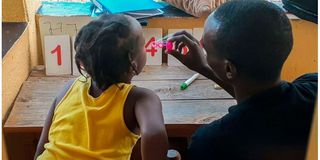
A notable step has been the teacher training project on autism detection, launched in Dar es Salaam, aimed at equipping educators with skills to identify early signs of autism and refer pupils for support.

Education officials say this is crucial, as schools are often the first place where developmental differences become visible. “Policies exist, but services on the ground are still very limited,” said chairperson of Lukiza Autism’s board, Dr Edward Kija. “Many children are diagnosed late, and some never reach a health facility at all.”

For Rehema Mussa, a mother from rural Coast Region, the journey has been lonely and exhausting. Her son, now nine, showed signs of autism at an early age, delayed speech, difficulty with social interaction and extreme sensitivity to noise.

“People told me I had bewitched my child, or that I had failed as a mother,” she recalls. “Even teachers did not understand. Some said he was stubborn or mentally ill.”

At the local primary school, her son was repeatedly punished for behaviours he could not control. Teachers lacked training, and there were no support structures. Eventually, Ms Mussa withdrew him from school. “If teachers were trained, my child would still be in class,” she said. “Awareness is everything.”

Her experience mirrors findings from several studies showing that misconceptions among educators and communities remain one of the biggest barriers to inclusion.

Civil society filling the gaps

Organisations like Lukiza Autism Foundation have stepped in to bridge these gaps-through awareness campaigns, parent support, advocacy and professional training.

According to founder and executive director, Ms Hilda Nkabe, the gala dinner had five key objectives, including fundraising for a five-year child wellbeing project, launching Run 4 Autism 2026, and recognising autism champions.

“So far, autism awareness has reached about 30 percent of Tanzanians through media and campaigns,” she said. “We have also trained more than 250 university students in inclusive and therapeutic skills.”

Experts note that anxiety is one of the most overlooked challenges for people with autism, often affecting learning, communication and daily functioning—underscoring the need for holistic support beyond diagnosis.