Dar es Salaam. The government has turned its attention to electricity exports after commissioning of the Julius Nyerere Hydropower Project (JNHPP) pushed installed generation capacity well above peak national demand.
The minister for Energy, Deogratius Ndejembi, said on Saturday that the country’s electricity generation capacity has now reached 4,646MW, against peak demand of 2,271MW, leaving a surplus of about 2,375MW.
The development has shifted Tanzania’s electricity position from addressing domestic shortages to exploring opportunities to supply neighbouring markets.
The government is already in discussions with countries including Zambia, Kenya and the Democratic Republic of Congo (DRC), while Tanzania’s membership of both the Eastern Africa Power Pool (EAPP) and Southern African Power Pool (SAPP) gives it access to wider regional electricity markets.
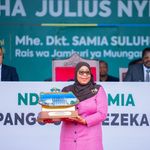
Speaking during the commissioning of JNHPP in Rufiji, Coast Region, Mr Ndejembi said President Samia Suluhu Hassan had ordered the treatment of electricity not only as a public service but also as a product that could be traded.
The government has completed negotiations with Zambia for the sale of 1,000MW, while discussions with other markets are continuing.
The strategy is expected to generate foreign exchange while creating room for further investment in electricity generation and transmission.
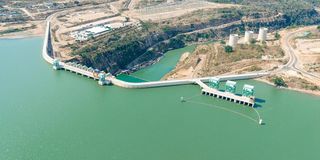
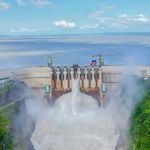
JNHPP (pictured) has nine generating units, each with a capacity of 265MW, giving it a total installed capacity of 2,115MW.
The project was contracted to Egyptian companies, Arab Contractors and Elsewedy Electric in December 2018 at an initial cost of about Sh7.452 trillion, with the government financing the entire project.
Analysts say after attaining the production level, focus should be at exporting the surplus and powering industries.
Former legislator, Zitto Kabwe, said Tanzania should use its strategic position between the two regional power pools to increase electricity exports.
“We must now use our strategic position between the East African and Southern African Power Pools to trade our surplus electricity. We must sell power to Zambia, the DRC and Kenya and target more than $1 billion in foreign exchange from these markets,” Mr Zitto, who is also an economist, said.
He said export earnings should help finance new power projects and expand access to affordable electricity.
An economist from the University of Iringa, Samson Rutashobya, said Tanzania should use the surplus electricity to support industrial expansion while pursuing export markets.
“The completion of this project gives Tanzania an important opportunity to use electricity as a driver of economic growth,” he said.
Mr Rutashobya said reliable electricity could encourage investment because industries would have greater confidence in the availability of power for production.
Executive Director of the Research on Poverty Alleviation (Repoa), Dr Donald Mmari, said infrastructure needed to be improved so that increased generation translated into economic activity.
“The government must now move with speed to improve infrastructure and ensure that the electricity we are generating is sufficient for our own needs and that any power exported to other countries also benefits Tanzanians,” he said.
Dr Mmari said improved electricity supply should also support the development of industrial clusters across the country.
Former Chadema chairman, Freeman Mbowe, said the project should contribute to broader economic and social development.
“We do not expect this electricity to be used merely to switch on lights. We expect it to power industries, improve social services and contribute significantly to rural development,” he said.
Transmission the next priority
Mr Ndejembi said despite the surplus in generation, distribution infrastructure remains a challenge in some areas.
The government’s focus, therefore, is shifting from generation alone to strengthening transmission and distribution, while building the capacity needed to turn Tanzania’s electricity surplus into a regional export opportunity.
“We recognise that increasing generation capacity alone is not enough. We must have a network capable of reaching and transmitting all the electricity to different parts of our country,” he said.
One of the key projects is the 400kV Chalinze-Dodoma transmission line, which has been completed and connected to the JNHPP transmission system.
Mr Ndejembi said the line has allowed more electricity from JNHPP to reach Dodoma, contributing to an increase in peak demand from 2,113MW to 2,280MW within three days of being switched on.
The government is also preparing to construct a transmission line from Chalinze through Mkuranga and Kisarawe to increase the capacity to move electricity and accommodate rising demand.
Other projects include upgrading the 220kV Ibadakuli transmission line in Shinyanga to 400kV, with the network passing through Dodoma and Singida towards Shinyanga.
The upgrade is expected to increase electricity supply to the Lake Zone, where demand is being driven partly by mining activities.
The government also expects peak national demand to rise to about 2,500MW as the transmission network expands.
Construction of the Tanzania-Uganda transmission line is also expected to begin soon, with the project intended to increase power availability in mining areas in Geita and Kagera.
Register to begin your journey to our premium contentSubscribe for full access to premium content