Land disputes undermine women’s secure land rights
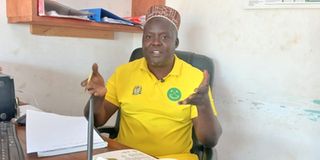
Matongolo Village chairman Yahaya Ndunda explains a point to a journalist during an interview at his office in Kilosa District, Morogoro Region. PHOTO | NASRA ABDALLAH
Dar es Salaam. Although women have the legal right to own land, some are losing access to it because of disputes that deprive them of opportunities to farm and support their families.
Kilosa District in Morogoro Region is among the areas where women have been affected by land disputes.
Interviews by The Citizen’s sister publication, Mwananchi in Matongolo, Chanzulu and Ilonga villages found that disputes had affected women’s livelihoods and efforts to secure land for economic activities.
Blandina John, a Matongolo resident, said after divorcing her husband, she returned to her family home, where relatives gave her a piece of land to live on with her children.
However, she said the land was later claimed by Abdallah Mjanganja, who said he owned more than 400 acres allocated to him by the village government in 1993.
Mr Mjanganja said he legally owned the land after buying it in 1993 and had documents to prove ownership. He claimed residents encroached on the area after its value increased following the construction of a tarmac road.
Ms John said the dispute had again left her without land despite her family’s efforts to help her secure a livelihood.
“I failed to own land while I was married, but even after my family decided to give me a piece of land, the dispute has taken that opportunity away from me again. Where should women go?” she asked.
Mapenzi James, another woman affected by the dispute, said their father left them about five acres in 1998, which was to be shared among six children, including four sons.
She said the siblings agreed to allocate equal portions to the daughters, but encroachment and disputes had affected the land.
Mwajuma Kunje said they previously owned farms that they leased to other people, but lost the income after an investor claimed the land.
“We now struggle to make ends meet. We have children to educate and other basic needs. We are asking the Government to look into the land disputes in our village,” she said.
Three years without farming
In Chanzulu, Mwasiti Mwailege said her parents gave her a farm in 2015, having owned it since 1965. The land is now disputed, leaving her without access to it. She said she had gone three years without cultivating the farm and could not afford to rent another plot.
“If I had a farm, it would be easier even to borrow money because people would know I could repay it. Now I cannot because I have nothing,” she said.
In Ilonga, farmer Nuru Mgweno said livestock entering her farm and destroying crops had also caused losses.
She said she had reported the matter to village leaders but no action had been taken.
Village leaders speak
Matongolo Village chairman Yahaya Ndunda said he was aware of the long-running dispute between the village government and Mr Mjanganja. He said residents were not informed about the case until people arrived to demolish their houses.
In Ilonga, village chairman Malonga Pascal said more than 2,000 of the village’s approximately 4,000 acres were affected by disputes, limiting access to land for residents, including women who depend on farming.
He said about 7,000 villagers had consequently been allocated a quarter of an acre each, forcing them to rent additional land.
Some tenants, he said, paid bags of rice, while others were charged up to Sh150,000 per acre.
“What can a quarter of an acre do for someone? It is not enough even for building a house. If this continues, people will remain poor,” he said.
Morogoro Assistant Regional Land Commissioner Idrisa Kayera said authorities allocated residents in Matongolo 80 acres after determining that they had encroached on the disputed land, partly because they had already built homes there.
In Chanzulu, he said the farm was returned to the Government after the Sisal Authority failed to develop it, while residents who had been farming there were instructed to form groups to receive plots.
In Ilonga, he said residents had been renting farms from the Agricultural Seed Agency (ASA) but later sought ownership.
Land commercialisation
HakiArdhi executive director Cathbert Tomitho said land disputes, alongside cultural practices, were limiting women’s access to land. He said women were particularly affected because they make up a large proportion of farmers and agricultural producers.
Mr Tomitho said the commercialisation of land was contributing to disputes, particularly in Morogoro, where agriculture is a major source of livelihoods.
“In Morogoro, there is a lot of land trading, with many buyers coming from outside the villages, while both women and men are among those selling,” he said.
Lawyer Jebra Kambole said poor land management, including by officials responsible for administering land, was another source of disputes.
He said large areas remained unsurveyed and lengthy procedures discouraged people from formally surveying their land.
Some cases also took years to resolve, while enforcing court decisions could be difficult.
“That is why you can find someone who has won a case, but the District Commissioner comes and makes a different decision, the Regional Commissioner intervenes, one says the farmer should cultivate the land and another says they should not,” he said.
Mr Kambole said the Government had also contributed to some disputes by holding undeveloped land that residents later occupied and built on before authorities reclaimed it.
To be continued tomorrow
Register to begin your journey to our premium contentSubscribe for full access to premium content