Unregistered electric bikes and tricycles raise alarm over safety, crime in Tanzania

Dar/Dodoma. Most electric tricycles and bikes operating in Dar es Salaam and Dodoma are running without registration, insurance, or visible number plates, despite clear legal requirements, a recent investigation by The Citizen has found.

The situation exposes residents in the two cities to heightened risks of preventable accidents and crime, as offenders can engage in such incidents and easily flee the scenes.
The Crime and Traffic Incidents Statistics Report for 2025 indicates that between January and December 2024, Tanzania recorded 1,735 major accidents, two more than the 1,733 crashes reported over the same period in 2023.

The document, prepared by the National Bureau of Statistics (NBS) and the Tanzania Police Force (Tanpol), shows that 1,715 people died and 2,719 were injured in incidents recorded in 2024, compared with 1,647 deaths and 2,716 injuries during the same period in 2023.

Furthermore, the report shows that from January to June 2024, a total of 259 motorcycle accidents were reported nationwide, up from 216 during the same period in 2023, representing a 19.9 percent increase.

Road accident deaths rose from 191 to 223 over the same period, a 16.7 percent increase, with Temeke, Kinondoni, and Dodoma among the country’s regions recording the highest numbers.

The Africa E-Mobility Report 2025: Trends, Policies, and Investments in Electric Mobility shows that two- and three-wheelers dominate the East African market, with Tanzania leading at an estimated 10,000 units, most of which are lead-acid scooters.

It notes that commercial E2W adoption leads due to strong product-market fit and financing, positioning Africa for scalable e-mobility growth amid global electric vehicle shifts. Despite the world’s transition from fossil fuels to clean energy, the rapid uptake of electric mobility, particularly electric cargo tricycles and bikes increasingly seen on Dar es Salaam and Dodoma streets, underscores the need for immediate regulatory action.

The situation contravenes Section 57(b)(I–IV) of the Amended Motor Vehicle (Tax on Registration and Transfer) Act, Cap. 124, 2023, which explicitly recognises electric vehicles, including two- and three-wheelers, within Tanzania’s legal framework.

It also violates the Road Traffic Act, Cap. 168, particularly the Road Traffic (Motor Vehicle Registration) (Amendment) Regulations, 2025, which introduced sub-items 1A(a)–(d). These provisions establish motor vehicle licence fees charged upon issuance of a certificate of registration for electrically charged vehicles.

The fees are categorised into three classes: Low Power EVs (below 50kWh), Mid Power EVs (50.1–100kWh) and High Power EVs (100.1–200kWh).

The regulations, gazetted on June 26, 2025 and signed by the then minister for Home Affairs, Mr Innocent Bashungwa, set registration fees of Sh50,000, Sh200,000 and Sh250,000 for Classes 1, 2 and 3 respectively, with Sh300,000 applicable to performance or high-end EVs.

Sub-item 1B further provides that the motor vehicle licence fee for a motorcycle, whether electric or conventional, is Sh30,000, while that for a tricycle carrying goods or passengers is Sh50,000.

However, Section 13(1) and (2) of the Road Traffic Act, Cap. 168, prohibits the use of any motor vehicle or trailer on Tanzanian roads unless it is duly registered under the Act.

Section 13(2) states that any owner or driver who operates an unregistered vehicle commits an offence punishable by a fine not exceeding Sh50,000, imprisonment for up to five years, or both, and may face forfeiture of the vehicle to the government.

The current situation also undermines Tanzania’s commitment to the Global Decade of Action for Road Safety 2021–2030, under which the United Nations, through the World Health Organisation (WHO) aim to reduce road deaths and serious injuries by at least 50 percent by 2030.

As a result, Dar es Salaam, the country’s commercial hub, and Dodoma, Tanzania’s administrative capital, continue to face heightened challenges, including rising road accidents, security concerns, and lost government revenue from uncollected fines and penalties.

Between October and December 2025, The Citizen surveyed parts of Kariakoo, Kimara, Tabata, Kitumbini, and selected areas of Dodoma to gauge the scale of the problem.

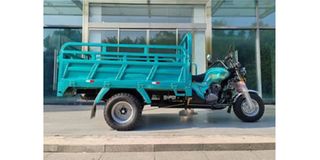
The survey found electric cargo tricycles ferrying goods from wholesalers to retailers without registration numbers.

Some were used for general transport, but a common feature was that they operated openly without number plates, navigating the busy streets and narrow alleys of the surveyed areas.

Interviewed riders said they had never been stopped by traffic police or asked to produce registration documents.

Some operators said they were unaware that registration was required, while others claimed sellers had assured them the machines were “like bicycles” and needed no documentation.

Most operators admitted that, having never been questioned by the authorities about registration, they saw no urgency in registering their vehicles.

Interviewed businesspeople in Kariakoo, and drivers say electric tricycles and bikes have already been involved in major and minor accidents.

“It is very difficult to track the rider whose tricycle or bike has been involved in an accident because they often flee,” said Kariakoo trader Mr Mussa Kinabo.

“These without number plates make the problem even worse, because even if you try to hold the rider accountable, you have no proof of the vehicle’s identity,” he added.

In Dodoma, a seller, Ms Happy Silvano, said demand is growing rapidly, forcing some operators to run vehicles unregistered.

“We see them on the roads. I have never heard of riders being fined, which shows enforcement challenges because we work with them every day,” she said.

Citizens agree that while electric vehicles are cost-effective, operating them unregistered exposes the public to higher risks of road accidents, crime, and lost government revenue from unpaid fines and penalties.

“Most victims of road accidents involve unregistered two- and three-wheeled motor and electric-powered vehicles. Many people are left with permanent disabilities following accidents caused by the rising number of such incidents, especially in major cities,” said Dar es Salaam resident Mr Simon Lunda.

“This is compounded by the increase in crimes linked to these fast modes of transport. Some snatch items like mobile phones from pedestrians or vehicle occupants, particularly in traffic, and quickly drive away,” added Dodoma resident Ms Linda Kisasa.

A Dar es Salaam-based daladala driver, Mr Hamisi Doto, recalled being lightly hit by an electric tricycle, noting that when he realised the vehicle was unregistered, he chose to continue with his journey.

“If it had been a car or a motorcycle, we would have argued, and I would have been compensated,” he said, wondering how much the government was losing in registration fines and penalties.

“The government could collect billions of shillings if the law were enforced against unregistered operators. This would have deterred them, thereby boosting compliance,” he added.

A businesswoman in Dodoma’s Jamhuri area, Ms Rita Massawe, said the quiet operation of electric transport makes it difficult to detect in congested areas.

“They make no sound. One day, I nearly got hit, only realising it was very close to me,” she said, adding that in some cases riders flee the scene, making it impossible to trace them.

What authorities say?

The head of the Legal Department in the Traffic Police, Superintendent of Police Mussa Manyama, admitted that driving an unregistered vehicle, whether motor or electric, contravenes sections of the law and poses serious risks to public safety.

He said, like motor vehicles, operating unregistered electric-powered vehicles attracts heavy fines and confiscation, as such vehicles are not covered by insurance, leaving drivers, passengers, and other road users vulnerable in the event of an accident.

However, he failed to provide details of vehicle owners and operators who have been fined, impounded, or removed from the roads since the June registration deadline.

“We will continue enforcing the law and educating the public on the importance of registration,” he said.

The Land Transport Regulatory Authority (Latra) Road Transport and Licensing Manager, Mr Patel Ngereza, said challenges in registering electric vehicles still exist, although awareness is gradually improving. He said out of more than 22,000 motorcycles registered by Latra in 2025, about eight percent are electric.

Furthermore, he said an awareness week organised last year to encourage registration of electric vehicles recorded a low response.

Mr Ngereza added that initially, electric units were imported as spare parts before being assembled locally, and started being used commercially. “The influx of these vehicles in city streets forced us to hold meetings with responsible stakeholders regarding registration and provision of commercial operating licences,” he said.

He said the authority has since engaged the Tanzania Bureau of Standards (TBS) to address battery quality and reliability.

“We also amended our regulations to formally include electric-powered vehicles so they can be registered and issued commercial licences,” he said. However, Latra did not provide data on enforcement actions taken, saying its focus was to invest in public education.

TRA’s Director for Taxpayer Services and Education, Mr Richard Kayombo, said electric vehicles use the same numbering system as conventional motor vehicles, and that owners or operators are also supposed to pay import taxes.

He said crackdowns against unregistered vehicles fall under the Traffic Police mandate.

“We issue public notices to encourage registration, but the mandate to arrest those behind non-compliance lies with the Traffic Police,” he said.

Transport stakeholders warn that the absence of coordinated enforcement risks creating a parallel informal transport system.

Commenting on the issue, Kinondoni District Commissioner, Mr Saad Mtambule, said three- and two-wheeled electric vehicles operate unregistered, contrary to the law.

He added that his district is collaborating with the Police Force to seize such vehicles and ensure compliance.

“We are going on with public education. The district is also working with online transport service providers to promote formal operations. During inspections, legal action is extended against drivers found to operate unregistered vehicles, including imposing heavy fines and penalties,” he said.