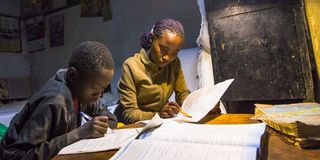
Dar es Salaam. For many pupils and students preparing for national examinations, school has become an almost full-day commitment, with some private schools keeping learners in class from as early as 6am until late in the evening.
In some schools, pupils and students attend regular lessons until around 3pm before returning for evening tuition or private lessons from about 4pm to 9:30pm.
While schools and parents argue that the additional hours help improve academic performance, the demanding schedules have raised questions about how much studying is too much and the health and developmental effects of leaving children with little time to rest.
Education is essential, but children also need adequate sleep, physical activity, recreation, social interaction and time with their families to develop properly.
Medical doctor Julius Twoli says when academic schedules leave little room for sleep and recovery, the consequences can go beyond ordinary tiredness.
A constantly exhausted child, he says, may struggle to concentrate, remember what has been taught and regulate emotions.
“After spending many hours in class, a child's ability to absorb and process new information can decline. Additional evening lessons may therefore produce diminishing returns, particularly when they come at the expense of sleep,” he says.
Maryciana Shigela, a parent whose children are in Grades IV and VII at private schools, says both had to be enrolled in boarding schools because it was difficult to cope with the demanding timetable.
“This comes with more financial expense, as the fees is always higher for examination classes. In the beginning, I refused to enrol them in boarding school, but it was never easy to drop them off at 6am and pick them up at 9:30pm on a daily basis,” she says.
She adds that the children also attend classes on Sunday evenings.
Dar es Salaam-based psychologist Cosmas Madulu says children need time to play, exercise, interact with friends, explore their interests and rest.
“These activities are not necessarily a distraction from education. They are part of healthy childhood development,” he says.
A child who spends almost the entire day at school and continues studying late into the night may have little opportunity to develop these other aspects of life, he says.
Children aged six to 12 need about nine to 12 hours of sleep a day, while teenagers aged 13 to 18 generally need eight to 10 hours, according to Mr Madulu.
A primary school teacher, who spoke on condition of anonymity, says intense competition for good examination results has contributed to the practice.
Many parents fear that their children will fall behind classmates if they do not attend extra lessons, while schools feel pressure to demonstrate strong examination results.
“In reality, this is more of a business strategy, as schools with good grades get more children. Parents complain a lot, but at the same time, they support the move,” he says.
Education Technical Advisor at HakiElimu, Dr Wilberforce Meena, says the government has a clear school timetable, but there are no specific guidelines governing the additional hours.
He says some parents have become too willing to accept what school authorities tell them, while some schools have increasingly operated as businesses rather than places where children learn and develop.
“Why are schools keeping students for extra hours during examination years? Is it that the curriculum is too long to be completed on time, forcing them to have extra hours?” he asks.
Dr Meena says schools should focus on teaching for learning rather than simply preparing pupils and students to answer national examination questions.
“If teachers are teaching for the purpose of learning and not preparing students to answer the national examinations, there is no need to keep these students for extra hours, which results in more stress than enjoying their last examinations as they prepare for other stages of education in their lives,” he says.
Register to begin your journey to our premium contentSubscribe for full access to premium content