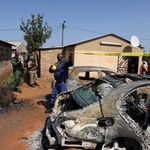
Tanzania finds itself in a moment of reflection following the events of October 29, 2025, and the days that followed. How have these events impacted the country’s diplomatic brand and international relations?
What happened on October 29 has had a profound impact on Tanzania. For many decades since independence, the country has enjoyed a positive reputation as one of Africa’s most peaceful and stable nations.

This record did not come about by chance or mere good fortune; it was the result of deliberate interventions immediately after independence.
Chief among them was the deliberate effort to forge a single, united nation deeply integrated across ethnic, tribal, religious, and racial lines. That foundation accounted for the peace and stability Tanzania has enjoyed for so many years.
Unfortunately, the events of October 29 have tarnished this hard-earned record. Tanzania’s diplomatic moment will now be defined by how it responds to this crisis, whether it does so in a credible manner that not only addresses the immediate issues but also provides an opportunity to recover and restore its lost standing in the international community.
Tanzania was among the frontline states in Africa’s liberation struggle and has long been viewed as a stable and reliable partner in regional affairs. How would you describe the country’s current diplomatic moment, and what distinguishes it from past periods of transition?
What occurred has significantly set us back. We now find ourselves in a very uncomfortable and untenable situation that requires a deliberate and thoughtful strategy to exit. Many of the events were centred on electoral disputes and restrictions within political and civic spaces, including complaints of abductions and disappearances.
This reality should form the starting point as we look for an off-ramp. We must assess honestly the extent to which we are addressing these grievances, because they have generated deep anger and frustration within society.
Over time, this unattended anger accumulated and ultimately erupted during the elections. As a nation, we must confront this situation directly and responsibly, in a way that restores stability and provides credible assurance that such events will never happen again.
President Samia has emphasised diplomacy and international cooperation as a core priority for 2026. From your experience, how important is consistency in foreign policy messaging during periods of heightened political sensitivity?
Going forward, it is essential that we assure ourselves, and the international community, that we are firmly in control of the situation. We must also demonstrate that there are genuine, credible measures being taken to address the root causes of the discontent that had been building within society.
Rather than contesting perceptions, our priority should be to manage expectations. This applies internally, by showing citizens that serious corrective actions are underway, and externally, by reassuring our regional neighbours and international partners that Tanzania is taking meaningful steps to resolve the situation responsibly.
Recent developments have drawn close attention from development partners and international institutions. In diplomatic terms, how significant is perception, and how can Tanzania actively shape the narrative going forward?
There is a substantial amount of diplomatic work that needs to be undertaken. Given the magnitude of the challenge, we might have benefited from beginning with quiet diplomacy among our neighbours and key allies, engaging in honest and constructive conversations about what exactly happened, as well as the measures and future corrective steps being put in place to ensure that such events do not recur.
In your view, what role does quiet diplomacy and behind-the-scenes engagement play compared to public statements when addressing partner concerns?
Public statements certainly have impact, but at this stage they may not necessarily serve our best interests. What we need most is careful management of the narrative. We should not leave matters to chance by allowing everyone to issue their own interpretations and statements. Expectations must be actively managed.
Quiet diplomacy requires the deployment of trusted envoys in strategic areas, beginning with our immediate neighbourhood. These should be individuals with influence and credibility. Quiet diplomacy is not about public pronouncements; it involves private sessions where issues can be discussed openly and candidly.
By engaging regional blocs and neighbours such as the EAC, SADC, and the African Union, we create a strong foundation from which Tanzania can effectively re-engage with the wider international community.
What lessons can Tanzania draw from other countries that have successfully restored confidence with donors and partners after periods of political tension?
There are valuable lessons to be learned, including from our neighbours. We have seen how Kenya addressed its electoral disputes through genuine constitutional reforms. Ghana, more recently, took concrete steps to amend its electoral laws and processes.
We can even draw lessons from Rwanda, a country that experienced genocide yet implemented a process that ensured long-term stability and predictability.
What is your view on Western influence and interference in African affairs in current times?
This is not a recent phenomenon. History shows that African affairs have long been subject to interference by imperial powers.
For a long time, we hoped this would change, but it appears that global power dynamics have remained largely the same. Recognising this reality, it is important that we take deliberate measures to eliminate, or at least minimize, such interference.
At times, we inadvertently provide justification for this interference due to our dependence on aid and external support. We need to move away from such relationships and towards a position where no external actor feels entitled to issue instructions.
This reflects a deeper paradox: Africa in general, and Tanzania in particular, is immensely rich yet persistently poor. We possess all the resources needed to redefine our global relationships, but we continue to miss these opportunities.
How closely linked are governance reforms and diplomatic credibility in today’s global environment, particularly for developing economies?
It is unfortunate that we have reached a point where reforms are often driven by external pressure. The struggle for independence across Africa was fundamentally about establishing post-colonial systems grounded in democracy, human rights, the rule of law, good governance, and regular free and fair elections.
Sadly, we sometimes forget why we fought for independence and allow systems to emerge that restrict these rights. In doing so, we invite external conditionalities tied to aid and support.
Finding an off-ramp that addresses what happened on October 29 and in its aftermath would place Tanzania in a much stronger position to resist such pressures and reclaim its sovereignty in decision-making.
President Samia has repeatedly spoken about dialogue, inclusion, and institutional strengthening. How important are these signals in reassuring international partners over the long term?
These signals are very important, but they must be backed by substance. If we focus only on perceptions, we risk constantly reacting rather than leading.
What truly matters is implementing serious measures that deliver meaningful solutions. This should not be about donor compliance or appeasement; it must be driven by our own genuine desire to strengthen our institutions and society.
Tanzania has traditionally played a stabilising role in East Africa and the Great Lakes region. How can the country leverage its regional standing to reinforce its global diplomatic position?
Since independence, Tanzania played a leadership role in East and Southern Africa. Positions taken in Dar es Salaam often shaped those of the Frontline States, the OAU, and the Non-Aligned Movement. Unfortunately, we lost much of this standing, particularly during the previous administration.
From 2015, Tanzania began withdrawing from its traditional leadership role on the continent. President Samia made efforts to reverse this trend, but during President Magufuli’s tenure, Tanzania largely disengaged from its historical regional leadership responsibilities.
Will Tanzania regain credibility as a nation that bridges divisions elsewhere in Africa?
We have a very strong foundation on which to rebuild. Tanzania has a long history of peace and stability, and that characteristic remains deeply embedded in our society.
I am confident that we can overcome the current situation, provided we diagnose the problem accurately and apply the right solutions.
The President’s commission of inquiry offers some hope, even though there are those who remain sceptical.
If you were advising the next generation of Tanzanian diplomats today, what principles would you emphasise for navigating an increasingly complex global environment?
I genuinely sympathise with them. The world they are entering is vastly different from the one I knew, particularly in the 30 to 40 years following the collapse of the Berlin Wall. That era was defined by a clear East–West divide, communism versus capitalism.
Today, the global landscape is shaped by multiple disruptions: geopolitics, economic shifts, climate change, and digital transformation. The interaction of these forces has produced a world marked by extreme unpredictability and instability.
Tanzania’s current predicament has revived debate about global alignment. Should Tanzania align with the West or with China?
Tanzania should align with itself. As I mentioned earlier, we are extremely rich yet remain poor. Escaping this situation does not require magic.
Countries like China and several Asian nations were at similar levels of development not long ago. We must remember that we do not have an uncle in this world. We must depend on ourselves, and we have all the resources required to do so.
Finally, Ambassador, what gives you confidence about Tanzania’s ability to rebuild momentum in its diplomatic and development partnerships in the year ahead?
The foundation of peace and stability in Tanzania remains very strong. At independence, we were merely a collection of tribes, yet over time we transformed into a cohesive nation. That resilience endures, even when we face serious tests such as those of October 29.
What matters most now is honesty with ourselves and a sincere commitment to addressing our challenges. If we do that, I am confident Tanzania can rebuild momentum and restore its standing both diplomatically and developmentally.
Register to begin your journey to our premium contentSubscribe for full access to premium content