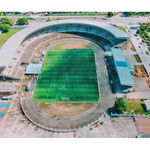
Dar/Arusha. Sports stakeholders have blamed historical construction practices, weak management systems and poor law enforcement for the failure of many major sports grounds in Tanzania to provide infrastructure that meets the needs of people with disabilities.
The views are based on a three-month (October to December 2025) investigation by The Citizen in Dar es Salaam and Arusha.
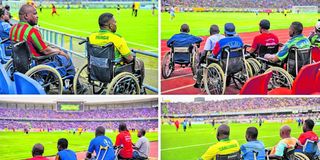
The investigation found that many grounds, particularly those hosting football matches, lack environments capable of accommodating people with physical, visual, or hearing impairments.
Instead, the grounds effectively exclude them from social activities despite laws promoting inclusion and equality.
Stakeholders say the problem stems from poor enforcement of laws, non-inclusive planning approaches and the attitudes of some officials.
Basic services
They recommend involving people with disabilities from the initial planning and design stages of grounds, alongside establishing a national government programme to renovate old facilities, starting with basic services such as access paths, accessible toilets, directional signage and sound systems for people with visual impairments.
What is the cause?
Speaking to this newspaper, Zanzibar Commissioner for Sports Ameir Mohammed Makame said many older grounds lack facilities for people with disabilities because those responsible at the time of construction did not consider the needs of special groups.
However, he noted that with growing legal awareness, gradual changes have begun, including consideration of some services such as access paths.
The 2010 Persons with Disabilities Act clearly outlines the responsibility of government, public and private institutions to ensure public building infrastructure, including sports grounds, is accessible and usable by all without discrimination.
The law underscores equal access to social, recreational and sports services, as well as the obligation to make reasonable modifications where required.
Tanzania is also a signatory to the United Nations Convention on the Rights of Persons with Disabilities, which obliges member states to ensure the full participation of people with disabilities in social life, including sports and recreation.
The convention was adopted in 2006, with Tanzania signing it in March 2007 and ratifying it in November 2009.
The Constitution of the United Republic of Tanzania further guarantees the right to equality and non-discrimination, meaning all citizens should have equal opportunities to participate in social activities, including sports and recreation.
Legally, therefore, people with disabilities have the right to access sports grounds, sit safely and participate as fans or athletes without environmental barriers.
“The challenge lies with many grounds built many years ago. Legally, there should be user-friendly infrastructure such as designated seating for people with disabilities, entry and exit routes, accessible social services including toilets, parking, signage and communication systems,” said Mr Makame.
“In many grounds these are missing, while some have provided them in limited ways,” he added.
He said the International Federation of Association Football (Fifa) and the Confederation of African Football (Caf) require grounds to meet the needs of people with disabilities, explaining why many older facilities fail to secure certification for competitions organised by those bodies.
“Construction at the time focused on stands, seats, toilets and other services, but people with disabilities were not considered. Given the layouts, it is now difficult to make changes and add the required facilities,” he said.
Mr Makame added that increased legal oversight has prompted gradual change, including the involvement of people with disabilities.
Referring to Zanzibar, he said legal supervision led to upgrades at the Amaan Complex Stadium that considered the needs of people with disabilities.
“During meetings to improve the stadium, leaders of organisations representing people with disabilities were involved, which is why access paths and special toilets were installed,” he said.
However, he noted that allocating special seating areas for people with disabilities was not possible due to the stadium’s structural layout.
A former acting permanent secretary in the Ministry of Works, who requested anonymity, said many grounds lack such facilities because some public servants ignored the needs of people with disabilities during construction and overlooked expert advice.
“There are grounds built recently that still do not comply with the law; when I asked, I was told the issue would be addressed later,” he said.
The official also cited limited budgets as a constraint, arguing that allocated funds are often insufficient to cover full construction requirements.
Mr Emmanuel Loi, manager of Sheikh Amri Abeid Stadium in Arusha, one of Tanzania’s oldest sports venues, said management recognised the need to create access routes for people with disabilities who previously sat in front of the stands.
“We added routes to allow them to move up, but the original layout left little room to add more facilities. We are trying to ensure that upcoming renovations incorporate their remaining needs,” he said.
What should be done?
A visually impaired resident of Dar es Salaam, Mr Ally Amri, said many people with disabilities struggle to attend grounds due to conditions that prevent them from enjoying sports like others.
“This issue needs serious examination by the government and institutions responsible for building grounds,” he said.
Tanzania Association of the Disabled (Chawata) chairman Hamadi Komboza said challenges facing people with disabilities at sports grounds remain significant.
Despite continued advocacy, he said authorities responsible for overseeing construction have shown limited responsiveness in addressing the needs of special groups, including people with disabilities.
As a result, infrastructure at many sports grounds continues to overlook their requirements.
“The lack of disability-friendly grounds is a cross-cutting issue. We keep raising our concerns, but the pace of change remains slow,” he said.
“Many grounds have serious challenges. You find toilets designed only for able-bodied people and wonder how we are expected to access services. Since taking this role, I have seen grounds built without compliance with existing laws,” added Mr Komboza.
Dar es Salaam-based lawyer Aloyce Komba said the government has already put in place policies, laws and regulations governing the construction of public buildings.
What is now required, he said, is stronger supervision to compel those responsible to provide infrastructure that accommodates people with disabilities during construction.
Limited inclusion
Mr Komba said inclusion by authorities remains limited and stressed the need for strict enforcement.
“The problem is not limited to sports grounds but affects other public buildings as well. You can find multi-storey buildings with only staircases and no alternatives. This happens despite clear laws that engineers and architects are aware of,” he said.
“There is a need to legally hold accountable all those who fail to comply with the law when building grounds and public spaces and to involve people with disabilities from the earliest stages of building designs and construction,” added Mr Komba.
Register to begin your journey to our premium contentSubscribe for full access to premium content