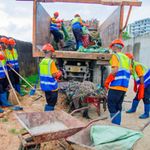
Dar es Salaam is experiencing what urban experts call a metabolic rift—a breakdown between the city’s rapid growth and its ability to process what it consumes. In 1950, fewer than 100,000 people lived in the city. Today, more than 6 million do.
Every morning, the city awakens to a simple, unglamorous arithmetic: more than 5,500 tonnes of waste are generated, and by nightfall, up to 75 percent will remain where it was discarded—choking drains and smouldering in open spaces. This is a problem that is visible, smelly, and economically crippling.
Yet within this failure lies one of the largest untapped business opportunities in Tanzania, if only we can dare to imagine.
The numbers tell the story. In 1998, Dar produced less than 2,000 tonnes of waste daily. By 2017, that figure had more than doubled to 4,600 tonnes. Today, it stands at about 5,500 tonnes.
Against this tide, the formal collection system captures between a quarter and 40 percent. The global average is about 44 percent; sub-Saharan Africa averages 28 percent. Dar sits in between—but still far short of what is needed.
The implication is stark: each year, well over a million tonnes of waste are left uncollected—blocking waterways, breeding disease, and eroding liveability. This is not just an environmental issue. It is a structural urban failure with real economic costs.
Now, consider the opportunity.
Take one ward: Mbezi Juu. With roughly 55,000 residents and about 17,000 households, the maths is simple. If each household paid just 10,000 a month for reliable waste collection, that would generate approximately 170 million per month—just over 2 billion annually.
Now, a typical two-person collection team serves around 150 households, then Mbezi Juu would require about 113 teams—roughly 226 direct jobs in a single ward, tied to a predictable, locally financed revenue stream.
Scale this across Dar’s estimated 1.6 million households, and the numbers become compelling. At 10,000 per household, monthly revenue reaches about 16 billion—equivalent to 194 billion annually. Using the same service ratio, this supports over 20,000 direct jobs in collection alone—before accounting for additional employment in sorting, recycling, transport, and processing.
This is not theoretical. It is already happening, informally.
I recall when I was living in Upanga years ago, the officially contracted company would go weeks without collecting waste, yet still demanded payment. Frustrated residents turned to local youth, who delivered what the formal contractor could not. When systems fail, markets improvise.
That experience is a microcosm of the challenges we face. The demand for reliable service exists; the labour exists; what is missing is a framework that allows the two to meet.
At the government level, we award contracts to politically-connected firms that underperform. Environmental laws aren’t enforced. Payments are disconnected from service, so residents withhold fees, creating a downward spiral. Meanwhile, informal recyclers—who handle much of the city’s waste—are sidelined instead of supported.
Yet the legal tools already exist. The Environmental Management Act of 2004 enshrines the “Polluter Pays” principle. Individuals who litter can be fined up to Sh1 million; companies that dump illegally face fines of up to Sh5 million, plus penalties for failing to clean up. The problem is not the law but enforcement.
Imagine a different approach. Ward-level environmental officers empowered to issue on-the-spot fines, much like traffic police. Dumping waste would quickly become more expensive than paying for collection. Behaviour would change. And the revenue from fines could be reinvested into equipping youth-led waste enterprises.
People respond to incentives—and to consequences.
At the same time, service delivery should be decentralised. Instead of relying on distant contractors, local youth groups should be prioritised. Service zones can be organised at ward or street level, with payment strictly tied to performance. The guiding principle should be simple: no service, no payment.
We do not need to reinvent the wheel. Kigali—once known for its waste problems—transformed itself by dividing the city into manageable sectors, awarding time-bound contracts, and enforcing compliance rigorously. Today, more than 90 percent of waste is collected.
Rwanda applied discipline. There is no good reason why Dar cannot do the same thing.
The good thing is that waste collection is not an end—it is the foundation for a broader environmental upgrade. Effective waste management also means reclaiming open spaces and creating safe walkways. Every clean street and vacant plot becomes a community asset. But none of this happens while rubbish piles up.
The fundamentals are already in place. People are willing to pay—for service that works. The labour force is ready. What is needed is a system that connects demand to delivery. Support local, youth-led waste enterprises, and the results will follow: a cleaner city, tens of thousands of jobs, and an industry worth hundreds of billions of shillings.
At its core, this is a leadership challenge. The waste we step over each morning is not just a nuisance—it is raw material for a more prosperous and more dignified city.
Clear the streets, and everything else can follow.
Register to begin your journey to our premium contentSubscribe for full access to premium content