Dar es Salaam. As Tanzania’s commercial capital continues to expand at a rapid pace, the battle to keep the city clean is increasingly exposing a hard truth: municipal efforts alone are not enough.
From clogged drainage systems to polluted water channels, poor urban sanitation has become one of the most visible and persistent challenges facing cities like Dar es Salaam.
With a population now exceeding six million, waste management systems are under pressure, often overwhelmed by unplanned settlements, rapid urbanisation and limited infrastructure investment.
It is in this context that private sector players are beginning to emerge as critical actors—not just supporters—in shaping cleaner and healthier urban environments.
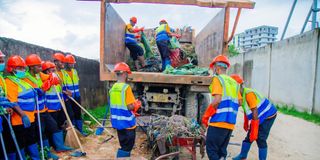
On March 26, 2026 Tanzania Breweries Limited (TBL) offered a glimpse of what this shift could look like. To mark World Water Day, the company mobilised more than 100 employees alongside city authorities to clean and restore a key effluent discharge channel in Ilala District—an area vital to protecting surrounding water systems.
Speaking during the exercise, TBL’s Corporate Affairs Director, Ms Neema Temba, said companies must go beyond policy statements and take practical responsibility for the environments in which they operate.
“Water is at the centre of our business and our communities. We have a responsibility to protect it, within our operations and in the environments where we operate,” she said, adding that such initiatives demonstrate how partnerships can deliver “practical solutions that support long-term water security.”
Her remarks reflect a growing consensus among environmental experts: that corporate sustainability must move from boardroom commitments to visible, on-the-ground action.
Urban planning specialist Dr John Livingstone of Ardhi University said the scale of Dar es Salaam’s sanitation challenge demands a collective response.
“We are dealing with a systemic issue—solid waste, drainage, informal settlements and weak enforcement. The government cannot do it alone. The private sector must take ownership of their footprint, not just inside their premises but in surrounding communities,” he said in a recent interview.
According to government data, Dar es Salaam generates more than 5,000 tonnes of solid waste daily, yet a significant portion remains uncollected.
During the rainy season, blocked drainage systems often lead to flooding, spreading waste into rivers such as Msimbazi and Kizinga—key water sources for the city.
The government has, in recent years, intensified efforts to address the problem. Through initiatives led by the Vice President’s Office (Environment) and local government authorities, regular clean-up campaigns and stricter environmental regulations have been rolled out.
President Samia Suluhu Hassan has also repeatedly called for stronger environmental stewardship, particularly in urban centres.
Dar es Salaam Mayor, Mr Nurdin Bilal Juma, echoed this call during the TBL exercise, stressing that maintaining urban cleanliness is a shared duty.
“Keeping our city clean and protecting our water systems is a shared responsibility. Partnerships like this support our efforts to improve sanitation, safeguard public health, and build a more sustainable city,” he said.
Beyond the clean-up exercise, TBL’s broader approach includes working with conservation organisations to support water security projects, including the protection of river systems such as Ruvu and Msimbazi.
These efforts, while still limited in scale, point to a model where companies align business interests with environmental sustainability.
However, analysts caution that isolated initiatives will not be enough.
“What we need is a culture shift,” said environmental policy expert, Dr Deus Nyaruhucha.
“Every factory, every office complex, every commercial building should have a clear sanitation and waste management plan that extends beyond compliance. It should be part of their corporate identity.”
He added that incentives and enforcement must go hand in hand, with regulators rewarding companies that demonstrate leadership while penalising those that neglect environmental standards.
For residents of Dar es Salaam, the stakes are high. Poor sanitation is directly linked to outbreaks of waterborne diseases such as cholera and dysentery, particularly in densely populated informal settlements.
As Tanzania pushes towards its long-term development goals, including improved urban liveability, the message is becoming clearer: clean cities are not built by government alone.
They are the product of shared responsibility—where businesses, communities and authorities each play their part.