Pay for 20 staff? Nope; say pay for staff of 20, or for 20 employees
Automated teller machine currently UNAVALIBLE? What does that mean? It means absolutely nothing, which is why, we aver, the graphic artist who prepared the notice was instructed to write “UNAVAILABLE.” How about “Sorry for the INCONVIENCE?” It’s nonsensical as well. Why, the word is INCONVENIENCE. Trust graphic artists! PHOTO | COURTESY

A recent edition of the huge Nairobi daily that commands a sizeable readership in Bongo has, in its Buzz pullout, an interview article entitled, ‘I paid Sh17 million for my husband.’ Responding to a question from the scribbler, the respondent is purported to have said, among other things: “…The sound equipment costs about Sh10 million and the media equipment another Sh15 million. Then there are salaries for 20 STAFF…”
Twenty staff? We don’t count one, two…twenty staff. The reason is, the noun “staff” refers to ALL the people employed by a particular organisation. Which is to say, our colleague could have recorded his respondent as talking about: 20 employees; a staff of 20 or 20 members of staff.
Bongo’s senior-most broadsheet of Saturday, February 21, has a story on 3 entitled, ‘Austria injects 15bn/- into Agro SMEs’ and therein, the scribbler writes in column 6:
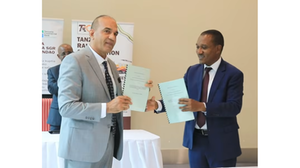
“Meanwhile, Tanzania’s Ambassador to Turkey, Ambassador Iddi Seif Bakari held talks with a delegation from the United Nations Technology Bank for the Least Developed Country…”
Our question here is: why utter the title “ambassador” twice in reference to the same official? That’s entertaining monotony. So, here’s our suggested remedy: “…Tanzania’s Ambassador to Turkey Iddi Seif Bakari…”
Let’s now take a look at Bongo’s huge and colourful broadsheet of Tuesday, February 24, whose Page 5 has a story entitled, ‘Government defends removal of traders from Stone Town.’ For his intro, the scribbler writes: “Tanzania’s Ministry of Tourism and Antiquities has defended the removal of small scale traders from parts of Stone Town, insisting that the action is lawful and necessary to safeguard the HISTORIC site’s heritage status.”
Historic site? Nope, Siree! Stone town is a HISTORICAL site. It’s a place that carries memories of where we came from. “Historic” is an adjective that refers to what’s taking place now and it’s likely to be remembered for years to come, inshallah.
In Para 3, the scribbler writes on—and we quote him in part: “Paje Representative Haku Hashim Ayoub… sought clarification on why small traders APPEARED TO BE REMOVED or restricted from operating within Stone Town…”
The phrase we’ve reproduced in capitals is nonsensical, which makes us conclude that the scribbler meant to say: “…why small traders ARE BEING REMOVED….”
On the same page, there’s another story whose headline reads, ‘Shoddy work: Minister issues stern warning to Shinyanga contractors.’
In his story, the scribbler reports the honourable minister as warning contractors that authorities won’t stomach any contractor “wasting or playing around with government funds. He then “quotes” the minister as saying: “Play with monkeys, reap the thorns.” Duh!
Our assumption is, the Hon minister, who delivered his stern warning in the national language, used the popular Kiswahili proverb, “Ukicheka na nyani, utavuna mabua.” English for this one, we can confidently propose, is: “If you fool around with monkeys, you’ll reap maize stalks.”
We’ll wind up by dishing out gems from the tabloid closely associated with this columnist, whose Page 2 has a story entitled, ‘Crisis in EAC finances triggers scrutiny non-paying states.’ Writes the scribbler in Para 2: “A February 24 LICKED internal memo signed by the Eala Assembly Clerk…warns of dire liquidity challenges that have made it difficult to pay February 2026 salaries…”
What’s “licked” internal memo? It’s means nothing. The scribbler obviously meant to write: LEAKED internal memo.
In the same paragraph, the scribbler writes: “Parliamentary activities have SLOWED while Members of the Assembly have gone months without allowances.”
Do activities slow? No; they slow DOWN. Then, reports the scribbler: “Tanzania and Kenya have paid their full contributions for the 2025/26 financial year…Rwanda has paid about 25 per cent DESPITE remitting $875,000 in February.”
Despite? No; the preposition “despite” has been misused. The correct one is “after”—has paid about 25 per cent AFTER remitting…”