Tanzania’s $42 billion LNG test: Why law, not gas will decide our energy future
By Baraka Thomas
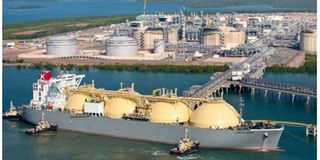
Tanzania stands at a decisive moment in its economic and energy future as the long-awaited Liquefied Natural Gas (LNG) project remains incomplete more than 13 years after the discovery of vast offshore gas reserves.
The delay of the nearly $42 billion project is not linked to a shortage of natural resources but is increasingly associated with concerns over legal certainty and policy clarity, factors that investors consider critical when committing to large-scale projects.
Analysts indicate that unresolved negotiations, unclear fiscal terms and regulatory unpredictability continue to send cautionary signals to potential investors, even as neighbouring countries move ahead with similar energy investments.
Experts argue that concluding the LNG agreement under a transparent and predictable legal framework could unlock Tanzania’s gas potential and strengthen its global investment reputation. The project is expected to create employment opportunities, boost local industries and generate long-term economic growth if successfully implemented.
The urgency of the project has also drawn international attention. Acting United States Ambassador to Tanzania, Andrew Lentz, recently raised concerns about investment challenges facing American companies operating in the country.
In an interview with The Citizen, Mr Lentz noted that some investors encounter barriers, including what he described as predatory tax practices and non-tariff obstacles. He cited the LNG project as a key example, pointing out that despite more than 13 years of negotiations, the investment has yet to be finalised.
He said completion of the nearly $42 billion project would demonstrate Tanzania’s capacity to implement complex and high-value investments.
Observers say such diplomatic remarks often reflect broader concerns raised by investors during private discussions. The concerns, they note, highlight growing attention on Tanzania’s investment environment at a time when global competition for capital is intensifying.
Tanzania holds significant energy potential, supported by more than 47 trillion cubic feet of offshore natural gas reserves. The LNG project, which involves international energy companies including Equinor, Shell and ExxonMobil in partnership with the Tanzania Petroleum Development Corporation (TPDC), is projected to be the largest single investment in the country’s history.
The project is expected to stimulate economic growth through job creation, expansion of local supply chains, infrastructure development and increased government revenues over the long term.
Despite its projected benefits, the project has yet to reach a final investment decision. Government officials have indicated that commercial negotiations are largely complete and that legal agreements could be concluded soon.
However, industry observers maintain that until final contracts are signed and financing arrangements secured, the LNG project remains at the planning stage, leaving its economic benefits unrealised.
The central challenge is no longer geological. It is legal.
Modern energy investments rise or fall not on the size of the resource but on the strength of the contracts that govern them. Investors and lenders do not commit billions simply because gas exists.
They ask whether fiscal terms are stable, whether taxes may change unexpectedly, whether agreements will be respected over time, and whether disputes will be resolved fairly. When the answers are uncertain, capital hesitates. When risk becomes too high, capital leaves.
This is not about avoiding taxes or weakening the state’s authority. Serious investors expect to pay their share. What they fear is unpredictability. A project that takes decades to recover costs cannot survive sudden regulatory shifts, retrospective tax assessments or prolonged bureaucratic delays.
Legal uncertainty raises financing costs, slows decisions and, in many cases, quietly kills projects before they begin. Investors do not fear taxation; they fear not knowing what tomorrow’s rules might be.
Delay therefore carries a price. Each year without LNG development means lost jobs for young Tanzanians, missed opportunities for local enterprises, forgone revenue for public services and infrastructure that remains unbuilt.
Meanwhile, other African countries are advancing their own gas projects and competing for the same global capital. Investors do not wait indefinitely. They redirect funds to jurisdictions where rules are clearer and timelines more predictable. Natural resources may remain underground for decades, but investment capital does not.
None of this means Tanzania should compromise its sovereignty. Our resources must benefit our citizens first. But sovereignty and certainty are not opposites. The most successful resource-rich countries combine firm national control with stable, transparent legal frameworks.
They negotiate strongly, but once agreements are reached, they honor them consistently. That consistency becomes their greatest competitive advantage.
For Tanzania, the way forward lies in clarity. The legal and fiscal framework for LNG must be predictable, transparent and durable over the life of the investment. Approval processes should be efficient and coordinated rather than fragmented across multiple authorities.
Dispute resolution mechanisms must inspire confidence among international lenders. Above all, policy stability must be deliberate. When rules are clear and dependable, investors compete to enter, and that competition ultimately benefits the nation.
The LNG project is therefore about more than energy. It is about credibility. Successfully closing a US$42 billion investment would send a powerful message that Tanzania can execute complex, long-term projects within a rule-based legal system.
That signal would extend far beyond gas, encouraging investment in mining, manufacturing, logistics and renewable energy. Confidence, once established, tends to multiply.
History does not always announce itself loudly. Sometimes it arrives quietly, disguised as a contract negotiation. Tanzania stands at such a moment. The world is watching to see whether we can convert natural wealth into legal confidence.
In the end, it will not be the size of our gas reserves that defines our future. It will be the strength of our laws, the clarity of our policies and the certainty of our commitments. Get those right, and investment will follow. Get them wrong, and the gas may remain beneath the ocean floor - valuable, but unrealized.
The choice, and the opportunity, is ours.
Baraka Masubo Thomas is The Energy, Mining, Finance and Investment Lawyer, you can reach by an email: [email protected]