When young people help rebuild education, a nation moves forward

By Alice Mtuga

When Asnath Yusuph returned to school in Bagamoyo, she was not simply resuming her studies; she was reclaiming a future that had almost slipped away. Pregnancy had forced her out of secondary school while she was in Form Two, a moment that many girls experience as a quiet end to their educational journey. For a long time, she believed school was no longer meant for her.

“After becoming pregnant, I had given up on school,” she recalls. “But when I heard about the opportunity to return, I decided to try again. Now I am back in class like other students, and I dream of becoming an accountant.”

As Tanzania marks the International Day of Education 2026 under the global theme “The Power of Youth in Co-Creating Education”, Asnath’s story reflects a deeper national reality. It speaks to the millions of youths whose education has been interrupted by poverty, social norms, geography, or circumstances, and to the growing recognition that education systems must adapt to learners, not the other way around.

Stromme Foundation supports SDG4 (Quality Education) by promoting inclusive, equitable, and quality education through community-based, innovative learning initiatives that empower youth and improve educational access in Tanzania. This also aligns with Tanzania’s long-term development agenda, articulated in the National Development Vision 2050, places human capital at the centre of national transformation. It recognises that inclusive, quality education is not only a social service but also a foundation for economic growth, social cohesion, and resilience. This vision is reinforced by the Education and Training Policy, which affirms the right of all learners, including adolescent mothers and out-of-school youth, to access flexible and inclusive education pathways.

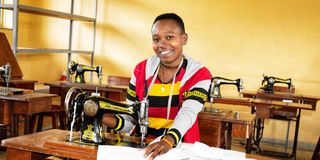
Across communities, that policy intent is becoming visible through second-chance education models and alternative learning spaces supported by partnerships between civil society, communities, and local authorities. With support from the Stromme Foundation, local organisations such as the Organization for Community Development (OCODE) have helped youth like Asnath return to learning while also supporting youth who cannot re-enter formal schooling to gain life skills and vocational training that prepare them for employment or self-reliance. These efforts are guided by mentorship, parental engagement, and close collaboration with education officers at the community level.

“What makes our work meaningful is witnessing transformation within communities,” says Tunu Sanga, Education officer, OCODE. “When a young girl returns to school, or a youth starts their own business, it reflects collective commitment and strong partnerships.”

What distinguishes these approaches is not only access to classrooms but also the way education itself is shaped. In alternative education settings, learners participate actively in discussions, peer learning, and critical thinking, helping to shape lessons around their lived experiences and aspirations. Education becomes a shared process co-created by learners, teachers, parents, and communities.

The results are tangible. At Nia Njema Primary School in Bagamoyo, enrolment in alternative education classes has more than doubled in a short period.

“When we started, we had 65 children, many of whom did not attend school regularly,” explains Madam Mwanahamisi Msagati, a MEMKWA teacher. “Today, we have 137 children who attend school every day.”

Yet this success also exposes ongoing challenges. “The classroom is now too small and in poor condition,” she adds. “We still need more learning materials and an additional teacher, as the demand continues to grow.”

These pressures point to a broader national issue: when inclusive education works, it must be matched by sustained investment in infrastructure, teachers, and learning resources.

By integrating parents and caregivers into Community Management Savings Groups (CMSGs), these efforts enhance sustainability and ensure continued support for children’s education even beyond the programme period.

The story of co-created education begins even earlier, in early childhood. Early Childhood Care and Education centres are helping children arrive at Primary school confident and ready to learn. At Mswakini Juu Primary School, teachers see a clear difference.

“In Standard One, there are many children who come from the Randilen Centre,” says Charles Mwenda, a Primary school teacher. “These children arrive already able to read, write, and count.”

The Randilen Centre, is one of several community-based initiatives supported through collaboration between the Stromme Foundation and the Maasai Pastoralist Development Initiative (MPDI) in Arusha. However, long distances to public schools in rural and pastoralist areas continue to limit access to early learning, underscoring the need for stronger government support for ECCE services closer to communities.

Taken together, these experiences reveal a quiet but powerful shift in how education is understood. Education officers, teachers, parents, civil society organisations, local government authorities, and youth themselves are working together to build systems that are more responsive, accountable, and humane.

As Tanzania looks toward 2050, the question is no longer whether young people should participate in shaping education, but whether systems are willing to fully embrace their role as co-creators. The voices emerging from classrooms, early learning centres, and alternative education spaces offer a clear answer: when young people are trusted and supported, education becomes more inclusive, more relevant, and more transformative.

This year, the Stromme Foundation celebrates 50 years of impact, 22 years of implementation in Tanzania. To date, these interventions have supported 14 public schools, strengthened the capacity of more than 200 teachers, and reached over 15,000 students, contributing to more inclusive and responsive education systems at the community level.

“Stromme Foundation Tanzania remains deeply committed to supporting Tanzania’s development through youth empowerment. We will continue to strengthen our collaboration with the Government to ensure our efforts contribute to the collective national momentum towards achieving the Tanzania Development Vision 2050,” said Alunas Mwamakimbula, Stromme Foundation Tanzania Program Manager.

Young people are not waiting to be empowered; they are already doing the work. When education systems make room for their voices, they do more than restore access to learning. They help build a future that is equitable, resilient, and shared by all.

Alice Mtuga is a Communications Officer at Stromme Foundation, Tanzania.