Why Namibian leader’s Tanzania visit matters beyond diplomacy

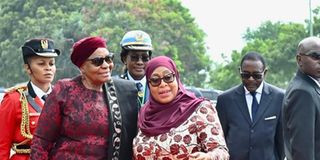
President Samia Suluhu Hassan with her Namibian counterpart, Dr Netumbo Nandi-Ndaitwah, when she arrived at State House in Dar es Salaam for talks on June 20,2026 when she was on a three-day state visit to Tanzania. PHOTO | STATE HOUSE

By Sheiba Bulu

State visits often come with colourful ceremonies, formal speeches and diplomatic courtesies.

But some visits carry significance that extends far beyond protocol. The recent State Visit by Namibia’s President, Dr Netumbo Nandi-Ndaitwah, to Tanzania was one such occasion.

The visit was not merely about strengthening bilateral relations between two friendly nations.

It served as a reminder that Africa’s liberation history still carries strategic value in shaping the continent’s future political and economic direction.

For Tanzania and Namibia, relations have never been built solely on trade interests or political convenience. They were forged during Southern Africa’s liberation struggles, when Tanzania stood firmly behind Namibia’s quest for independence.

Tanzania provided political, diplomatic and logistical support to the South West Africa People’s Organisation (SWAPO), while many Namibian freedom fighters found a home and a support system within the country.

President Nandi-Ndaitwah herself was among those who spent part of their liberation journey in Tanzania. Her return, this time as Head of State, was therefore more than symbolic.

It represented a full-circle moment in a relationship rooted in sacrifice, solidarity and shared aspirations.

However, while history creates strong foundations, it cannot by itself sustain modern relations. Nostalgia does not create jobs, expand markets or strengthen economies.

Historical goodwill must be transformed into practical cooperation that delivers measurable benefits to citizens.

Encouragingly, this appeared to be one of the central messages of the visit.

The strong focus on economic diplomacy and the Tanzania–Namibia Business Forum demonstrated recognition that political friendship must evolve into stronger trade and investment partnerships.

Agriculture, mining, tourism, manufacturing, logistics and energy are sectors where both countries possess opportunities for mutual benefit.

Tanzania can benefit from Namibia’s expertise in sectors such as livestock and mining development, while Namibia can leverage Tanzania’s strategic geographic position and access to East African markets.

Such partnerships become increasingly important as African countries seek to reduce dependence on external markets and strengthen intra-African trade.

This is particularly relevant at a time when implementation of the African Continental Free Trade Area continues to gather momentum.

Africa has spent years discussing regional integration, yet practical outcomes have often lagged behind political commitments. Strong bilateral partnerships can serve as building blocks for broader continental ambitions.

The visit also highlighted another important reality: the growing role of women in African leadership.

The meeting between President Samia Suluhu Hassan and President Nandi-Ndaitwah projected a strong image of female leadership at the highest level.

Beyond symbolism, it reflected changing governance realities across the continent and demonstrated that leadership effectiveness is not determined by gender.

Perhaps the most memorable moments of the visit came when President Nandi-Ndaitwah revisited places associated with her liberation journey, including Magomeni and Kongwa.

Such moments reminded many people that the freedoms enjoyed today were achieved through difficult struggles and collective sacrifice.

But Africa cannot afford to remain captive to memories alone. The continent’s liberation history should not simply be remembered; it should be utilised as a source of political trust and strategic cooperation.

The significance of President Nandi-Ndaitwah’s visit ultimately lies in its broader message. Shared history matters.

But it matters even more when it becomes a foundation for economic transformation, regional integration and future prosperity.

That is where the true value of this visit should be measured.

Sheiba Bulu is Information Officer at the Ministry of Foreign Affairs and East African Cooperation