Tanzania puts training grounds at heart of Afcon preparations
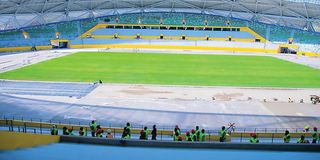
Arusha Stadium has been upgraded ahead of the 2027 Africa Cup of Nations, with modern training facilities also available at the venue. PHOTO | COURTESY
Dar es Salaam. The countdown to the 2027 Africa Cup of Nations is increasingly becoming a test of Tanzania’s readiness, with attention shifting from construction work to whether stadiums, training grounds and supporting facilities will be fully operational when the tournament begins.
With 10 months to go before Tanzania co-hosts the tournament with Kenya and Uganda, the focus is now on completing the remaining works, testing facilities and resolving technical requirements. The tournament is scheduled to run from June 19 to July 18, 2027.
The progress provides reason for optimism. A Confederation of African Football (CAF) inspection earlier this year found Tanzania to have the most advanced structural position among the three host countries, although several venues still require technical and operational improvements before they can be declared fully compliant. The challenge now is to turn construction progress into full tournament readiness.
The project is also extending beyond the stadium itself. Roads leading to the venue are being upgraded, while surrounding infrastructure is being improved to facilitate the movement of spectators, teams and officials.
Th government would continue monitoring the projects to ensure contractors maintained the required standards and timelines.
Training grounds complete the picture
One of the strongest signs that Tanzania is not leaving preparations for the 2027 Africa Cup of Nations until the final months is the attention being given to training facilities, an area that could prove just as important as the stadiums when the continent’s biggest football tournament arrives.
In Dar es Salaam, five facilities have been identified for teams participating in the tournament: Dar es Salaam Gymkhana-2, Major General Isamuhyo, the Law School of Tanzania, Leaders Club and Farasi.
Major General Isamuhyo and the Law School grounds had already been reported as complete by May, while work was continuing at Gymkhana-2, Leaders Club and Farasi as Tanzania continued upgrading its facilities ahead of the competition.
The focus on training grounds reflects the demanding nature of hosting AFCON. The tournament will bring 24 national teams to East Africa, meaning host countries must provide facilities that allow teams to prepare properly between matches.
CAF requirements extend beyond match venues. Training sites need suitable playing surfaces, changing rooms, security, accessibility and other services capable of meeting the needs of international teams and their technical staff.
The quality of a training ground can have a direct impact on a team’s tournament experience. While matches will be played in major stadiums, players and coaches will spend much of their time preparing at training bases, making the facilities an important part of the overall tournament operation.
For Tanzania, the development of these grounds also represents a potential long-term benefit. Better training facilities can support national teams, domestic clubs and youth development programmes long after the final AFCON match has been played.
The facilities could therefore become part of Tanzania’s broader football development infrastructure rather than being used only for a few weeks during the tournament.
Sh516.6 billion commitment
The training facilities are part of a much wider infrastructure programme backed by a major financial commitment from the Government.
Parliament has approved about Sh516.6 billion to facilitate Tanzania’s preparations for AFCON 2027, with the allocation supporting the wider programme covering stadiums, training grounds, roads and other infrastructure required for the tournament.
The commitment underlines the Government’s intention to use AFCON as a catalyst for long-term infrastructure development rather than treating the event simply as a month-long football competition. Some of the funds are supporting roads leading to stadiums and training facilities, improving access for teams, officials, supporters and other stakeholders.
That connectivity will be particularly important during the tournament because teams will have to move between hotels, training grounds and match venues according to tight schedules.
In Arusha, for example, road development around the new stadium is taking place alongside construction of the venue, while Zanzibar is combining stadium construction with improvements to surrounding infrastructure.
The result is an infrastructure programme stretching from Dar es Salaam to Arusha and across the Indian Ocean to Zanzibar. he three host countries, Tanzania, Kenya and Uganda, are preparing their respective facilities as part of a joint AFCON project, meaning coordination will be important not only within Tanzania but also across the wider tournament network.
CAF’s wider test
The importance of the training grounds has also been highlighted by CAF’s inspection programme.
CAF’s latest inspection of Tanzania, Kenya and Uganda assessed not only match venues but also training sites, hotels, airports and other supporting infrastructure.
The eight-day inspection involved officials from CAF’s competitions, safety and security, transport, marketing, media, television and logistics departments, demonstrating the range of requirements involved in staging the tournament.
For Tanzania, the development of training grounds must therefore be viewed as part of a much larger operational system.
A team may play at Benjamin Mkapa Stadium, for example, but its daily preparation will depend on the quality of its training base, the distance between the training ground and hotel, transport arrangements, security and access to medical services.
This makes the five Dar es Salaam training grounds an important component of tournament delivery.
The Government has placed particular emphasis on completing remaining works. In August, Prime Minister Mwigulu Nchemba inspected Leaders Club and Farasi and directed contractors to increase the pace of construction, including extending working hours where necessary, to ensure the facilities meet CAF standards. The directive reflects a broader shift in Tanzania’s preparations from construction towards readiness.
The challenge is no longer simply to put structures in place. Facilities must be tested and shown to work efficiently under the demands of an international tournament.
A legacy beyond 2027
Tanzania’s preparations also carry a strong political and developmental dimension. President Samia Suluhu Hassan’s administration has placed major emphasis on using sports and large international events to promote infrastructure development, tourism and the country’s international profile.
The AFCON preparations build on the Government’s wider investment in sports facilities while also continuing work initiated under previous administrations. The tournament provides Tanzania with an opportunity to demonstrate not only its ability to host Africa’s biggest football competition but also its capacity to deliver infrastructure that serves the public beyond the event itself.
The training grounds are particularly important in this regard because their usefulness will not end when the tournament does. If properly maintained, they can provide improved preparation facilities for Taifa Stars and other national teams, domestic clubs and young players. They could also help create better conditions for coaching, talent identification and player development. For Zanzibar, President Dr Hussein Ali Mwinyi’s administration is pursuing a similarly ambitious approach, with Fumba Stadium positioned as both an AFCON venue and a long-term sports and tourism asset.
The investment across the host areas could therefore leave Tanzania with a stronger sports infrastructure network, provided facilities are maintained and given regular use after the tournament.
More than 10 months to get it right
With AFCON scheduled to begin in June 2027, Tanzania still has a substantial window to complete the remaining works, test facilities and address CAF’s technical observations.
The remaining period will be important because successful hosting will depend on more than construction progress. Stadiums must be operationally ready, training grounds must meet international standards, transport systems must function efficiently, while safety, security, hospitality, accreditation, medical and media arrangements must work together.
The country has already moved a significant distance in its preparations, but the final test will come when the facilities are required to operate as one system.
That means training grounds must be ready to receive international teams, stadiums must handle matchday demands, hotels must accommodate delegations, roads must support movement and emergency and medical services must be available when required.
The training facilities will also need to meet expectations around security and privacy, giving teams an appropriate environment to prepare without disruption. CAF’s inspection programme provides another checkpoint in that process. The continental body will continue working with the three host nations as preparations advance and outstanding issues are addressed.
Register to begin your journey to our premium contentSubscribe for full access to premium content