NSSF celebrates key social protection milestones in Samia’s first 100 days
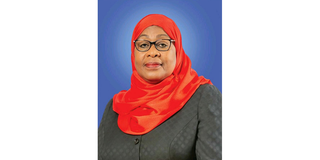
The President of the United Republic of Tanzania, Dr. Samia Suluhu Hassan
The first 100 days of President of the United Republic of Tanzania, Dr. Samia Suluhu Hassan have witnessed remarkable progress in strengthening Tanzania’s social protection sector, marked by key reforms and strategic initiatives aimed at expanding protection and improving member services.
Notable achievements include the launch of the Hifadhi Scheme to widen social security coverage, the commencement of industrial sugar production at Mkulazi Sugar Plant and enhancement of service delivery through appropriate amendments of the law.
These milestones reflect the Government’s strong commitment to building a more inclusive, responsive and sustainable social protection sector.
Launch of Hifadhi Scheme
In a major step towards expanding social security coverage nationwide, the Prime Minister’s Office, Labour, Employment and Relations (PMO-LER), through the National Social Security Fund (NSSF), has launched a new initiative known as the Hifadhi Scheme. The programme aims to integrate all Tanzanians, particularly the self-employed into the social security system.
The official launch took place in Arusha on 9th February 2026, marking a significant milestone in the first 100 days of Her Excellency Dr. Samia Suluhu Hassan, the President of the United Republic of Tanzania, after she was sworn in for the second term in the highest Office on 3rd November 2025.
Alongside the introduction of the Hifadhi Scheme, the Government also launched the Social Protection Policy of 2023, reinforcing its broader agenda to build a comprehensive and inclusive social protection framework.
The expectation is to register all the self-employed who are able to contribute into Hifadhi Scheme. This expansion is anticipated to reduce poverty, strengthen social protection and ensure that no Tanzanian is left behind as the nation moves forward in the implementation of the Development Vision 2050.
Expanding social security to the self-employed
For many years, more than 80 percent of Tanzania’s labour force, especially the self-employed, remained outside the social security system. As a result, millions lacked protection against risks such as old age, invalidity, sickness, injury, loss of income and other life uncertainties that can reduce or eliminate earning capacity.
The Hifadhi Scheme is designed to bridge this gap by extending social protection to the self-employed including small-scale traders, farmers, fishermen, small-scale miners, boda boda riders, artisans, salon operators and food vendors (mama/baba lishe), among others.
Speaking during the launch event, Hon. Deus Sangu (MP), Minister of State in the PMO-LER, emphasized that the scheme reflects President Samia’s commitment to strengthening social protection system and ensuring that no Tanzanian is left behind.
The Hifadhi Scheme initiative directly implements the Social Protection Policy of 2023, reinforcing the Government’s broader agenda of building a comprehensive and inclusive social protection framework.
The Minister of State, Prime Minister’s Office - Labour, Employment and Relations Hon. Deus Sangu (right) presents the Hifadhi Scheme Registration Certificate to the NSSF Director General, Mr. Masha Mshomba.
What is the Hifadhi Scheme?
The Hifadhi Scheme is a voluntary contribution social security programme tailored specifically for self-employed individuals across various sectors of the economy. Tanzanians aged 15 to 70 years are eligible and qualify to register for this scheme, provided that they are not beneficiaries of any other existing pension scheme.
Members enrolled in the scheme are entitled to many long term and short term benefits including Old age pension, Invalidity pension, Survivor’s pension, Funeral grant, Maternity benefit, Social Health Benefit and Unemployment benefit.
The minimum contribution for one member is Sh 30,000 per month, enabling him to access all basic benefits, including the Social Health Benefit (medical benefit). However, a member who contribute a minimum of Sh 52,200 per month qualify for extended Social Health Benefits covering the principal member, his/her spouse and up to four dependents.
“The strength of the Hifadhi Scheme lies in its flexibility,” said NSSF Director General Mr. Masha Mshomba during the launch event. “A member can contribute small amounts daily, weekly, monthly or even seasonally, depending on their income flow, provided they reach the minimum required monthly contribution. Payments can conveniently be made in various ways including through mobile phones using a USSD code”.
Enhancement of service delivery
Other milestones that have been achieved during the first 100 days of President Samia Suluhu in her second term are the decision to make some amendments through NSSF Benefit Regulations 2025, in which the amended Benefit Regulations have provided conditions for survivor benefits to be paid to children of the deceased member who have above 18 years (or 21 years for those in school). This room was not there before these amendments.
As of now, a special lump-sum is paid to children of the deceased member who have above 18 or 21 years as the case may be. Before these amendments, lump-sum payments were limited to dependents below 18 years (or 21 years. for those in school).
The first 100 days have also seen the Government introducing greater flexibility for payment of Unemployed Benefits. Through the amended Benefit Regulations, conditions for Unemployment Benefits have also been revised.
As of now, a member eligible for unemployment benefit shall opt to be paid special lump sum by submitting their claim after 90 days from the date of termination. Previously, members had to wait for a minimum of 24 months to access their full benefit.
However, the right for this member to be paid only 33.3 per cent of his gross salary for six months and retain his membership status within the Fund is also maintained in case the member prefers to take this option.
Investment at Mkulazi
As part of strengthening strategic investments in Tanzania’s industrial sector, President Samia Suluhu Hassan officially inaugurated the Mkulazi Sugar Plant in Morogoro on 7th August 2024. Notably, brown sugar production had already commenced in July 2024, a month before the official inauguration.
Within the first 100 days after being sworn in as the President of the United Republic of Tanzania for the second term, the factory achieved significant milestones including the commencement of Industrial Sugar Production. The plant successfully began producing industrial sugar, contributing to the national sugar supply, reducing import dependency, and supporting domestic industries that rely on sugar as a raw material.
The factory has also generated substantial employment opportunities including 2,172 direct jobs and about 8000 indirect jobs from related activities, including transportation, supply chains and support services. Hence total employment opportunities generated so far is about 10,172. This has significantly contributed to income generation and improved livelihoods in Morogoro and the surrounding areas.
Furthermore, the plant has an installed capacity to generate 15 megawatts (MW) of electricity. Out of these, eight MW will be consumed by the Plant and the remaining seven MW will be integrated into the national grid through the Msamvu power station in Morogoro. This contribution strengthens the national energy supply and supports industrial growth.
Public opinion during the first 100 days
Many self-employed Tanzanians have welcomed the Hifadhi Scheme, expressing optimism that it will help lift families out of extreme poverty by creating a structured savings culture and providing protection during times of crisis. Beneficiaries have noted that the scheme offers a long-term income security, access to medical services through the Social Health Benefit and a safety net during economic shocks.
On the other hand, social security experts have praised the integration of the self-employed into the social security system, noting that it will assist in promoting a culture of savings, reduce household vulnerability to economic shocks and contribute to national economic development.
The first 100 days of the second term for the Sixth Phase Government have demonstrated a strong commitment to improving the lives of Tanzanians and advancing the nation toward the aspirations of Vision 2050.
The achievements highlighted above clearly reflect the Government’s determination to promote inclusive development and reduce poverty, particularly through strategic reforms and improvements in the social security sector.
By strengthening social security services and implementing strategies aimed at expanding coverage to more citizens, President Samia Suluhu Hassan’s administration has signalled a clear and deliberate commitment to building an inclusive and sustainable social protection system that serves the majority of Tanzanians. These efforts lay a solid foundation for long-term socioeconomic transformation and shared prosperity.