Over 12,000 Zanzibaris hired by foreign firms, yet challenges persist

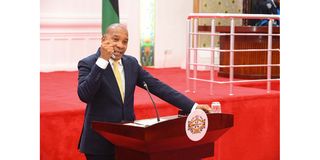
Zanzibar’s Labour and Investment Minister, Mr Shariff Ali Shariff, addresses the second session of the 11th House of Representatives in Chukwani, Unguja, on Wednesday, February 11, 2026. PHOTO | JESSE MIKOFU

Unguja. Despite foreign firms operating in Zanzibar employing 12,244 locals over five years, challenges remain, as many Zanzibaris fail to step forward to secure roles in various positions.

This emerged on Wednesday, February 11, 2026, during a House of Representatives session, when the Minister of Labour and Investment, Mr Shariff Ali Shariff, responded to MPs’ questions.

He noted that over the last five years, foreign companies establishing projects in Zanzibar employed 12,244 locals in those ventures.

Addressing MPs’ concerns, some of whom said access to jobs is a key challenge for youth, Mr Shariff acknowledged complaints that positions suitable for locals in projects run by foreign firms are often taken by foreigners.

Contributing to the discussion, Wawe lawmaker, Mr Bakari Hamad Bakari, said that although many projects are implemented in areas with young people, complaints persist about locals missing out on opportunities.

“The government is taking various measures, but our youth need to change their mindset. Opportunities exist, but they are reluctant to seize them. This remains a challenge, and sometimes investors have to look elsewhere to fill positions,” said Mr Shariff.

On youth employed between 2020 and 2025, Mr Shariff said 10,848 were in Unguja and 1,396 in Pemba.

Of the total, he said 3,970 were women and 6,878 men in Unguja, while in Pemba, 446 were women and 950 men.

Mr Shariff was responding to a question from Mr Bakari, who sought to know how the government evaluates employment opportunities for locals provided by foreign firms in Zanzibar, given the growth of foreign operations.

“The ministry, through the Labour Commission, evaluates jobs offered to locals by foreign companies and regulates issuance of work permits for foreign employees,” said Mr Shariff.

He added that Investment Act No. 10 of 2023 sets out the percentage of foreign hires and, for projects registered with the Zanzibar Investment Promotion Authority (Zipa), considers the need for foreign workers.

Furthermore, Mr Shariff said assessments are conducted through workplace inspections, verification of employment contracts, and collaboration with institutions such as Immigration, the Tourism Commission, Zanzibar Revenue Board (ZRA), and Zipa.

According to the law, 90 percent of jobs provided by these companies must go to locals, while 10 percent may be allocated to skilled specialists within the company.

Mtambwe legislator, Dr Mohamed Ali Suleiman, asked what percentage of opportunities is reserved for locals during project implementation and sought a law to regulate this.

Minister Shariff said the Securities Regulatory Code (SRC) Act is at an advanced stage in the Revolutionary Council and is expected to be tabled in the House soon, as it will provide guidance on investors’ obligations.

On profits to be shared with locals, he said discussions are ongoing, with one to two percent of annual profits likely directed to communities.

Mr Shariff said that under Public-Private Partnership (PPP) projects, the government provides incentives to investors implementing development initiatives that benefit communities.

Such incentives include tax relief, including exemptions or reductions during a defined implementation period.

Investors may also receive land or infrastructure at low or no cost, and legal and administrative facilitation, including permits and licences, to accelerate project implementation and secure long-term contracts that guarantee returns while ensuring communities benefit from quality services.

Another objective of PPP incentives is to encourage investment, improve public service delivery, and ensure PPP projects deliver sustainable benefits to communities and the national economy.

Special Seats MP, Ms Fatma Ramadhan Mohamed, asked about the criteria for investors to receive free land and infrastructure.

In his response, the minister said the criteria depend on the type of project, as sometimes investors are given already completed buildings to continue operations.