Study exposes child labour in Zanzibar’s marine economy

What you need to know:

  • A recent Situational Analysis of Child Labour in Coastal and Marine Activities in Zanzibar shows that fish frying, often perceived as lighter and safer work, accounts for just 2.2 percent of children’s involvement, underscoring how physically demanding tasks have quietly become part of daily life for many children living along the coastline.
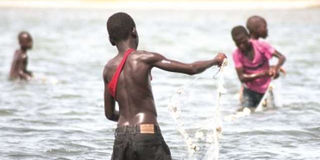
Dar es Salaam. Despite sustained efforts to eradicate child labour, many children in Zanzibar remain deeply involved in the marine economy, with fishing emerging as the most common activity, engaging 27.8 percent of children, followed by fish de-scaling at 14.4 percent.

A recent Situational Analysis of Child Labour in Coastal and Marine Activities in Zanzibar shows that fish frying, often perceived as lighter and safer work, accounts for just 2.2 percent of children’s involvement, underscoring how physically demanding tasks have quietly become part of daily life for many children living along the coastline.
The study was conducted in three villages in Unguja: Kiwengwa, Nungwi and Nyamanzi, and involved a sample of 90 children aged between five and 17 years, offering a snapshot of children’s participation in marine-based livelihoods.

Published in the Journal of Humanities and Social Sciences (JHSS), Volume 14, Number 1, on November 6, 2025, the study reveals a clear gender divide in children’s engagement in marine-related activities across the surveyed communities.

Co-authored by Ms Happiness Moshi and Ms Rukia Kitula of the University of Dar es Salaam (UDSM), the research shows that boys dominate fishing and fish descaling, activities regarded as physically demanding, while girls are more involved in fish frying, seaweed farming and the gleaning of marine animals.

“The findings show that some children (32 percent) spent more hours in coastal and marine activities than the recommended time for their ages, which could be considered as being involved in child labour,” reads part of the study.

Another section notes that children aged between 10 and 14 years constituted the largest group, 43.3 percent, of those who spent more time than recommended working hours per week in coastal and marine activities, with most engaged in fishing, fish vending, and selling seashells.

However, the findings indicate that no children were found to be spending more than the recommended working hours per week in loading or offloading fish, washing fishing nets, or gleaning marine animals.

According to the document, more than half of the children involved in coastal and marine activities—56 percent—were assisting their parents, while 23 percent were engaged by other actors within the fishing value chain.

“Fishermen were the most common agents engaging children in child labour, followed by fish vendors (14.3 percent). Most of the children (81 percent) were engaged in any activity available at the time, while only 19 percent were involved in specific tasks,” the report states, adding that children earned between Sh50,000 and Sh100,000 per month.

The study further shows that most children engaged in child labour reported exhaustion (93 percent) and injuries (58 percent), compared with children not involved in child labour, among whom 39.3 percent reported exhaustion and 29.5 percent injuries.

These findings were corroborated through participant observation, with researchers noting that children appeared visibly exhausted, while some sustained injuries from fish spines during descaling or cuts from boat engine parts.

The study concludes that child labour remains a significant problem in Zanzibar’s coastal and marine activities, with fishing attracting more children than other sectors, particularly in households where parents are fishers who routinely involve their children in income-generating work.

Poverty emerged as the primary driver of child labour in the surveyed areas, with children working to supplement household income and meet basic needs in poor and often large families.

“The results also reveal that child labour negatively affects school attendance and academic performance, with some children dropping out of school at an early age,” the study notes, adding that the activities are hazardous to children’s health and wellbeing due to fatigue and frequent injuries.

To address the problem, the study recommends strong interventions to reduce poverty through alternative income-generating activities, including small-scale entrepreneurship, vegetable farming, beekeeping, and aquaculture.

While acknowledging that involving children in family activities can be beneficial for skills transfer and social upbringing, the study stresses the need for clear boundaries to prevent exploitation and abuse.

It further calls for changing public perceptions, raising awareness of the consequences of child labour, strengthening law enforcement, and improving school facilities to ensure that every child is encouraged and supported to remain in school.