Zanzibar debt rises to Sh2.385 trillion as Government defends borrowing for strategic projects

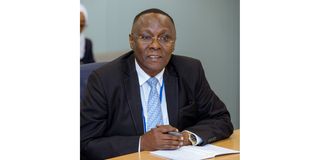
Zanzibar Minister for Finance and Planning, Dr Juma Malik Akil

Unguja. Zanzibar Minister for Finance and Planning, Dr Juma Malik Akil, said government borrowing is aimed at funding major strategic projects after realising that reliance on donor funding had delayed progress on many initiatives.

As of December 2025, the debt of the Revolutionary Government of Zanzibar stood at Sh2.385 trillion, raising concern among members of the House of Representatives, who sought reasons for the rising borrowing and national debt.

Dr Akil made the remarks on Thursday, February 19, 2026, while concluding discussions on the national plan and the 2026/27 budget framework during the 11th House meeting in Chukwani, Unguja.

“Borrowing has been widely debated. We are indeed borrowing, sometimes on commercial terms, because in the past we lacked productive strategic projects, and depended on donors, who at times considered our plans not aligned with their procedures,” said Dr Akil.

“We are obliged to borrow to execute our strategic plans and repay later. Financial institutions understand our rationale and trust us on borrowing,” he added.

Dr Akil said that alongside borrowing, revenue collection is increasing and development is progressing, making this approach appropriate.

Without it, he added, achieving national goals would have been delayed by continued donor dependence.

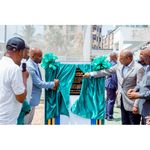
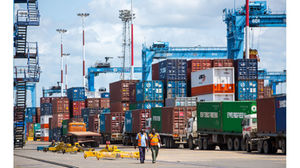
“The impact of relying on donors would have been greater. We have decided to change. Currently, we are constructing 1,200 kilometres of tarmac roads with our own funds and building ports, airports, and international stadiums. No donors are involved; it is our own money,” he said.

He noted that previously, relying on donor funds, the government had never built even 20 kilometres of tarmac road.

Some representatives said the government should seek new revenue sources and conduct project evaluations instead of relying on the same ones each year, even as national debt rises, although it remains sustainable.

They also urged local government authorities to enhance tax collection methods rather than burdening ordinary citizens, noting that each budget plan relies on the same revenue streams.

Chambani Representative, Mr Mahmoud Shineni Ali (ACT–Wazalendo), said that despite intentions to increase revenue, the government has not innovated in identifying new sources.

“With regret, the Planning Commission has not conducted sufficient research or evaluation on revenue sources. The government still depends on the same sources of income,” he said.

He added that the Zanzibar Revenue Authority (ZRA) has not adequately engaged stakeholders or educated citizens on tax obligations, instead pursuing traders and causing inconvenience.

Mr Ali said revenue projections within local government authorities often differ from actual collections, and performance in this area has not improved.

“I think new revenue sources should be introduced. For example, billboards should be supported with proper systems to collect revenue without disturbing citizens,” he said.

On tourism, he said routine practices persist, and the government must adopt a strong strategy to maximise the sector’s potential.

The report indicates the government aims to raise tourist arrivals from 400,000 to 500,000, but this is modest compared with the opportunities available.

“We do not have even a single international conference centre, which is disappointing. The government should explore partnerships with the private sector to secure suitable venues,” he added.

The Ole Representative, Mr Seif Hamad Suleiman (ACT–Wazalendo), said the same priorities and goals are repeated annually, noting that proper evaluations are essential for progress.

He also said the government must reduce budget dependence, citing a planned Sh5 trillion development budget, with Sh3 trillion (74 percent) from domestic collections and Sh1.5 trillion (26 percent) from donors.

“There is still significant dependence. We cannot implement plans relying on donors; we must focus on domestic budget execution,” he said.

He further urged the government to review tax exemptions, which have risen from 240 to 280, to assess revenue loss and benefits.

Special seats representative, Ms Fatma Ramadhani Mohamed (Mandoba-CCM), recommended raising taxes on alcoholic beverages, which the Finance Minister said would be considered.

Dr Akil said all contributions from representatives have been noted and will be addressed to strengthen the June budget proposal.