Zanzibar Information Ministry outlines nine priorities for 2026/27 fiscal year
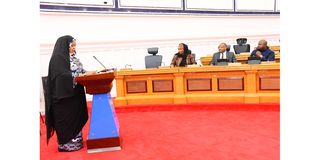
Minister for Information, Culture, Arts and Sports, Dr Riziki Pembe Juma, presents the ministry’s revenue and expenditure estimates at the House of Representatives in Chukwani, Unguja, Zanzibar on Thursday, June 4, 2026. PHOTO|JESSE MIKOFU
Unguja. The Zanzibar Ministry of Information, Culture, Arts and Sports has outlined nine priorities for the 2026/27 financial year, focusing on expanding access to information and promoting the use of standard Kiswahili.
Presenting the ministry’s revenue and expenditure estimates on Thursday, June 4, 2026, the minister responsible for the portfolio, Dr Riziki Pembe Juma, sought parliamentary approval of Sh243.3 billion to implement the planned activities.
Dr Riziki said the ministry would strengthen access to and dissemination of information, enhance regulation and oversight of media institutions, publishing and broadcasting services, and promote public awareness on the preservation of Zanzibar’s traditions, customs and culture.
“We will oversee arts and entertainment activities, promote and expand the use of proper Kiswahili, strengthen sports infrastructure and coordinate sports development across the country,” she said.
Other priorities include coordinating preparations for the 2027 Africa Cup of Nations (Afcon) and reviewing policies, laws, regulations and guidelines to improve governance and service delivery in the information, arts, culture, and sports sectors.
Presenting the views of the Social Welfare Committee, Mr Ibrahim Hussein Makungu, said inadequate office space and a shortage of transport facilities remained major challenges facing the Zanzibar Kiswahili Council (Bakiza).
“The limited office space creates a poor impression among both staff and visitors. This is an important institution that receives many visitors from within and outside the country seeking academic knowledge,” he said.
The committee urged the government, through the Ministry of Finance, to provide reliable transport to support the council’s operations.
Contributing to the debate, Wawi Representative, Mr Bakar Hamad Bakar, CCM, said the information sector plays a central role in advancing government programmes and national development but continues to face challenges that require urgent attention.
“The sector is vital in promoting national unity, strengthening social cohesion, and supporting development. There is also a need to improve journalists’ welfare, as promises to enhance working conditions in both public, and private media institutions have remained unfulfilled for years,” he said.
Paje Representative, Mr Jaku Hashim Ayub, CCM, said some media outlets continue to produce content that undermines Zanzibar’s cultural values.
He also called for greater efforts to promote proper Kiswahili, warning that widespread grammatical errors were damaging the language.
Mr Ayub further sought an update on the proposed media law, saying the legislative process had taken too long.
Tumbatu Representative, Mr Mahmoud Omar Hamad, said Bakiza should better reflect the status and importance of Kiswahili through increased research and publication.
“Given the importance of Kiswahili, we expected to see more research on the language,” he said.
He noted that global demand for Kiswahili is growing faster than domestic demand, underscoring the need for increased investment in research and publications to support the language’s growth and preservation for future generations.