Zanzibar launches Sh99bn drive to end school double shifts
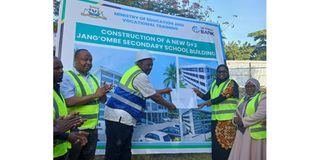
Zanzibar’s Minister of Education and Vocational Training, Ms Lela Mohamed Mussa (right), hands over construction documents for Jang’ombe Secondary School to Faster Company representative Mr Fakih Abdalla Pandu. The three-storey school in West Urban District, Zanzibar, is part of a Sh99.187 billion project to build 397 classrooms and will provide 38 classrooms. PHOTO | JESSE MIKOFU
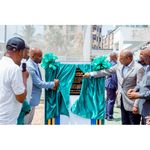
Unguja. Zanzibar has launched a major initiative to end double shifts for primary and secondary students, with the government handing over construction sites for 13 multi-storey schools in Unguja and Pemba to contractors.
The schools, to be built by five different contractors between February this year and February 2027, will range from 16 to 41 classrooms.
The project will deliver a total of 397 classrooms for Sh99.187 billion.
Seven of the schools are part of the Zanzibar Improving Quality of Basic Education (Zique) project, funded by the World Bank, while the remainder are financed directly by the Revolutionary Government of Zanzibar (RGZ).
Currently, 81 percent of secondary students in 227 government schools attend a single shift, while 70 percent of primary pupils in 341 government schools study in one session.
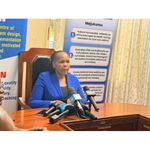
Speaking at the handover on Saturday and Sunday, February 21 and 22, 2026, the Minister of Education and Vocational Training, Ms Lela Mohamed Mussa, said the project aims to eliminate double shifts for the remaining 20 percent of secondary and 30 percent of primary students.
“This is our focus in Unguja, ensuring the remaining students complete schooling in a single session. Pupils will attend in the morning, leaving afternoons free for other activities such as madrasa,” said Ms Mussa.
She noted that the Eighth Phase Government has prioritised education by strengthening infrastructure to end the double-shift system and urged contractors to complete work on time and to the required standards so students can occupy the new buildings next year.
According to the minister, within the first 100 days of President Hussein Ali Mwinyi’s second term, the ministry planned to implement strategic projects, including these new schools, to increase learning spaces and improve study environments.
“The government has invested heavily in modern infrastructure. We have also emphasised vocational education to enable youth to find employment or start businesses after completing their learning,” she said.
“These are public funds, so they must be managed with integrity to ensure results are achieved, and value for money is observed,” emphasised the minister.
She further urged contractors to assign non-specialised work to local youth to provide temporary employment opportunities.
Supervisory consultant Valence Jeremia pledged to ensure work progresses rapidly and meets the standards required by the government and the public.
“With our experience, I assure you the work will meet high standards and be completed on schedule, or even ahead of time,” he said.
Contractors also pledged quality and timely delivery to honour the trust placed in them.
Faster representative, a contractor building Mikunguni Technical School, Mr Fakih Abdalla Pandu, said the project is scheduled for completion in time for the 63rd anniversary of the Zanzibar Revolution in 2027.
The headteacher of Mikunguni Technical School, Tifli Mustafa Nahoda, said the school currently has 250 students, nine classrooms, and 18 toilets.
“Our performance has been good, and once the modern facility is ready, we expect to produce highly skilled professionals,” insisted the headteacher.
A representative at Jang’ombe Secondary School, Mr Abdalla Idd Hassan, highlighted the school’s challenges, noting it serves Forms One to Form Six with 1,200 students, 54 teachers, but only 11 classrooms.
“Expectations are high. The new construction will include laboratories for chemistry, physics, biology, and computer science. With 38 additional classrooms, we can accommodate 2,000 students in a single shift,” he said.
Of the 13 schools, six, including Fuoni Kibondeni, Jumbi, Chunga, Minungwini, Mchangamdogo, and Micheweni, are being built by Rok; two others, Jang’ombe and Mikunguni, by Faster; two, Mtoni Kidatu and Kianga, by Till; the other two, Miti Ulaya and Wesha, by Scenic; while Kengeja is assigned a Mwinyi school.
The site handovers began on February 16, and the exercise is expected to conclude on 28 February 2026.