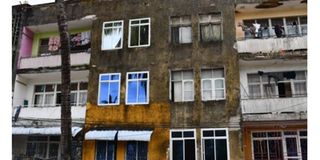
Zanzibar’s historic Kikwajuni homes face March 26 demolition amid resident fears

What you need to know:

  • The area has 150 houses built by Germans during the era of Zanzibar’s first president, the late Abeid Amani Karume, and were given to residents for free and that of these, 99 belong to ZHC, and 51 are privately owned.

Unguja. While residents of Kikwajuni Mjerumani in Mjini Magharibi Region continue to raise concerns over relocation agreements, the Zanzibar Housing Corporation (ZHC) has said it will begin demolishing the houses on March 26, 2026, to pave the way for a modern city project.

Residents say the contract issued by ZHC lacks key safeguards, although some were called to sign, they later realised it could work against them as several important clauses were missing.

The area has 150 houses built by Germans during the era of Zanzibar’s first president, the late Abeid Amani Karume, and were given to residents for free and that of these, 99 belong to ZHC, and 51 are privately owned.

Under government plans to modernise urban areas and replace the dilapidated houses through ZHC, the land is to be handed to an investor who intends to construct more than 1,150 modern houses.

Under the agreement between ZHC and residents, they are to receive subsistence payments for two years while the project is underway, after which they will be allocated new houses in the same area once construction is complete. The project is expected to take one year.

Residents’ complaints

Speaking to The Citizen’s sister newspaper Mwananchi on Wednesday, February 4, 2026, the Secretary of the Relocation Oversight Committee, Mr Omar Nassor Suleiman, said that although the project has development benefits, contractual issues continue to raise fears among residents.

He said that initially, there was resistance to relocation, but after extensive engagement and civic education by the government, residents eventually agreed, noting however that problems have now emerged around the contracts.

He explained that there were three groups of residents; one opposed relocation because the “revolution legacy” would disappear; second simply did not want to give up their homes; and third supported development.

“We worked hard to get the government to guarantee that people would be relocated and later returned. We held many meetings and eventually agreed there should be two contracts to protect residents: one for relocation and another guaranteeing their return,” he said.

Mr Suleiman added that ZHC initially used the sheha (local leader) to have people sign agreements framed as “compensation certificates”, which would effectively strip them of land rights.

“What we want are subsistence allowances throughout the project period, not compensation that permanently removes our rights to the land,” he said.

He accused ZHC of attempting to take the houses without legally binding guarantees that residents will be returned after construction.

Residents also want the Attorney General to oversee the contract and for the investor to be directly involved to ensure a clear commitment to their return.

They further demand reasonable rental rates for temporary housing, fearing that future rents in the new development may be too high since many houses will be commercial.

They also complained that the contract does not specify that returnees will be allocated homes in the same area, it only states they will receive “a house”, without indicating where.

They noted that witnesses to the contract include only ZHC and residents, with no government institution or the Attorney General present.

Another major gap, they said, is the absence of a clause specifying what happens if construction exceeds two years.

They want the investor to be obliged to continue paying subsistence allowances until completion.

They also want the size of the houses clearly stated in the contract, noting that they were promised four-bedroom homes.

Finally, they insisted that no contracts should be finalised unless the committee and all residents sign together by mutual agreement.

ZHC response

Responding to the claims, ZHC’s Head of Public Relations, Mr Amour Mussa Makame, did not directly confirm whether the contracts have flaws but said residents have been fully involved from the start, with many meetings held, and that some have already signed agreements and received payments.

He said demolition will proceed on March 26, 2026, and that payments have already begun.

He confirmed that 99 houses belong to ZHC and 51 are privately owned.

“The government has acted in good faith by compensating residents and will return them to this area. The infrastructure is very old and the houses are dilapidated, so modern housing is needed, but all residents’ rights are being considered,” he said.

He added that many opponents are tenants accustomed to living in town and doubt they will be returned, but insisted the government plans to bring them back.

“They will receive subsistence payments for two years even though construction is expected to take only one year. Priority will be given to building houses for returnees first, and each house will have four bedrooms,” he said.

He assured that no one will be wronged and that everyone will receive their rightful entitlements.