BoT sees renewed hope for growth as gold prices edge higher globally

Dar es Salaam. Rising global gold prices have raised optimism for Tanzania’s economy, with the Bank of Tanzania (BoT) saying the precious metal remains a strategic asset that can strengthen exports, foreign exchange reserves and overall economic stability.

Gold prices climbed to a record high of $4,410 per ounce on Monday, December 22, 2025, from about $4,100 an ounce recorded last month, according to data from GoldPrice.org.
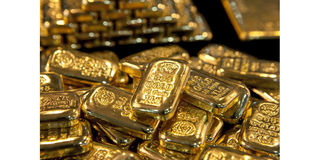
The website shows prices have risen by between 5 and 8 percent over the past month, translating into gains of $300 to $336 per ounce.

The surge has been driven by strong investor demand for safe-haven assets amid expectations of US interest rate cuts, geopolitical tensions and a weaker US dollar.

Speaking to The Citizen, BoT Governor Emmanuel Tutuba said gold plays a dual role as both a commodity and a financial instrument, enhancing Tanzania’s economic position.

“Increased gold exports bring in foreign currency, which can help improve the current account balance,” he said.

Mr Tutuba noted that higher prices are also good news for mining companies, whose production costs typically range between $1,000 and $2,000 per ounce.

“At these elevated prices, companies enjoy strong margins, increased cash flow and the capacity to reinvest, pay off debts and expand operations. Shareholders also benefit through higher dividends, making mining stocks more attractive,” he said.

He added that large producers such as Barrick Gold and AngloGold Ashanti are particularly well placed to benefit, as most of their fixed costs are already covered, meaning price increases translate directly into profits.

“Gold is a strategic economic asset for Tanzania. It boosts exports, improves the balance of payments and supports broader economic stability,” Mr Tutuba said.

Independent financial analyst Mr Oscar Mkude said gold prices have been on a steady upward trend over the past two years, an unusual pattern that reflects a shift in how the metal is perceived.

“Traditionally valued for its preciousness, gold is increasingly being treated as a store of value,” he said. “Investors tend to hold onto gold when confidence in currency markets is low. Even as the global economy gradually stabilises, gold continues to attract attention as a safer asset.”

Mr Mkude noted that the trend is particularly beneficial for gold-producing countries such as Tanzania, offering them a stronger economic position than in the past. However, he cautioned that gold production cannot be scaled up instantly to take advantage of high prices, meaning timing remains critical for miners.

Another independent analyst, Mr Christopher Makombe, said gold is currently Tanzania’s leading export earner, with revenues exceeding $4.3 billion in 2025. He added that a further rise in prices to around $4,500 per ounce would significantly boost export earnings.

“Higher export revenue strengthens foreign exchange reserves, supports import payments and can help stabilise the Tanzanian shilling,” he said.

Mr Makombe added that rising gold prices would help narrow the current account deficit by offsetting import costs and easing pressure on external borrowing. He also said the government stands to benefit through increased royalties, taxes and export duties from the mining sector.

“With more revenue, the government may have greater capacity to fund public services, infrastructure, health and education, depending on fiscal policy and how the revenues are managed,” he said.

He noted that mining already contributes about 10 percent of Tanzania’s Gross Domestic Product and a sustained rise in gold prices could support higher output and stronger economic growth, particularly if investment in the sector expands.