Dar es Salaam. Millions of Tanzanians will be closely watching and listening to parliamentary proceedings today amid widespread anticipation that the government will unveil concrete measures to ease the rising cost of living when it presents its Sh62.3 trillion Budget for the 2026/27 financial year.
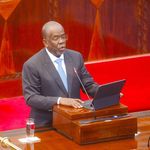
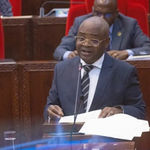
The minister for Finance, Khamis Mussa Omar, is expected to table the fiscal plan amid growing public concern over inflationary pressures that have steadily eroded household purchasing power over the past several months.
The Budget comes at a time when the cost of essentials, from transport and food to energy and basic services, has risen sharply, reshaping daily life for millions of citizens.
A major driver of the current inflationary pressure has been volatility in global oil markets, largely attributed to the US-Israel’s February 28, 2026 invasion of Iran and particularly disruptions around the Strait of Hormuz.
The instability has sent shockwaves through global supply chains, pushing up energy costs worldwide and feeding directly into domestic price levels.
In Tanzania, the impact has been swift and visible.
Fuel prices, which are central to transport, production and logistics systems, have increased significantly since March 2026.
Petrol rose from Sh2,864 per litre in March to peaks of about Sh4,115 in May, while diesel climbed from Sh2,858 to Sh4,248 over the same period.
Kerosene, widely used in low-income households, increased from Sh2,932 to Sh4,677 per litre.
Current retail prices in Dar es Salaam stand at approximately Sh4,086 for petrol and Sh4,333 for diesel.
The increase in fuel costs has triggered a cascade of secondary effects across the economy.
Transport fares, logistics charges and the cost of moving goods from production areas to markets have all risen, feeding into higher retail prices for food and essential commodities.
Regulators have already adjusted public transport tariffs in Aresponse. The Land Transport Regulatory Authority (Latra) and the Zanzibar Maritime Authority (ZMA) recently approved fare increases across multiple transport categories.
Short-distance commuter fares of up to 10 kilometres rose from Sh600 to Sh700, while medium-distance routes now cost up to Sh1,500 depending on distance.
Long-distance bus fares have also been revised upward, with charges now averaging Sh57.93 per kilometre on tarmac roads and Sh66.62 on gravel routes.
This has pushed a typical Dar es Salaam–Arusha journey to more than Sh40,000. Ride-hailing services have increased fares by about 22 percent, while passenger ferry services between Dar es Salaam and Zanzibar now charge between Sh40,000 and Sh80,000 depending on class of travel.
For many households, transport has become one of the fastest-rising monthly expenses, particularly in urban centres where daily commuting is unavoidable.
The knock-on effect is being felt in reduced disposable income and tighter household budgets.
The rising cost of transport has also fed directly into inflationary pressures. Tanzania’s annual headline inflation rate currently stands at about 4.0 percent.
This is largely driven by a 9.2 percent increase in transport costs and a 5.7 percent rise in food prices, according to recent official data.
Food inflation, in particular, has been amplified by higher logistics costs, as fuel price increases affect every stage of the supply chain, from farming and harvesting to milling, distribution and retail delivery.
For ordinary citizens, the consequences are increasingly visible in everyday life.
“For us who commute daily to work in the city, transport costs are forcing us to cut down on essentials just to get to work,” said Amina Juma, a small business trader in Kariakoo.
A motorcycle taxi operator in Temeke, Juma Kessy, said the fuel price increases have squeezed earnings in the informal transport sector.
“Fuel keeps going up, but passengers resist fare increases. It is becoming difficult to make a living,” he said.
Economists argue that fuel price volatility is particularly disruptive because of its deep integration across the economy.
Fuel is not only a transport input but also a production cost in agriculture, manufacturing, construction and retail distribution.
As a result, even marginal increases quickly translate into broader inflationary pressures.
Mzumbe University economist, Dr Daudi Ndaki, said global geopolitical tensions continue to play a significant role in shaping domestic inflation trends, particularly through energy markets and imported commodities.
“The Middle East conflict has had an impact, especially on fuel and other imported goods,” he said, noting that Tanzania’s relatively strong domestic food production base has helped cushion some of the pressure on food prices.
He said that while short-term shocks are largely external, long-term resilience will depend on structural reforms in productivity, energy diversification and employment creation.
Dr Ndaki said Tanzania’s long-term development framework under Vision 2050 places emphasis on private sector-led growth, which could help expand job opportunities and improve income distribution if properly implemented.
“We have seen a clear direction from the government to involve the private sector in implementing development projects.
The expectation is that this will create jobs and ensure money circulates more effectively in the economy,” he said.
He also stressed the importance of accelerating investment in renewable and alternative energy sources to reduce exposure to global fuel shocks.
“We must continue strengthening the use of alternative energy sources to offset fuel costs and create an environment that supports cleaner and more affordable energy solutions,” he said.
Expand tax base
Against this backdrop, private sector stakeholders are urging the government to prioritise growth-oriented fiscal measures in the new Budget.
Their central argument is that sustainable revenue growth depends on expanding the economy rather than increasing the tax burden on already compliant businesses.
Tanzania Private Sector Foundation (TPSF) policy analysis manager, Mercy Philipo, said the Budget should be aligned with Vision 2050 priorities by unlocking the private sector’s full potential.
“As we begin implementing Vision 2050, the Budget should aim at unlocking the private sector’s contribution of up to 70 percent of the economy,” he said.
He said that there is still room to improve domestic revenue mobilisation, but this should be achieved through widening the tax base rather than increasing pressure on existing taxpayers.
“A successful Budget is not only one that raises revenue, but one that stimulates investment, creates jobs and supports long-term economic growth,” he said.
Philipo further noted that improving tax administration and compliance systems could yield better results than introducing new levies, particularly in an environment where cost pressures are already high.
Multiple taxes, fees and charges
Traders operating in Tanzania’s largest commercial hub, Kariakoo, have also voiced concerns over multiple taxes, fees and charges imposed by different institutions.
Kariakoo Traders Association chairman Severine Mushi said businesses are calling for a more streamlined and predictable taxation system that reduces administrative complexity and compliance costs.
“There are still complaints about the various taxes and charges imposed by different institutions,” he said.
He proposed the introduction of a unified payment system to consolidate levies and simplify compliance for traders operating across different sectors.
“At the moment, each institution collects payments independently, which increases the burden on traders.
A unified system would allow businesses to operate more efficiently,” he said.
Beyond taxation, Mushi highlighted infrastructure challenges within the Kariakoo business district, including congestion, blocked access roads and limited parking space, which he said continue to affect business performance and customer access.
He also raised concerns about unfair competition from informal traders who operate outside the tax system while competing directly with compliant businesses.
“Some traders operating informally do not pay taxes, while formal businesses face a heavier burden. This creates an uneven playing field,” he said.
Business leaders argue that formalisation of the informal sector must be accompanied by tangible benefits, including improved infrastructure, simplified regulations and access to finance.
Formalise the informal
Tanzania National Chamber of Commerce (TNCC) chief executive officer Oscar Kisanga said the Budget should prioritise policies that encourage informal enterprises to formalise their operations.
“We would like to see a more business-friendly tax environment that encourages enterprises to formalise,” he said.
According to him, broadening the tax base is a more sustainable way of increasing revenue than raising tax rates.
He added that predictability in tax policy is critical for investment planning.
“Frequent changes to taxes and levies make it difficult for businesses and investors to plan. We expect a stable policy environment that gives confidence for long-term investment decisions,” he said.
Manufacturers, meanwhile, are calling for stronger protection of local industries to support industrialisation goals.
Promote local manufacturing
Confederation of Tanzania Industries (CTI) director of policy and advocacy, Akida Mnyenyelwa, said high production costs remain a major challenge for domestic manufacturers.
“Production costs in Tanzania remain higher compared to countries like China and India,” he said.
As a result, locally produced goods often struggle to compete with cheaper imports, undermining domestic industrial growth.
Manufacturers are therefore calling for policies that support value addition, reduce input costs and promote local production.
Economists argue that improving energy reliability, transport infrastructure and access to affordable finance will be key to boosting competitiveness.
Invest in core competencies
Agriculture remains another critical sector, employing more than 65 percent of Tanzanians.
However, it remains vulnerable to climate variability, input costs and market inefficiencies.
Stakeholders expect increased investment in irrigation systems, extension services and climate-smart agriculture to strengthen resilience.
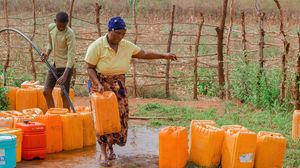
The government has proposed a Sh1.12 trillion allocation to the water sector, alongside dam construction projects aimed at improving irrigation, water security and rural livelihoods.
The energy sector is also expected to receive renewed attention, with calls for expanded transmission networks, rural electrification and clean cooking solutions to reduce dependence on biomass fuels.
Youth employment remains one of the most pressing policy challenges.
While the government has allocated Sh200 billion for youth self-employment initiatives, analysts argue that long-term solutions will depend on private sector expansion, industrial growth and investment incentives.
Register to begin your journey to our premium contentSubscribe for full access to premium content