Dodoma. The Minister of State in the President’s Office (Planning and Investment), Prof Kitila Mkumbo, has outlined an extensive and reform-oriented development agenda for the 2026/27 financial year, seeking parliament approval for Sh144.9 billion in recurrent and development expenditures allocations.
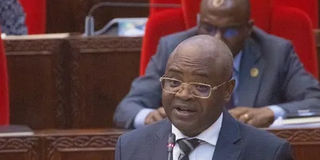
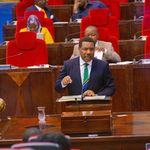
In his budget speech in the august House on Thursday, April 16, 2026, Prof Mkumbo said that his ministry’s top priorities will be pegged on research, private sector-led growth, and strategic public investment aimed at accelerating Tanzania’s transformation into a competitive industrial economy.
Presenting the proposals, the minister said the priority areas and expenditure plans are firmly aligned with Tanzania Development Vision 2050, the Fourth Five-Year Development Plan (2026/27–2030/31), and the national development plan for 2026/27, alongside the 2025 ruling party manifesto and the President’s inaugural address to the 13th Parliament.
He informed Parliament that the success of the 2026/27 plan must depend on effective implementation, robust coordination, and measurable outcomes, noting that Tanzania is now shifting from policy formulation to execution in its pursuit of sustainable growth, increased investment, and improved livelihoods.
Also, he emphasised that the Office’s expanded mandate now includes promoting private sector development and coordinating poverty reduction programmes.
Central to the 2026/27 agenda is a decisive shift toward evidence-based planning, with the government prioritising the use of research, data, and innovation in designing and implementing development programmes.
According to the minister, the government is also prioritising stronger coordination and monitoring of development programmes, with a national system set to track implementation of the 2026/27 development plan, including seven flagship programmes and 38 strategic projects.
At the sub-national level, he noted, regions and local authorities will be required to prepare detailed economic profiles and align their development and investment plans with national priorities, ensuring more efficient use of resources and better targeting of local opportunities.
“At the same time, the government will undertake a comprehensive assessment of key national resources, including land, water, and minerals, to unlock high-impact investment opportunities.
He said a major share of the proposed expenditure and programme focus is directed at stimulating private sector growth and investment.
“The government plans a comprehensive review of Special Economic Zones to improve incentive structures and attract large-scale, high-impact investors capable of driving industrial transformation, expanding small and medium enterprises, and creating jobs, particularly for youth,’’ he said.
To address one of the biggest constraints to investment, the minister said the government will expand the land bank by identifying and preparing investment-ready land, including compensation, and provision of critical infrastructure such as roads, electricity, water, and communications. This information will be digitised to allow investors to access opportunities globally.
“In a significant industrial push, the government will develop a strategy to attract investment in vehicle assembly and manufacturing, targeting a position among Africa’s leading automotive producers by 2030,’’ he said adding that export-oriented production will also be strengthened through improved support to Export Processing Zones, including simplified registration, better infrastructure, enhanced product standards, and adoption of modern technologies.
He also underscored the need for youth empowerment through the establishment of dedicated Youth Industrial Special Economic Zones in regions including Dodoma, Singida, Pwani, Mara, and Ruvuma.
“These zones will provide land and facilities for young entrepreneurs to set up industries either individually or in groups, opening new pathways for employment and innovation,’’ he said.
In the priorities, he added, the government will implement measures to improve the business environment, including drafting a Business Facilitation Act to streamline regulations, reduce unnecessary inspections, and formalise enterprises.
Prof Mkumbo emphasised that inclusive private sector participation is critical, with renewed focus on integrating micro, small and medium enterprises, informal businesses, youth, women and persons with disabilities into national economic decision-making processes.
The Parliamentary Standing Committee on Governance, Constitution and Legal Affairs suggested that, to support the effective implementation of that budget, the government should ensure that funds allocated for the implementation of development projects in the 2026/27 financial year are fully released within the required period.
Acting committee chairperson, Ms Zena Katambo, suggested that the government should ensure that it prepares and begins using effective instruments for the implementation of the National Development Vision 2050 to deliver meaningful benefits to citizens.
“The government should ensure that it conducts an evaluation of strategic projects being implemented and those planned for implementation through various ministries and institutions, to avoid duplication and, where possible, promote coordination among them,’’ she said.