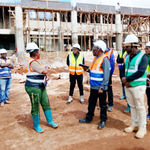
Why investors are now flocking to Njombe Region ahead of UDOM’s campus launch

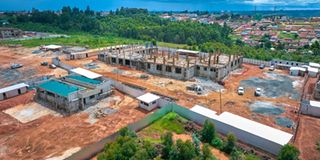
A view of part of the UDOM campus under construction in Njombe. PHOTO | COURTESY

Njombe. A steady investment surge is unfolding in Njombe Region as businesses position themselves ahead of the opening of the University of Dodoma (UDOM) Njombe Campus.

Across Njombe Town, new commercial buildings are emerging to house banks, money transfer outlets, restaurants and hostels, while demand for land continues to rise.
The regional administration has directed councils to survey and allocate plots for investors and to ensure proper land use planning to avoid disorderly urban growth.

The momentum follows the ongoing construction of the Sh20 billion UDOM campus under the Higher Education for Economic Transformation (HEET) project.

The first phase is expected to be completed by June 2026, with student admissions projected for the 2026/27 academic year.

This government and World Bank-backed initiative is not only expanding higher education infrastructure, but is also becoming a powerful economic stimulus across the country.

In regions where universities are establishing new campuses, household incomes have risen, small businesses have expanded and new employment opportunities have emerged, particularly in construction, retail, transport and hospitality.

At its core, the government’s strategy has been to correct long-standing regional imbalances by ensuring that areas without universities are no longer left behind.

According to experts, taking higher education closer to the people is not merely an academic reform; it is an economic intervention.

Beyond widening access to learning, the project is accelerating urban growth, attracting private investment and laying the foundation for knowledge-driven local economies.

Njombe Region, alongside Iringa, Mbeya, Songwe and Ruvuma, forms the economic backbone of the Southern Highlands.

The zone is one of Tanzania’s leading producers of Irish potatoes, tea, timber and avocados, contributing significantly to national food supply and export earnings.

Agriculture accounts for more than 70 percent of household income in the region, while forestry plantations and timber processing employ thousands.

Njombe has also emerged as a major avocado-producing region, tapping into European and Asian markets.

However, value addition, specialised technical skills and structured industrial linkages have remained limited. The university campus is expected to help bridge that gap.

Njombe Regional Commissioner Mr Anthony Mtaka, speaking to The Citizen recently, described the development as a strategic economic turning point.

“There are many opportunities, and the Njombe Region is becoming more vibrant. We are transforming it into an investment region. We want to restore the region’s status as a business hub for Tanzania,” he said.

He confirmed that local authorities have been instructed to begin surveying land for investors while safeguarding proper land use to prevent future conflicts.

The Njombe Town Council has already allocated Sh400 million for the construction of multi-storey hostels and commercial shops, viewing the university as a catalyst for expanding its own-source revenue.

“We cannot wait for demand to overwhelm us. We must prepare infrastructure early,” a council official, Mr Iddi Juma, said.

Investors move in

Private investors are already responding. Dar es Salaam-based hospitality investor, Mr John Msuya, said he is finalising plans to construct a 120-bed hostel near the campus.

“We have observed how universities have transformed towns such as Dodoma. Njombe is even more strategic because it already has a strong agricultural and forestry base,” he said, noting that he has already put aside Sh500 million for the investment.

Financial institutions are expanding branch networks in anticipation of increased transactions linked to student loans, SMEs and staff payrolls.

An avocado exporter in Njombe noted that research collaboration could improve productivity.

“If we work with students and researchers on soil health, disease control and value addition, productivity will rise. That translates directly into economic growth,” he said.

Built on a 110-acre site, the campus will include lecture theatres, modern laboratories, a library, administration block, cafeteria and dispensary. It is expected to admit at least 1,000 students in its first intake.

Yet its impact extends beyond infrastructure.

UDOM Vice Chancellor Prof Lughano Kusiluka said the institution has been deliberately aligned with the economic realities of the Southern Highlands.

He welcomed private sector participation in supporting student services.

“The land is available, and we encourage serious private investors to construct hostels and other essential services. The university alone cannot provide everything,” he added.

A multiplier effect

Experience from other university towns suggests that each student generates demand for housing, food, transport and retail services.

With an initial intake of 1,000 students and room for expansion, the multiplier effect on Njombe’s urban economy could be substantial.

Education analyst, Dr Rehema Mhando, believes the campus will also reduce youth migration.

“For many years, our brightest students left the region and often did not return. Establishing a campus here strengthens the local knowledge economy and keeps talent within the Southern Highlands,” she said.