UDOM’s Njombe model: Blue print for employment-focused higher education
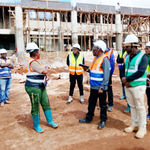
The Vice Chancellor of the University of Dodoma, Prof Lughano Kusiluka (third right, in a blue and orange hi-vis vest), listens to site foreman Ms Teopista Mgani during an inspection of the administration block under construction at the UDOM’s Njombe Campus. PHOTO | JACOB MOSENDA
Njombe. In a move that could redefine how universities respond to local economies, the University of Dodoma (UDOM) has unveiled a suite of context-specific academic programmes for its Njombe campus, The Citizen has learnt.
The programmes were designed not in isolation, but in consultation with the very communities they intend to serve.
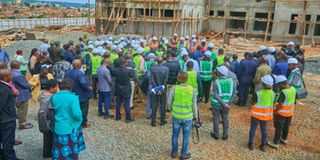
Presented to the Njombe Regional Advisory Committee by UDOM’s Director of Undergraduate Studies, Prof Godlisten Kombe, on February 20, 2026, the curricula reflect a deliberate shift from theory-heavy training to practice-oriented, enterprise-driven education.
The meeting, Chaired by Njombe Regional Commissioner, Mr Anthony Mtaka and attended by local Members of Parliament, local authorities, farmers, private tree farm owners, scholars and parents, marked a rare moment where indigenous knowledge directly shaped university syllabi.
According to Prof Kombe’s presentation, the Njombe campus that is set to begin admitting students later this year, will launch three undergraduate degree programmes and eight diploma and certificate courses, largely centred on agriculture, forestry, livestock, fisheries and mining, sectors that define the Southern Highlands economy.
“These curricula have been narrowed down to address real, identified skills gaps in Njombe,” Prof Kombe explained. “We conducted a preliminary needs assessment involving residents of the Southern Highlands to understand what skills their children require to become self-employed and create jobs locally.”
Among the flagship degrees is the Bachelor of Science in Crop Production and Farm Management, tailored to tackle Njombe’s acidic soils and shortage of indigenous estate managers.
With modules in precision agriculture using drones and GIS, soil health engineering and international standards such as GlobalGAP, he said, the programme aims to connect local production to global markets.
For decades, farmers in Njombe have suffered losses due to limited knowledge of soil types and appropriate seed varieties.
By embedding soil science and agronomic precision into training, UDOM is seeking to turn that historical weakness into competitive strength. Equally transformative is the BSc in Sustainable Forestry Management, designed to bridge gaps in carbon trading, silviculture and international certification such as FSC.
In a region frequently ravaged by forest fires whose underlying causes are poorly understood, the curriculum incorporates forest risk management and carbon auditing, skills that could reposition Njombe as a key player in the global carbon economy.
One of the most strategic interventions is the introduction of Aquaculture and Fisheries Management at diploma level. Despite its proximity to Lake Nyasa, structured economic exploitation of the lake has remained limited.
The proposed programme focuses on cold-water fish such as trout and climate-resilient tilapia, hatchery management and on-farm feed production.
Researchers believe this could unlock the lake as a major economic driver, integrating scientific breeding, value addition and sustainable fisheries governance.
Perhaps the boldest innovation is the Bachelor of Business Innovation and Entrepreneurship. Under a “venture creation” model, students will be required to register and operate a live company as a graduation requirement, rather than merely submit a dissertation.
UDOM Vice Chancellor, Prof Lughano Kusiluka, told the committee that the government’s objective is clear: “We must produce graduates with the capacity for self-employment and employability. Universities cannot continue preparing students without a defined direction for work.”
He added that aligning curriculum with Njombe’s economic realities would ensure students gain practical exposure capable of offering long-term solutions to local and national challenges.
Regional Commissioner Anthony Mtaka described the initiative as “a milestone for higher learning institutions”.
“It is not common for universities to come back to farmers, businesspeople and local leaders to ask how programmes can be improved,” he said.
A model for national replication?
Education analysts argue that what is emerging in Njombe reflects a modern, community-embedded university model.
A higher education policy expert, Dr Asha Mwakyembe, noted that Tanzania’s graduate unemployment challenge partly stems from misalignment between training and productive sectors. “When a university integrates estate farming, carbon markets, agro-processing and livestock health within the context of a specific region, it reduces the theory-practice gap,” she said.
“This is a model that can be adapted in other economic zones, be it fisheries along the coast or mining in the Lake Zone.”
The Njombe campus is being developed under the Higher Education for Economic Transformation (HEET) project, a government initiative supported by the World Bank to expand infrastructure and improving quality.
Nationally, the $425 million project seeks to bring university education closer to communities and ensure institutions contribute directly to economic transformation.
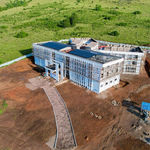
UDOM’s Njombe campus, whose construction is progressing steadily with multiple academic and administrative blocks underway, is expected to admit its first cohort in the 2026/27 academic year.
Register to begin your journey to our premium contentSubscribe for full access to premium content