Why Stanbic is betting big on Tanzania’s next growth phase
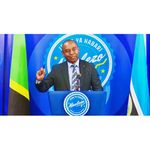
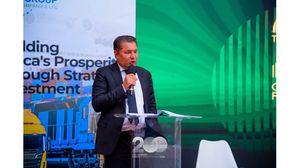
Stanbic Bank Chief Executive Manzi Rwegasira (left) discusses the bank’s role in financing Tanzania’s infrastructure and SME sectors with MCL Executive Editor Mpoki Thomson in Dar es Salaam. PHOTO | MICHAEL MATEMANGA
Stanbic has witnessed a turnaround and scale-up story: You were named the Best Bank in Tanzania for 2025. What has been key in this growth journey, and what does this recognition say about the Bank and the market it operates in?
Our story is one of continued improvement, focus, and growth. There is no straight line to success. We had our challenges very early on, but what I am proud of is what we have been able to achieve over time, every year, we have worked hard to get better.

We have built the right team, hired the right people, and ensured that everyone is focused on the mission, which is to add value to the Tanzanian economy and to serve our clients effectively.
Over the last couple of years, we have moved beyond operating only in cities. We have opened more agencies; from zero to now almost 1,000, and expanded our branch network beyond Dar es Salaam.
Through these changes, together with a rigorous focus on risk management and product innovation, we have been able to grow sustainably.
The award comes after a very competitive year in the banking sector. Stanbic’s revenue growth slowed to 5%, mainly due to tighter margins and global market pressures. What were the biggest headwinds, and how did you manage them?
A smooth, continuous growth trajectory is almost impossible. You always have to deal with headwinds and challenges as they arise. In 2025, we were coming off our best year ever in the preavious year, so sustaining that rate of growth was always going to be a challenge.
There were market pressures that all banks faced. The cost of funds rose, which led to margin compression, and some areas of the economy experienced a slowdown. What we needed to do as a bank was realign and rebalance, and we were able to do that.
We ensured that we remained focused on risk and avoided unnecessary losses. We also made sure we secured funding at reasonable costs so that we did not place undue pressure on our clients. While revenue growth slowed somewhat, it was coming from a very high base.
Looking ahead, we see the economy continuing to pick up. There are new and exciting projects in development, and investor confidence remains strong.
We are confident that 2026 may turn out to be our best year yet.
Do you expect margins to recover in 2026, or is this the new normal for banks?
Banking is cyclical. There are periods when you experience acute foreign exchange shortages driven by global dynamics, and times when there is pressure on interest rates. What you can control as a bank is how you grow your business, how safely you lend, and how effectively you manage credit risk, operational risk, and costs.
Over the past five years, Stanbic has played a strong role in financing trade, infrastructure, agriculture, energy, and mining as priority sectors. Why are these sectors so central to Tanzania’s economic transformation?
Tanzania is blessed with a diversified economy. When you look at our region and Sub-Saharan Africa more broadly, very few countries have such diversification. The government has a clear plan on how it intends to exploit natural wealth and maximise the benefits. Vision 2050 is very clear, ambitious, and bold.
Through our Corporate and Investment Banking, as well as Business and Commercial Banking divisions, we focus on identifying key economic hotspots and the clients operating in those areas. We want to be the best at providing infrastructure financing for government, the best at raising funding for large corporates, and the best at supporting those who want to start and grow their own businesses.
How does Stanbic assess risk when financing large public projects, considering that development financing at scale requires long-term conviction?
We are very confident about the long-term payoff for the country, based on our experience. As part of the wider Standard Bank Group, which operates across multiple markets, we benefit from insights and learnings from different jurisdictions.
When we look at countries where the energy sector is vibrant, we are often the leading bank in those markets.
We have seen how countries that manage to exploit their resources properly are able to transform their economies. In all these cases, discussions are never easy or straightforward. Goavernments have a responsibility to secure the best possible outcomes for their people.
These projects are, by nature, large and capital-intensive, so they take time to negotiate and implement. As a bank, our role is to provide both financing and intellectual capital to support informed decision-making by governments and the private sector.
While some Tanzanian projects have taken longer than expected, what we are hearing from key stakeholders is that progress is being made in the right direction.
What is the financial impact of these project delays?
There is a concept in finance known as the time value of money, which states that a shilling today is worth more than a shilling tomorrow. This principle also applies to large-scale projects, the sooner they are operational, the sooner their economic benefits can be realised.
That said, these are complex projects involving states and communities, making discussions inherently complicated and time-consuming. However, if there is a balance between negotiation and implementation, meaningful benefits still accrue.
Even during the construction phase, often five to six years after signing, positive impacts are already being felt.
There is a strong signalling effect: signing such contracts reflects confidence in a country’s policies and governance.
Construction creates employment, stimulates local content, and generates revenue and profits within the country.
The very existence of a project on the horizon also leads to reassessments of a country’s credit risk, as future revenues [six or seven years down the line] can already be projected to rise significantly.
Stanbic has led some landmark transactions, including the first infrastructure bond, the Zanzibar blue economy syndication, and the first multicurrency Sukuk bond. What role should banks play in national development?
It is a significant win-win. These initiatives are undertaken with strong partners who are driving innovation. Tanzania’s banking sector is growing, but it is still in a relatively nascent phase. This places responsibility on both large and small players to innovate, introduce new products, address client challenges, and add real value to the economy.
Do you feel banks are stepping up to the occasion?
Banks are problem-solvers. As financial intermediaries, our role is to connect supply and demand as efficiently as possible. However, savings rates in Tanzania remain low. Higher savings would reduce the cost of funds by increasing supply, allowing banks to lend at lower rates.
At present, there is a finite pool of funds and very strong demand, creating pricing pressure. Depositors seek higher returns, and banks often find themselves caught in the middle. This can be difficult for borrowers to appreciate, but it reflects the dynamics of a competitive market.
As the economy grows, savings increase, and banks become more efficient in managing operational costs, we expect the cost of funds to decline.
What would be the ideal rate of operational cost reduction that would enable banks to offer more funding at lower rates?
It is a balance. Regulators closely monitor the cost-to-income ratio because lower costs can enable banks to pass savings on to customers.
However, this also depends on revenue growth - higher revenues naturally improve efficiency ratios.
Our objective is to significantly reduce operational costs while growing revenues sustainably.
Many Tanzanian businesses are now looking beyond our borders to trade, partner, or expand. How is Stanbic supporting local businesses to grow regionally?
Stanbic aims to champion Tanzanian firms as they expand beyond the country’s borders. There is a significant opportunity, and Tanzanian businesses have much to offer the region and the world. As a bank, we are committed to serving our clients wherever they operate.
Your green and women-led business initiatives are gaining attention. Are these commercial or purely developmental plays?
They do not have to be one or the other. In some cases, commercial returns and social impact converge. As a bank, Stanbic is committed to doing good and creating positive community impact. Some initiatives may not generate immediate financial returns, but we believe they deliver long-term societal value.
How does Stanbic ensure that economic growth is inclusive?
We have dedicated ESG specialists who are highly trained and apply rigorous analytical frameworks to assess the impact of our initiatives on a day-to-day basis.
How has Stanbic tailored financing solutions for SMEs, who contribute between 27 and 35 percent of national GDP?
Our loan products are designed to fit the specific needs of each business.
This includes structuring facilities around cash flows, asset bases, and business cycles. When this is done well, it creates value for clients and opens growth opportunities for the bank.
Considering that your bank’s recent growth is driven mainly by SMEs and commercial clients, what strategies are in place to sustain this growth and ensure wider economic impact?
Sustaining growth depends on remaining relevant to clients and the market. Globally, SMEs are the largest employers and contributors to economic activity. While Stanbic has not traditionally led in this segment, it is now a strategic focus. Our SME portfolio currently stands at Sh700 billion, and we expect it to reach Sh1 trillion within the next few months.
Tanzania’s Vision 2050 emphasises industrialisation, infrastructure, and public-private collaboration. How does Stanbic support this agenda?
We combine intellectual capital with financial strength. In energy, we have financed some of the largest and most complex projects on the continent. For example, we were among the few African banks involved in financing EACOP.
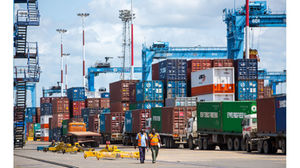
We apply the same approach to infrastructure and transport, including financing for ports and the Standard Gauge Railway, as well as other key sectors of the economy.
Stanbic is part of the wider Standard Bank Group, which has the largest balance sheet on the continent. How does this regional footprint strengthen support for Tanzanian clients?
It means clients benefit from local expertise backed by global reach. Our presence in markets such as New York, London, Beijing, and Dubai, combined with 165 years of heritage and operations in over 20 African countries, [DS1] strengthens our ability to support Tanzanian clients. Our balance sheet, valued at over $200 billion, is a powerful asset for Africa’s growth.
As Stanbic marks 30 years in Tanzania, what lessons from this journey continue to shape the Bank today?
No journey to success is smooth. There are peaks and troughs, and resilience is essential. Building the right team, doing business ethically, and working with the right clients are critical to longevity.
Early on, we believed we had all the solutions. Over time, and through difficult lessons, we learned the importance of listening, understanding client needs, and tailoring solutions accordingly. We have significantly improved in this area in recent years.
What role do people and culture play in sustaining performance?
An organisation is defined by its people. Investing in the right talent, attracting, developing, and retaining skilled individuals – is fundamental to long-term success.
Looking ahead to Stanbic 2030, what strategic priorities will define the next phase of growth?
Our goal over the next five years is to reach and maintain a top-three position.
We will focus on business and commercial banking, remain a leader in corporate and investment banking, offer premium retail solutions, manage risks prudently, and lead innovation in the market.
What risks—regulatory, macroeconomic, or competitive—could derail your growth plan?
Risk is part of operating in a dynamic environment. On the regulatory front, there is strong alignment with the sector to promote responsible growth.
We maintain open dialogue with regulators to share ideas and improve outcomes. Competition is healthy and drives better service. Broader risks include geopolitical uncertainty and global economic shifts, but we are confident in Tanzania’s resilience.
What does winning the Best Bank in Tanzania for 2025 award, presented by The Banker, signify?
It is a testament to the dedication of our staff and a strong vote of confidence from our clients and stakeholders.
Awards of this nature are only possible with consistent performance and strong partnerships.
Register to begin your journey to our premium contentSubscribe for full access to premium content