One of the standout moments of the 2026 AMVCAs was Uche Montana winning the Trailblazer Award, recognising her rapid rise through Nollywood YouTube projects such as Monica
The 2026 Africa Magic Viewers’ Choice Awards in Lagos was never going to be just another awards night.
It unfolded instead as a continental cultural statement where film, fashion, celebrity branding and digital storytelling fused into one highly stylised spectacle that felt closer to a live cultural exhibition than a traditional ceremony.
It was a night of record-breaking red carpet moments and historic wins in television writing. The AMVCAs cemented their place as one of Africa’s most influential entertainment platforms.
For East Africa, especially Tanzania, the event became both a mirror and a warning. It reflected creative possibility while also exposing how fast African fashion culture is evolving beyond regional comfort zones.
Storytelling still reigns
While fashion dominated global conversation, the awards themselves reinforced a quieter but powerful truth.
African storytelling is becoming structurally mature and increasingly competitive across regions.
Kenya’s Shuga Mashariki made history once again, winning Best Writing TV Series for the third consecutive year.
This level of consistency signals a writing culture built on discipline, realism and narrative control rather than spectacle alone.
Tanzanian actress Talie Grey joined the cast of MTV Shuga Mashariki for its second season. She was announced as part of the new cast ensemble, bringing cross-border energy to the Kenyan-based production.
She is known for her work in The Christmas Run (2024), Married to Work (2023), and Elsewhere (2017).
Shuga Mashariki was nominated alongside Nigeria’s The Wives, Our Husband, Baba Oh and The Party, as well as Ethiopia’s Addis Fikir and Gizat.
The red carpet became a runway revolution
If the awards crowned storytellers, the red carpet crowned designers. But what unfolded in Lagos went far beyond fashion display.
It became a full cultural performance where clothing, identity and digital reaction merged into one living system.
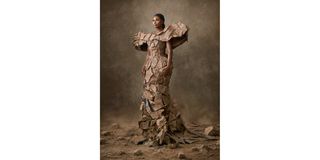
Designers moved beyond fabric into structure, treating garments as sculptural installations built with volume, layered frameworks and exaggerated silhouettes.
Osas Ighodaro stood out in two custom Veekee James creations that captured the range of modern African couture. The first was a crimson tiered architectural gown balancing strength with elegance, while the second was a striking silver ballgown crafted from 400 repurposed metal sponges, transforming industrial material into conceptual red carpet art.
Nana Akua Addo turned the red carpet into a curated fashion exhibition, presenting three theatrical looks that reinforced her reputation for storytelling through style.
She opened in a Gothic cathedral-inspired gown, followed by a “Living Stone” mermaid silhouette carved from textured fragments, and closed with a spiral fish-scale gown paired with a sculptural, fish-shaped beaded bag.
Eniola Ajao embraced experimental fashion in an Elegante by Tiannah Styling balloon-textured dress that sparked mixed reactions, though her polished hair and make-up were widely praised.
Queen Mercy Atang delivered one of the most talked-about moments of the night in a bold bread-inspired couture.
The structured design, crafted from bakery-themed elements, blurred the line between fashion, performance art and branding, instantly becoming a viral talking point.
Chioma Ikokwu, popularly known as Chioma Goodhair, remained one of the event’s most discussed fashion figures despite not physically attending due to recovery.
She later unveiled a surprise styled “Look 3” designed by Weiz Dhurm Franklyn, inspired by the theme “Fashion is Art”.
The piece fused Nigerian carved wood artistry with a fully hand-stoned Swarovski crystal body design, creating a sculptural couture moment that merged heritage with high fashion.
She described it as “a striking fusion… sculptural, intricate, and unapologetically theatrical”, reinforcing her reputation for bold fashion storytelling and positioning her among the night’s standout style interpreters.
Online reactions reflected the scale of impact, comments such as, “This is not just fashion…this is art you can walk in.”, “This is what the Met Gala was supposed to give!”
Another widely shared comment adds, “Art is FASHION in the Motherland.”
Across fashion communities, a recurring emotional response emerged, “Asymmetrical, mixed prints, zero rules… just high fashion expression. I LIVE!!!!!!!!”
These reactions captured a shift in perception. African fashion was no longer being viewed as regional styling. It was being recognised as a global creative authority.
Menswear at the AMVCAs delivered one of the most unexpected shifts of the night.
Male celebrities moved away from conventional tuxedos and embraced embroidered tailoring, flowing fabrics and layered textures.
The result was a more expressive and experimental menswear language that challenged global norms of male red carpet dressing.
A fashion observer noted, “African men are no longer dressing for approval. They are dressing for expression.”
This signals a growing opportunity for East African menswear to enter a global conversation with culturally rooted tailoring systems.
Unlike traditional fashion eras where influence was controlled by magazines and runway institutions, the AMVCA red carpet existed entirely within digital culture.
Every look was instantly photographed, reposted, debated and ranked across TikTok, Instagram, Reddit and fashion blogs.
Virality became part of design strategy.
Designers now consider not only how a garment looks in person but also how it behaves in images, videos and algorithmic feeds.
A major distinction between the AMVCAs and many Western red carpets was the willingness to embrace risk.
Where Hollywood often prioritises restraint and minimalism, the AMVCAs leaned into symbolism, exaggeration and theatrical expression.
Some designs sparked debate, especially highly experimental looks, but even criticism contributed to visibility.
One online comment summarised the cultural tension, “Even when it divides opinion, it dominates conversation.” Beyond the red carpet spectacle, designers themselves reflected on the global impact of African fashion visibility.
Okarafor Heritage Obarido shares, "Beauty indeed is power. Deeply honoured to have created this iconic AMVCA look for Queen Dabota Lawson. Seeing our work featured internationally is a beautiful reminder that excellence will always speak. Grateful for the trust, the vision and the magic we created together.”
These behind-the-scenes reflections highlighted a growing truth that African designers are no longer working in isolation. Their work now exists in global media ecosystems where recognition can happen within hours.
By the end of the night, success on the AMVCA red carpet was no longer defined by elegance or tradition alone.
It was defined by impact, virality and cultural conversation.
A successful look is one that circulates, divides opinion, inspires imitation and becomes part of a wider cultural memory.
The red carpet has now fully evolved into a runway, a gallery, a marketing platform and a digital performance space at once.