Beware of harmful cocktails this festive season

Are these drinks really ‘energy giving’? Experts warn of the hazards associated with the popular drinks. You might develop a heart problem in the long run.

PHOTO | FILE

What you need to know:

  • A cocktail of alcohol and energy drinks was enough to keep him awake as he danced in merriment at night clubs in Dar es Salaam.
  • But today, as he speaks to Your Health, what used to be his favorite cocktail is not something he would recommend for anyone else.
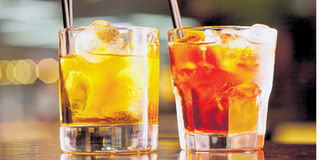

For Mr Paul Agaba, 45, the forthcoming festive season is reminiscent of his youthful days when he used to make it through a night of partying, with no problem.

A cocktail of alcohol and energy drinks was enough to keep him awake as he danced in merriment at night clubs in Dar es Salaam.

But today, as he speaks to Your Health, what used to be his favorite cocktail is not something he would recommend for anyone else.

“After extensive reading, I have come to realize that energy drinks are harmful to health. I used to mix the energy boosters with alcohol in order to get high and stay awake,’’ says the resident of Tabata Mawenzi in the city.

He recalls a scenario on one Friday evening, a decade ago, when he returned to Dar es Salaam from a trip to South Africa and never rested after the long safari, but went straight to club. “How do you think I got rid of the fatigue?’’ he asks and adds with a laugh, “The energy boosters, of course.”

But this was no laughing matter, and Agaba knows it. It wasn’t until later in life that he started feeling like his heart was beating too fast and he had lost his ability to concentrate. He recalls the numerous occasions when doctors have advised him to refrain from consuming energy drinks, cautioning him about possible heart complications.

Although Agaba is narrating a story about scenarios that happened several years ago, the consumption of energy drinks in Tanzania has not ceased.

They are being advertised, sold in bars, supermarkets, restaurants and night clubs in Dar es Salaam, every day.

In his view, Agaba thinks that energy drinks are somehow losing popularity nowadays. “In our days, it was pompous to be seen holding a can of an energy booster,’’ he says.

However, the marketing for the “energizers” is still prevalent. Many youth are lured by the way these drinks are being advertised, said to be designed to improve performance, increase energy levels and stimulate the mind.

Now, the question people ask is: Are these drinks really ‘energy giving’? Experts warn of the hazards associated with the popular drinks. As a matter of fact, science has it that energy giving foods are primarily starch, sugar or carbohydrates, just like maize, sweet potatoes, yams and the like.

These foods, experts say, literally boost the body’s energy stores and can keep one going for hours. Mr Punit Solanki, a pharmacist in Dar es Salaam told Your Health that energy drinks contain a high amount of sugar. He goes ahead to caution about other contents and the health risk of mixing these kid of drinks with alcohol.

He further explains, “Energy drinks are heavily caffeinated and contain what we call simple sugars. The energy drink itself is harmful to health due to the amount of sugar it contains.”

According to medical sources, the ‘simple sugar’ contained in energy drinks is similar to over-the-counter glucose and sugar. So, it does not give long-lasting energy (it is comparable to drinking very sugary tea when hungry). You feel better temporarily but after a short while you feel hungry again.

Yet, most energy drinks contain large amounts of caffeine, which is a stimulant – not an energy giving food/substance. Some people cannot work without it—they are addicted to the caffeine.

You might have seen on the labels these terms mentioned-- guarana and ginseng. Do you know what there are? Guarana is a plant extract. It contains caffeine in varying quantities. If consumed in large quantities, it can cause caffeine toxicity, medics say. Beware of adverts suggesting that an energy drink has no caffeine. They will tell you it only has guarana, but this is another form of caffeine, experts have cautioned.

Then, there is ginseng—a herbal extract thought to have a stimulant. Although the quantities found in energy drinks are rarely toxic, pharmacists say it can interact with your regular medication and cause side-effects.

Ms Neema Samson, 27, a third year Engineering student at the University of Dar es Salaam (UDSM) has made it a habit to take one can of an energy drink when she wants to concentrate on her books, especially at night.

“It helps me stay awake through the night, especially when reading for exams.’’ But Neema also admits taking plenty of the drinks as a cocktail with alcohol sometimes.

A medical officer from Bagamoyo Hospital, Dr Fredrick Mackay says, “Drinking too much caffeine can lead to nervousness, irritability, insomnia, rapid and irregular heartbeats and problems with blood pressure. There have been reported incidences of confusion and seizures.”

Concerning mixing cocktails, Mr Solanki says, “Making a cocktail of energy drinks and alcohol is taking two substances that have opposing reactions. One depresses activity while the other one stimulates activity. When mixed, there is a diminished depressive effect of alcohol and that leads to over drinking, compared to a person who has had alcohol that is not mixed with anything else.”

He adds, “The effects can go as far into running personal life. One can end up in self-damage, accidents, family conflicts, cases of rape, violence and all other unacceptable behaviors. ”

Several studies have been published, warning about the harmfulness of the commonly used drinks across the globe, including one published three years ago in the Journal of Preventative Medicine in Canada.

Researchers said there was compelling evidence showing that frequent consumers of energy drinks, most of whom are the youth, are at high risk of developing substance abuse problems.

The study involved examination of more than 8000 high school students in Atlantic Canada and found that 60 per cent of the respondents consumed energy drinks during the year, and 20 per cent of the students drank the beverage at least once a month.

Results indicated that energy drinks have been associated with other negative effects such as sleep impairment and disruption of the cardiovascular system. But the researchers do not yet understand why energy drink consumption may lead to behavioral problems.

Lead investigator, Sunday Azagba, who is a researcher at the Propel Centre, at the University of Waterloo said that there may also be a higher tendency of heavy consumers of the energy drinks to be thrill-seekers, and they were more likely to suffer bouts of depression.

Azagba attributed some of the blame to the marketing campaigns that have been designed to appeal to young adults, raising concerns about the relatively larger number of younger teenagers consuming high-energy drinks which just offer temporary benefits.

When the findings were released, Tanzania’s Food and Drugs Authority (TFDA), admitted that there was no study done yet in the country but the tendency of youth indulging in energy drinks was highly prevalent.

Last year, in April, the TFDA closed down 39 supermarkets operating in Dar es Salaam for a number of malpractices and allegations, including operating without registration and selling high-risk food products. Among the things that were declared unfit for human consumption that the supermarkets were found selling, were cartons of energy drinks and infant formula milk. Yet again, close to the end of last year, the TFDA also impounded 655 cans of counterfeit energy drinks, 32 bottles of substandard juice, during its “Sweep 1” operation in Dar es Salaam. The TFDA boss, Mr Hitili Sillo, said at the end of the operation that the products were not certified. According to Mr Sillo, consumers sometimes fall prey to dubious products on the market.

On the other hand, Dr Mackay explains that most people who take energy drinks don’t read the warnings written on the can of energy drink before using the products.

“There are a lot of instructions and limitations in almost every can of a beverage,’’ he said and further pointed that consumers should shy away from products that have warnings written in a language they can’t understand.

A World Health Organisation (WHO) study published in 2014, warned that energy drinks would become a significant public health problem if their use among young people is not addressed through a cap on caffeine levels and restrictions on their sale and marketing.

The study said the primary risk was from high caffeine levels, which were found to cause problems such as palpitations, hypertension, vomiting, convulsions and in extreme cases heart failure leading to death.

The paper, published in Frontiers in Public Health, added to the growing concerns about the harmful effects of excessive energy-drink consumption.

In the study, they said: “The full impact of the rise in popularity of energy drinks has not yet been quantified, but the aggressive marketing of energy drinks targeted at young people, combined with limited and varied regulation have created an environment where energy drinks could pose a significant threat to public health.”